Note: Around the College Town is my weekly-ish links roundup article on urbanism and education. These posts mostly cover news that may have fallen through the cracks rather than the big events. Subscribe to get this free in your inbox weekly-ish.
Seinfeld Teaches Us to Shame Driving While on the Phone
This week, 33 years ago, on Dec 16, 1992, the Seinfeld episode ‘The Pick’ first aired. This Christmas episode opens with Jerry receiving a personalized holiday card from his traveling girlfriend and Elaine trying to replicate it with Kramer’s help—with disastrous results.
The title of the episode comes from Jerry’s plot in which his girlfriend sees him driving his car, waiting in traffic, and then picking his nose. She is disgusted. Jerry spends the rest of the episode denying wrongdoing, but he and George defend nosepicking as something that should not require shaming.
I’m not here to argue nose-picking as a social faux pas; instead, the episode got me thinking about shame and traffic. My take: There should be more shame associated with using a phone while driving. Seeing someone messing with their phone while driving should bring about the same kind of disgust as Jerry’s girlfriend seeing him pick his nose.
Every single time I drive, I spot another driver on their phone. Every. Single. Time. Head straight down, neck strained, eyes glued to whatever is viral on social media that week. If you don’t notice this, start paying attention to other drivers around you, especially while waiting at a stoplight. You will not be able to unsee it after you first notice it.
Why do I think we need to shame this behavior? At best, driving while using a phone is annoying to everyone else driving; at worst, it’s dangerous to everyone anywhere, including other drivers, pedestrians, and even nearby buildings.
When I say annoying, I mean the scenario where you might be stopped at a red light and a driver ahead of you somewhere delays moving through a green light because they were staring down into oblivion. This creates more traffic because the light is timed with a sensor to get waiting cars through (meaning the light might be longer). Or, probably more infuriating, you end up missing the light completely and have to sit through another cycle, making the line longer behind you because someone was on the phone.
Very very annoying!
Being annoying is bad enough, but using a phone while driving is actively dangerous. Thousands of people die each year in the US because someone took their eyes off the road to respond to a text. I even see people driving down the highway laughing it up to some TikTok video. It is a death waiting to happen.
Despite being both annoying and dangerous, people use phones while driving all the time. Phones are so ingrained into our lives, coupled with driving has been made so comfortable, that there is no longer shame to this behavior.
But there should be shame! Because using a phone while driving is both annoying and dangerous, it really does deserve much more social stigma. Staring down at your phone while driving should be akin to a finger up your nose.

Sure, like Seinfeld pleads, there should be grace for scratching or similar incidental nose-to-finger interactions. Quickly hiding a notification that blocks the map or pushing skip on a podcast should not hold that much stigma. But there should be fear that the action could cause disgust, so drivers would only check sparingly and quickly. No lingering on your phone to actually read a message.
Yes, we should still have enforcement, but enforcement has taken a dip in recent years. We need self-policing that only comes from social stigma. Normal people who do not typically exhibit any antisocial behaviors often still use their phone while driving. They do it right in front of their passengers! It is so normalized that no one seems to think this is a problem.
Given this danger and annoyance, seeing Jerry scrolling TikTok in traffic should have disgusted his girlfriend and warranted a breakup. So this holiday season, let’s make our roads a little less annoying and much safer by not using our phones while driving, or at least be grossed out by the other drivers you might see doing so.
Links I’m Reading This Week
Education
Pacific U and Willamette U are merging. It’s good that two fairly strong institutions are doing this; my only concern is the terrible name they have chosen: University of the Northwest. This sounds like a generic university name from a TV show or movie. We also already have Northwestern and Northeastern. For this merger, I would have gone with the University of Pacific Northwest to match the region.
A recent report shows the US is running low on Merchant Marines, despite lucrative careers. Students are just reluctant to enter the attached academies. I visited one in California and was really impressed. But I could see why students may not like the military lifestyle (such as morning Reveille).
The story of the Japanese international student (aka the“Tokyo Toe”) who joined Hawaii’s football team this year keeps getting better: he’s officially an All-American and was nominated as the top kicker in NCAA football.
South Korea now has over 300,000 international students. I am glad fellow students are following my lead, as I am an alum of a Korean university (Yonsei).
More research to support smartphone bans in schools. The positive effect, it seems, shows up on grades two years after the bans. I am really starting to wonder if we will look back at this era like we do with cigarettes.
Point Park U in Pittsburgh is remodeling an old downtown YWCA for student housing. It got me thinking that we are losing our YMCAs (and the W variant). These used to be prevalent in cities as cheap short-ish term housing. I don’t see many of them anymore
Portland State is tearing down old dorms to build new ones, which is concerning some locals. Normally, I am skeptical of such concern, as it is often just obstructionism. In this case, the area around PSU already had really nice urbanism, so I am distrustful of modern architectural sensibilities. The renderings do not give me hope. Wish they would just basically keep the aesthetics.

Old vs Render. What do you think? Am I overrating the historical design here? Cal State-Monterey Bay has started converting an old office building to dorm space. I often hear about the challenges of office-to-housing conversions, such as no kitchen/ bathroom and weird layouts, but those issues are not a big problem for college students. Good test case here.
Providence, Rhode Island, is debating a tax on student housing. It would be $300 per year for every tenant. I do think it’s an example of towns putting too much blame on students, but I also recognize universities themselves are tax-exempt. There are complications to running the city beyond NIMBYism in this case.

Urbanism-ish
Seoul is seeing a wave of anti-Chinese sentiments due to overtourism from its neighbor. In part related to the tension between Japan and China.
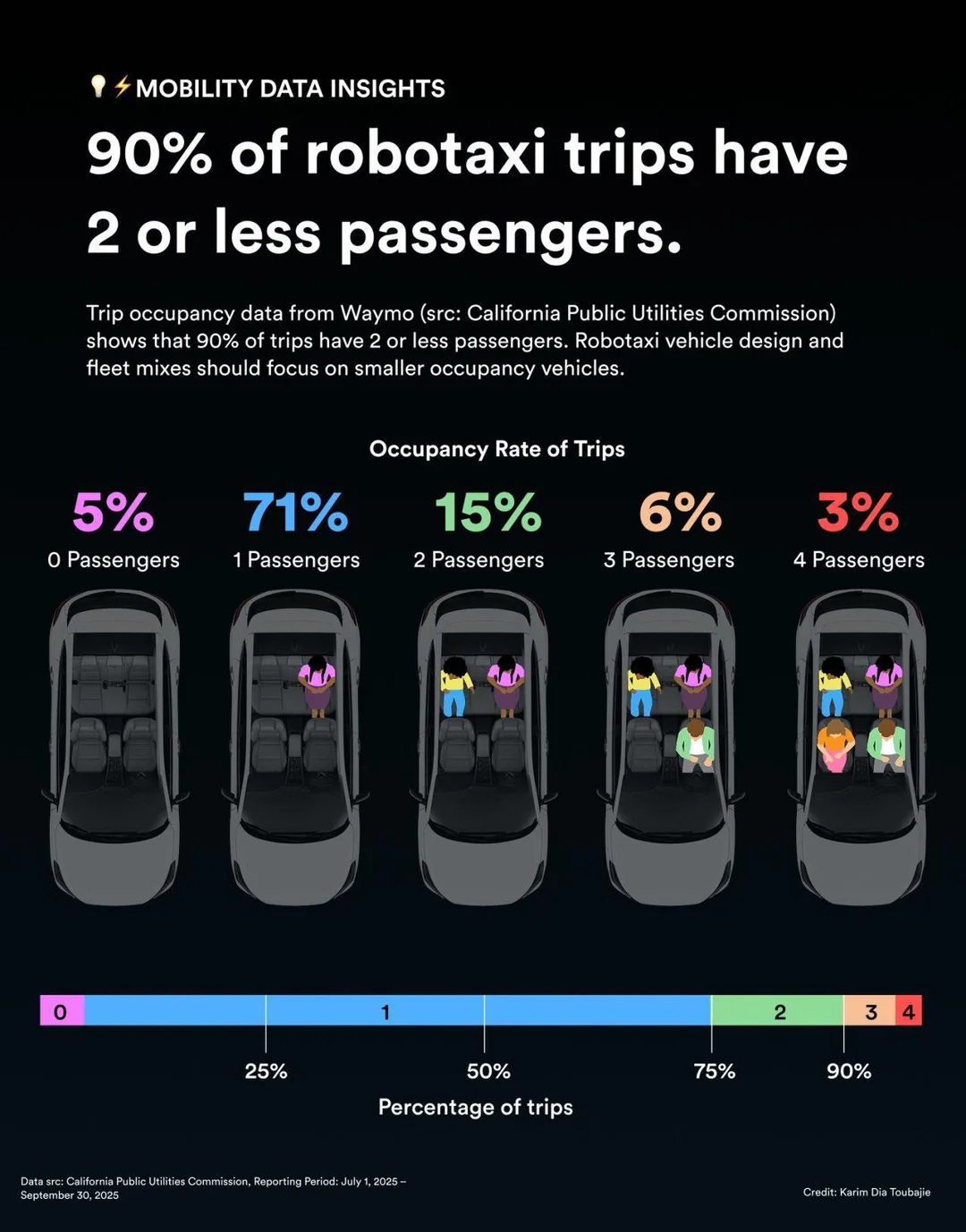
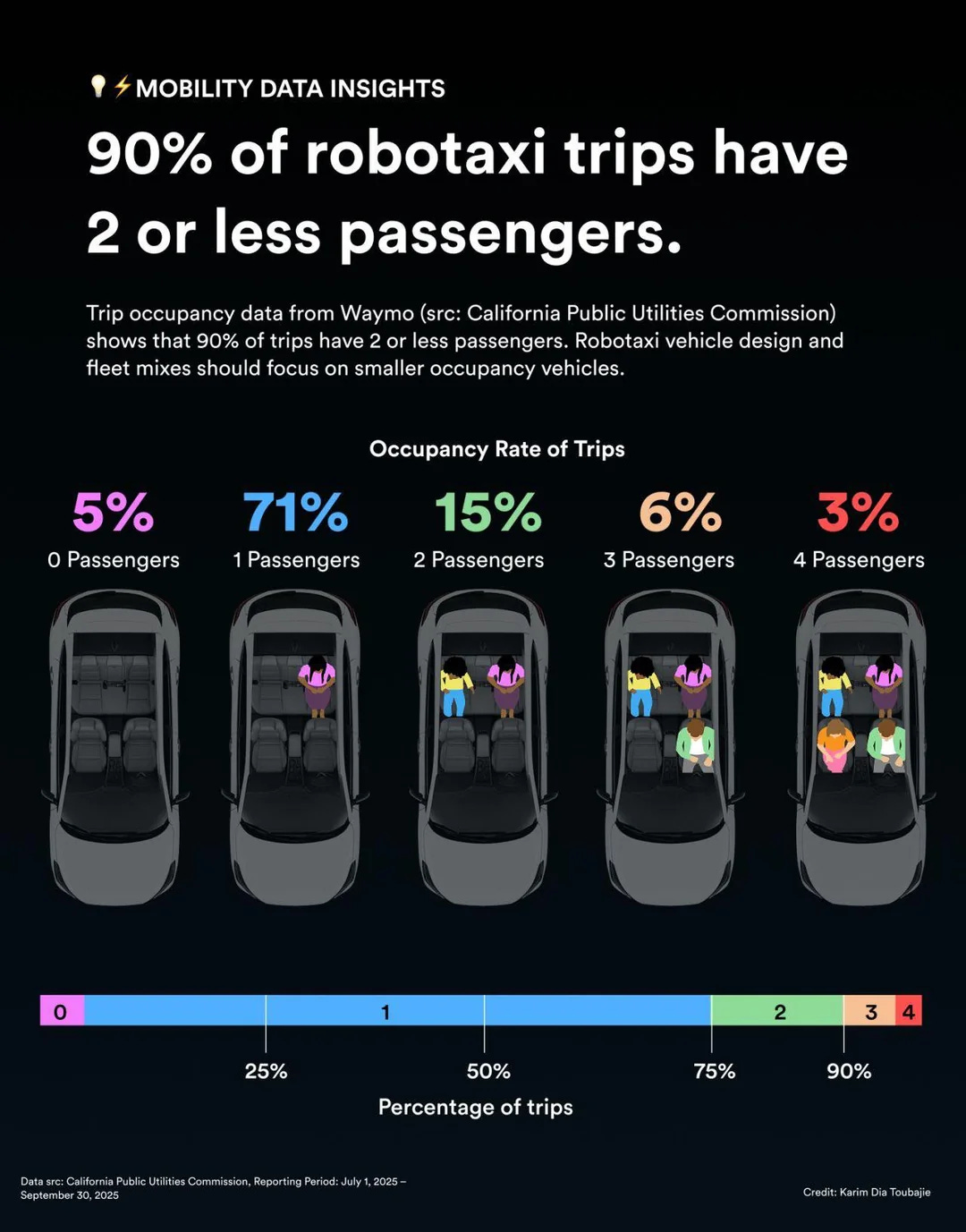
Waymo data shows most rides are just one passenger. This is one cause for concern by urbanists wary of the tech. I take these and other issues seriously, and will address them in a future article on self-driving cars.
Not being able to walk to a theater has killed the movie industry, says the Netflix CEO. This American reality, coupled with giant TV screens and inflated theater ticket prices, means people just stay at home to watch movies.
Congrats to Toronto for opening their first new metro line in over two decades. The final stop listed is Humber College, a massive (over 80,000 students) polytechnic on the edge of town.
Closing Time… The Education of Physical: Asia
Note: This is a spoiler-free write-up of the show Physical: Asia.
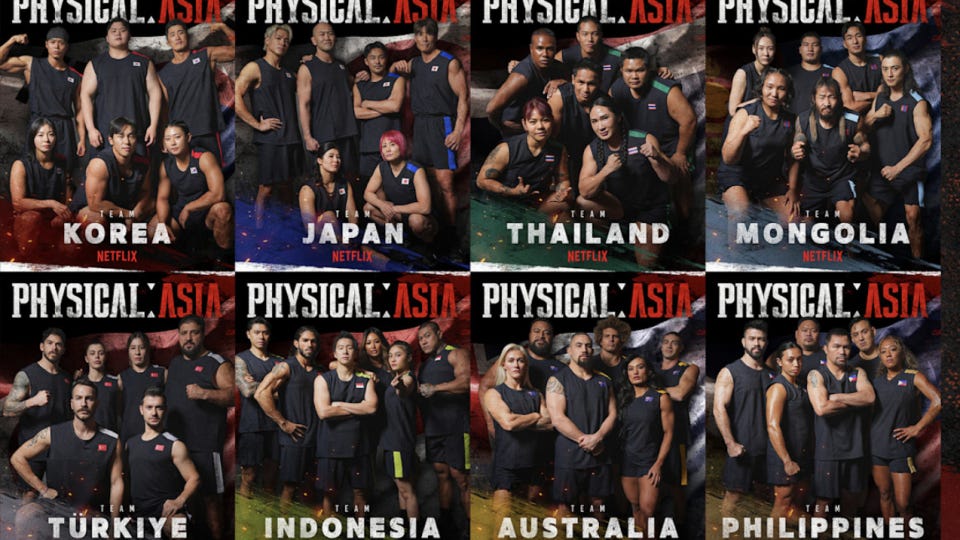
If you need a good show to binge this winter, I suggest Physical: Asia. It is a Korean series on Netflix that originally stemmed from the popularity (and format) of Squid Game. While Squid Game depicted a scripted game show, the Physical series is a real game show bringing together top athletes to compete in gruelling challenges.
Physical: Asia is the third season of the series, with the first two seasons being one-on-one competitions with competitors mostly from South Korea. This new third season switches the format to national teams from around Asia. Each country has a team of top athletes competing from a wide range of sports, such as Olympians, rugby, CrossFit, and even well-known fighters like Manny Pacquiao for the Philippines and Robert Whittaker for Australia.
I’m always thinking about a higher ed angle when I consume media. Since Netflix didn’t have university backgrounds listed in the bios, I compiled the results with the help of AI (sorry I used AI!)… UPDATE: and r/Physical100 community suggestions. Given these are not (all) celebrities, some of the educational data was hard to find or corroborate (entries from both AI and Reddit were confirmed through links). Of the 50 total contestants, I found 22 29 with confirmed university educations.
Unlike in the US, where universities are the training grounds for sports, including Olympians, many other countries have a more centralized system or academy program to produce athletes. And, frankly, I am not as familiar with these other systems. An American university, though, did pop up on the Philippines team with the University of Hawaiʻi at Mānoa alum Robyn Lauren Brown.
In Korea, where they have specific sports-themed institutions, a couple of contestants attended the Korea National Sport University: Yun Sung-bin, Olympic gold medalist in the skeleton, and Jang Eun-sil, national wrestler. Likewise, the Japanese team included alumni from some of their top institutions, Waseda (Katsumi Nakamuram, Olympic swimmer) and Keio (Nonoka Ozaki, Olympic bronze medalist wrestler). Other national teams seemed a bit more sparing in terms of university education.
In some cases, I found through the very active subreddit group that some of the competitors worked in menial labor, and even as a garbage man. It’s funny because an American version of the show would have made these hardships central storylines. Physical: Asia did not mention them at all, and the focus was completely on the tasks at hand and the national teams.
One debate from the r/Physical100 caught my attention: “Why is Australia there? The top comment clarified that Australia does compete in the Asian Football Confederation, so the inclusion made sense. But I do think the producers tried to play up the Australians as a kind of Goliath due to their physically imposing size. Later, through media interviews, the Big Three on their team revealed they all have heritage from smaller islands. Refreshing that these backgrounds were not played up in the show at all. Instead, they were just the Australian team.
This national team angle was another aspect that I really enjoyed about the show. Again, as an American, it was funny that each team was really playing up national stereotypes. We often try to eschew stereotypes or break the mold in the US, but these places have different cultural sensibilities. The Mongolian team was consistently referring to their conquering heritage. The Japanese and Korean teams leaned into their rivalry.


It was all, though, played in good fun. There didn’t seem to be animosity, just competitive spirit. This was especially apparent after the show ended and all the cultural exchanges happened with the competitors visiting each other’s countries. There will even be another spinoff season just for the Mongolian team.
Physical: Asia is just a fun, light-hearted, yet intense show that highlights different national sentiments. There is a lot more I could write about it, too! (like the simultaneous translation, no China/ India, etc.). If you and the fam need a show to binge this Christmas season, this is a good one.