


This article is the first installment of my United States Semiquincentennial Series. This series is a celebration of the country, its history, and the American people. It also offers direction moving forward to the next 250 years of our country.
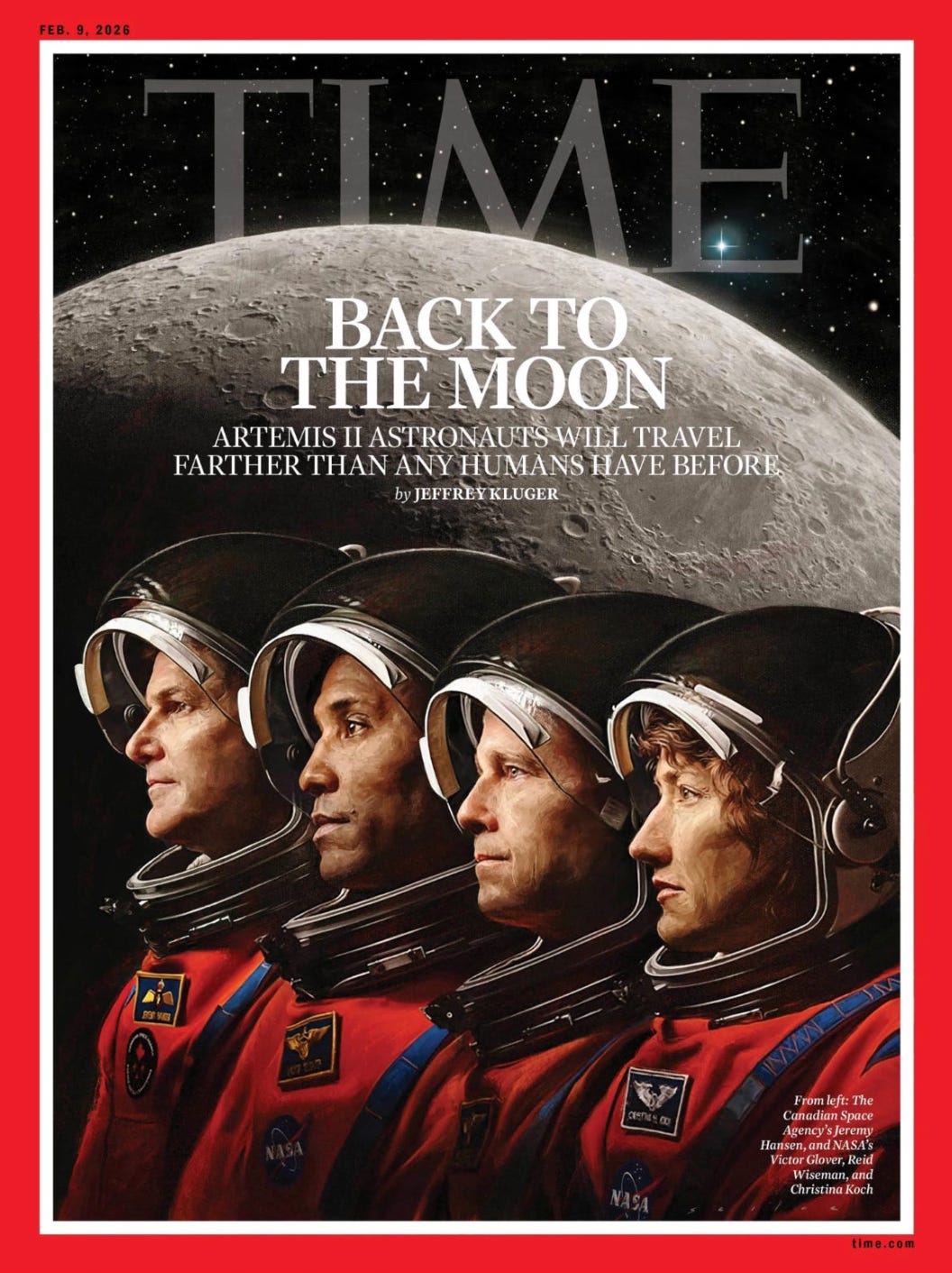
The Artemis II launch this week is an ambitious plan to explore the Moon, sending astronauts further than any human has ever ventured. The images seemed to have captured the attention of the nation. The sentiments harkened back to that of a previous age in the country, one that was defined by exploration and imagination: The Space Age.
The Space Age began in 1957, when the Soviet Union launched Sputnik 1 into orbit. The Space Age was really about a Space Race, and the US began behind its rival. In 1961, John F. Kennedy boldly proclaimed, “This nation should commit itself to achieving the goal, before this decade is out, of landing a man on the moon and returning him safely to the earth." When he made that proclamation, it seemed absurd and brash. Yet it gave everyone a common goal of Flags and Footprints.
I believe that the US needs another Space Race to capture the imaginations of Americans again. Most would also agree that the national mood is down. There is widespread belief that the US is heading in the wrong direction, that the government cannot do anything, and our best days are behind us. A new Space Race can turn us out of this funk.
I am under no illusions that everything was better in the past. That’s not what this is. By many indicators, so much about life is better right now than any time in human history. I think part of that progress, though, was elevated by the advances made through the Space Age. It was also a symbol, a symbol of hope. It told Americans and the world that there was a future, and we were leading it.
So much of our modern discourse is dominated by the negative. I understand why. There is division, malaise, and legitimate hostility in the national mood. It seems we believe that we cannot do anything as a country. But the current era does have parallels to those in the 1950s, 1960s, and 1970s, with McCarthyism, Communist Containment, the Civil Rights Movement, and broader protests. The national divides are similar; the difference comes from the Space Race. The era was not a national utopia. Nonetheless, there was some kind of unity and hope bound by space and the progress of the future that we need to rediscover as a country.
NASA as Americana Art
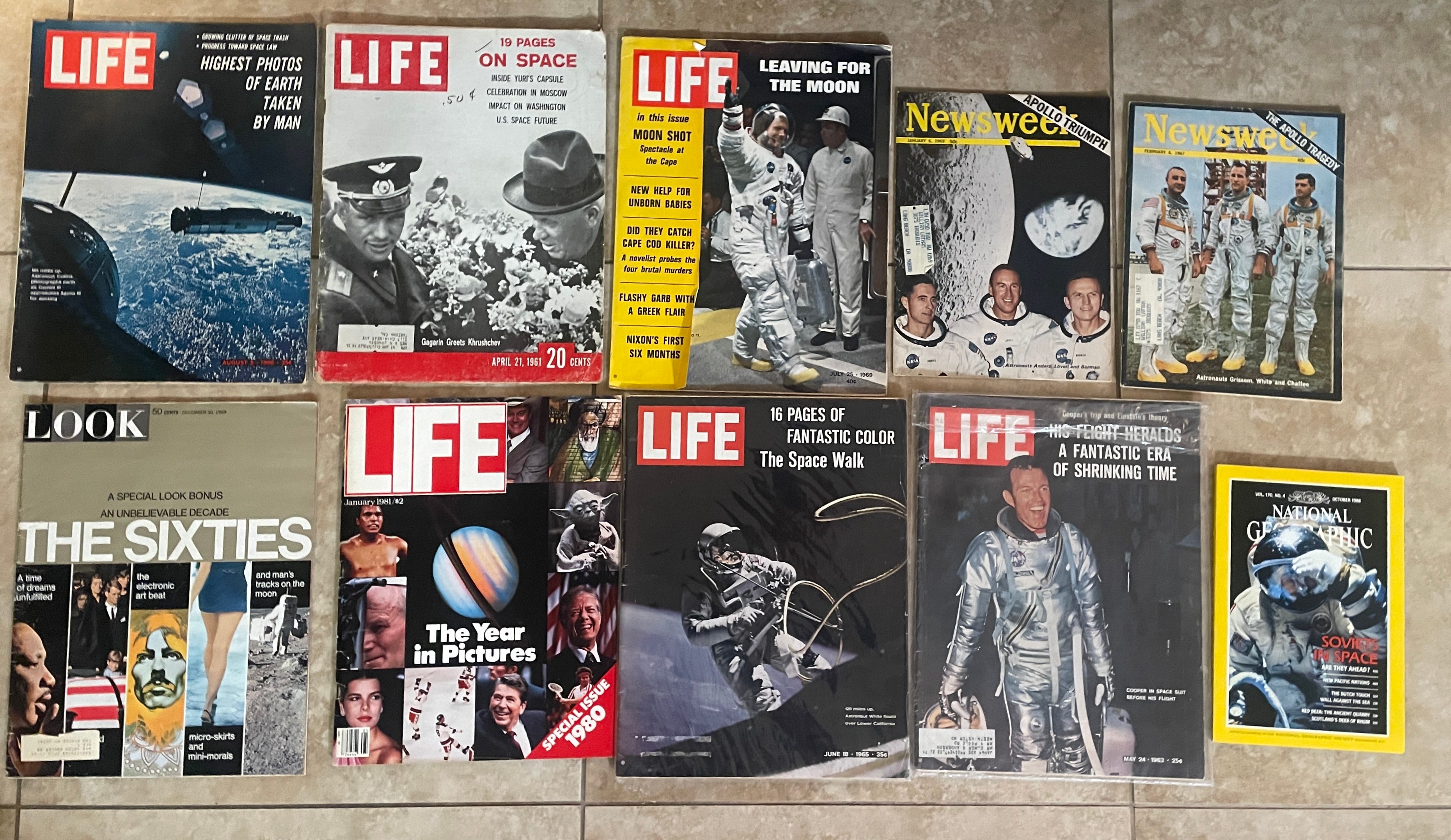
I am a casual collector of Space Race memorabilia. I have old Life or Newsweek magazines from the 1960s. I even stumbled on pins from across the NASA shuttle programs. A lot of my thinking on the topic comes from this iconography, along with the book NASA/ART: 50 Years of Exploration (2008) by James Dean and Bertram Ulrich. It chronicles the importance that art played in the development of NASA.
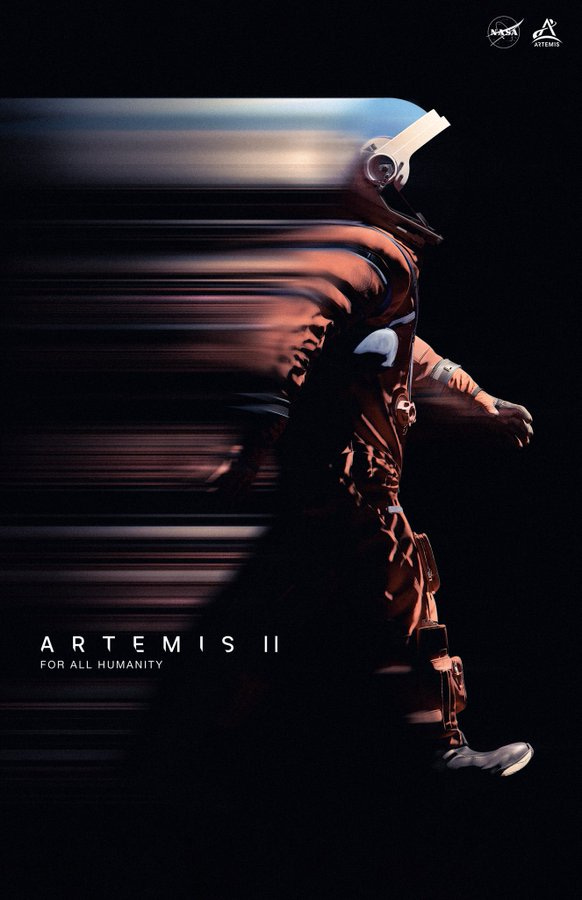
NASA has long understood the public perceptions shaped by the images coming from its explorations. They not only released incredible photos to outlets across the world, but also brought in artists to recreate the imagery and environment. These depictions framed the narrative around NASA with a future aesthetic that was somehow still relatable to the everyman. Sci-fi had become sci-reality, uplifting the sentiment of progress.
“Just what NASA should do in the field of fine arts to commemorate past historic events, such as Shepard’s and Glenn’s flights, as well as future historic events that we know will come to pass,” wrote NASA administrator James Webb in a 1962 memo. “Important events can be interpreted by artists to give a unique insight into significant aspects of our history-making advances into space. An artistic record of this nation’s program of space exploration will have great value for future generations.”
This drive for artists was in part due to that famous NASA necessity. The camera technology could not fully capture the majesty of the moment. Even today, the grainy footage of the era fuels conspiracy theories. Yet, NASA was always transparent in understanding the limitations of its technology, hence the creation of the NASA Art Program.
Artists were brought into NASA facilities and given space to document, create, and frame our exploration of space. These included titans of the art world, such as Norman Rockwell, Andy Warhol, and Annie Leibovitz. Norman Rockwell, the famed illustrator, even sketched the Moon landing two years before it even happened, with the Man on the Moon (1967).
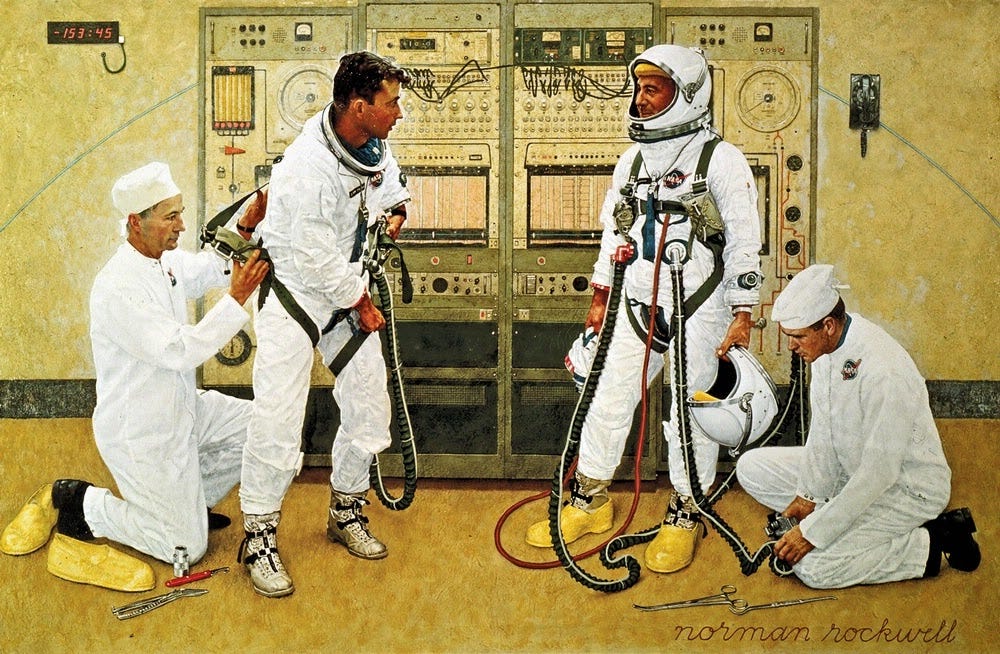
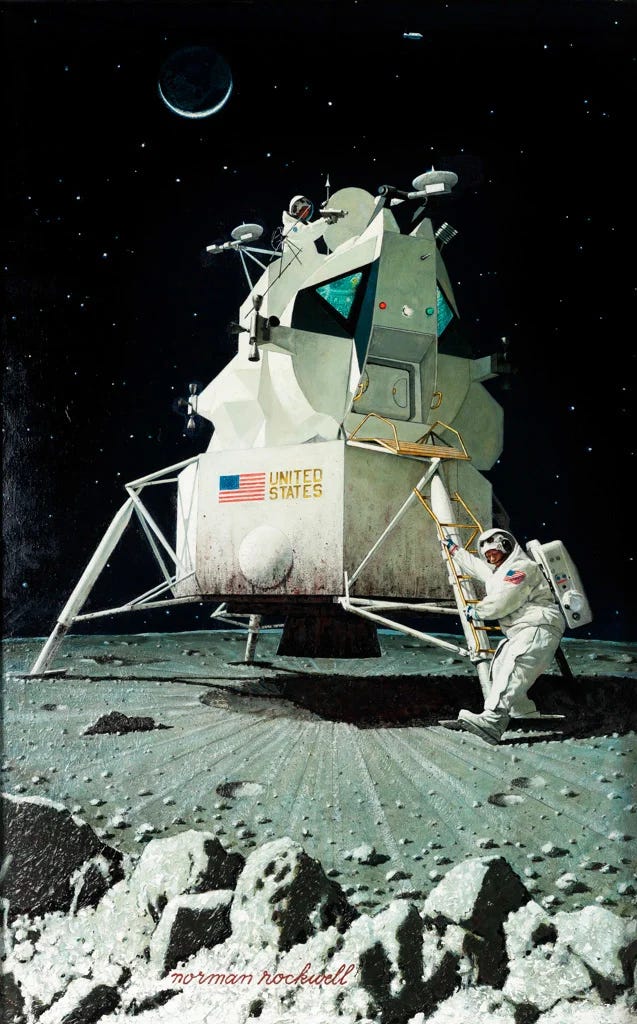
Some may consider this endeavor propaganda; after all, this is what we call the Soviet version. One man’s propaganda is another’s PR. And the NASA Art Program has long done wonderful PR. They’ve painted our astronauts as real life superheroes; the rockets their chariots; and the efforts to belong to all of us.

NASA is America
The message that NASA sends is that America can still dream big. Can build big. Can do the unbelievable. It represents the country. After all, these are tax dollars. NASA is America. With tax dollars, comes oversight.
Unfortunately, the appetite for public funding has dried up in recent decades. As Neil DeGrasse Tyson argues in “We Stopped Dreaming,” the NASA budget is a fraction of our national expenditures. Yet he says the country gets so much back from it:
Meanwhile, however, that entire era galvanized the nation… it galvanized us all to dream about tomorrow. To think about the homes of tomorrow, the cities, the food of tomorrow. Everything was future world, future land. The World’s Fair. All of this was focused on enabling people to make tomorrow come. That was a cultural mindset that the Space Program brought upon us.
This public mission is one reason why NASA must be the leader of the US Space Race team, not private companies. Certainly, private businesses have provided invaluable service to the field of space exploration. Companies like Space X and Blue Origin are pushing the boundaries of the frontier. NASA has long partnered with the private sector in various capacities.
It must must must be humans, not robots. Our space program has long been successful with robots. The Mars Opportunity Rover captured the hearts of young people. “My battery is low and it’s getting dark,” the little guy’s last transmission was touching to many. But the impact was fleeting and limited with an anthropomorphic machine. Yes, we all love Wall-e, but real heroes are stronger inspiration. We must have human astronauts. They are a symbol. They are us.
Trump should get some credit for starting the Artemis program in his first term, starting Space Force. Luckily, Biden didn’t just toss out his rival’s space plan, continuing the mission, one of the rare things that wasn’t tossed out. In Trump’s second term, he obviously championed Artemis since it originated under him to begin with. Although there are now budget cuts to NASA coming from the Trump administration.
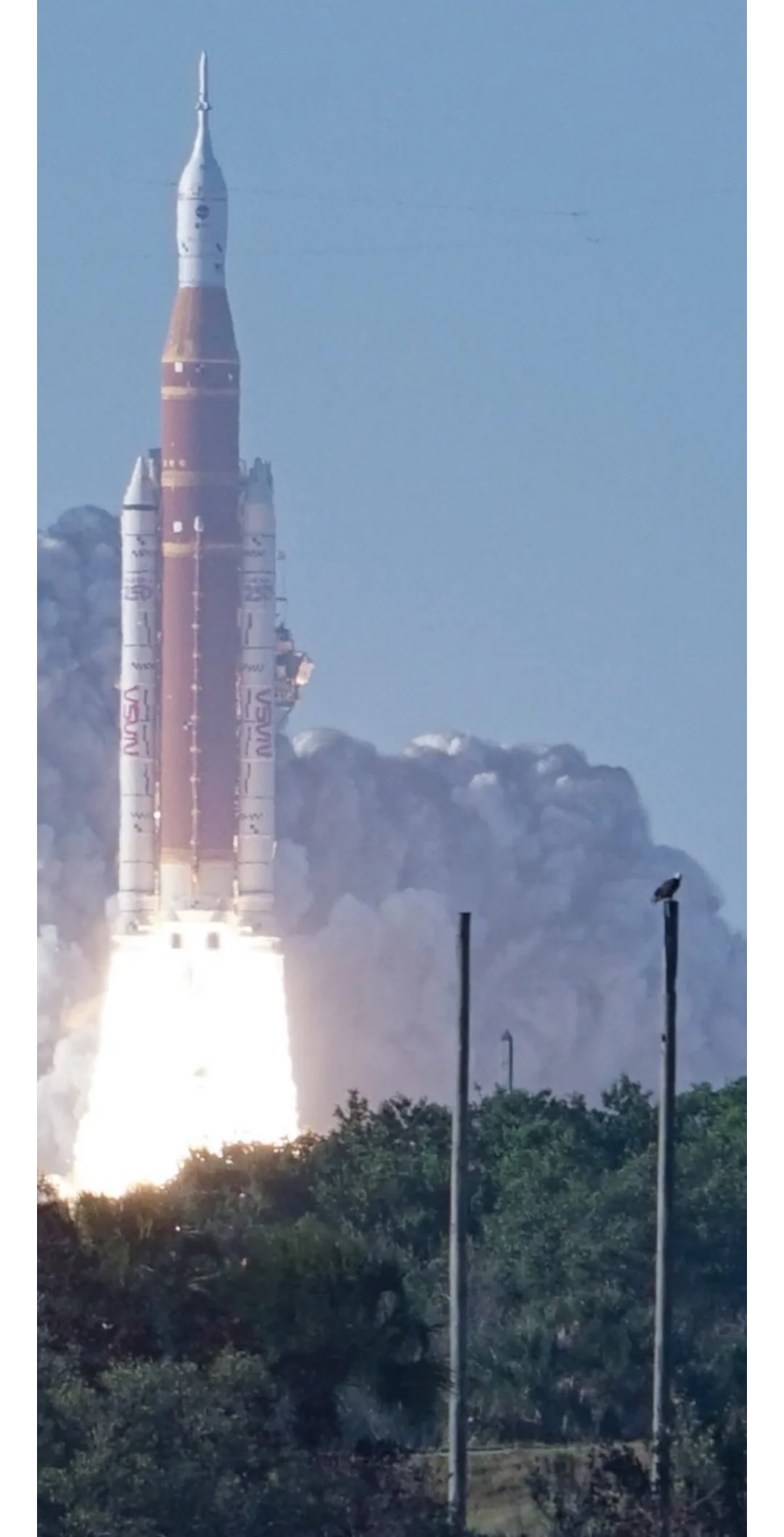
Given the gravity that attention to a new Space Race will generate, NASA could also play into the private-public partnerships in this space. Netflix is already getting in on the action by streaming the mission. Apple, another great American brand, should feel left out and find a way to get on board. There are some opportunities to recoup money via US business.
We Need China
The foil in the original space was the Soviet Union. Er, actually, in the USSR, the Americans were the foil. Years ago, I had a Russian student who explained that they are taught the Soviets won the Space Race because they had so many first. Us Americans usually mark the Moon as the finish line. Either way, we both pushed each other with differing visions of the future, but both with space as a key human cultural dimension.
When the Soviets launched Sputnik, the entire country freaked out that the US was being left behind in this Great New Space Race. It caused a jolt to public support of science and education through massive increases in funding for such endeavors. We need such support for research, science, and progress again.
Having a clear, respected, and notable rival in this endeavor. China must play the role of foil in this new era. Just as the Soviets scared us into funding science, we must believe that China is a credible and worthy opponent. A recent Ars Technica article already proclaimed, “China appears likely to beat the United States back to the Moon.” In some ways, I hope that they do beat us. Like in the first Space Race, it will mobilize the entire country to action.
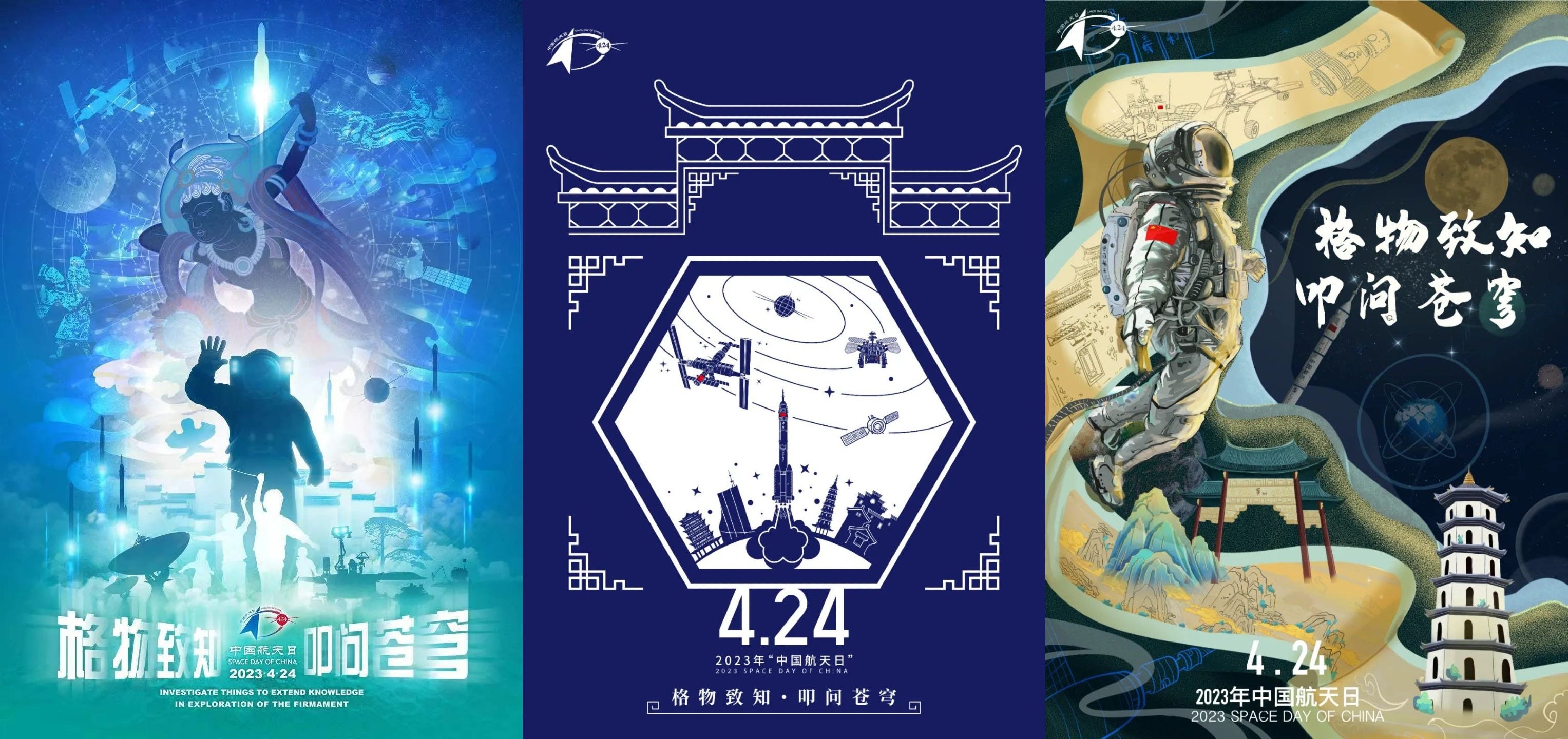
Given the appetite for budget cuts that has dominated the US in recent years, a new Space Race may again jolt support into research and development. After all, much of the national debt is centered on taking care of seniors. Very much the opposite of the first Space Race, which was young, exciting, and future-thinking. Those getting the lion’s share of US public investment actually felt the fruits of such educational spending in the excitement of the 1960s and 1970s. It’s time to turn back to the future, back to the kids, back to the space.
When the Soviet Union fell apart, the appetite for funding evaporated. The only thing that will bring back these sentiments is a rival seemingly beating us. It’s the old Flags and Footprints narrative. We lost the initial leg of the Space Race, but won the journey to the Moon in the end. The Soviets like to say that they won since they were the first, which just goes to show that its all about framing here rather than real fighting.
We need to ask Americans if they want China to be the first nation to go back to the Moon this Millennium, the first to establish a permanent base there, or, eventually the first to discover alien life. It’s a big universe out there. We need China to push our curiosity further than we are currently imagining.
The Naysayers
Unsurprisingly, given the negative national mood right now, there are some critical of the country’s space exploration aspirations. They often argue that we have too many problems down here on earth, we shouldn’t be wasting resources in the heavens. Our recent struggles to build infrastructures also factors in to these critiques.
I am sure there are pockets of Americans who simply do not like this recent space initiative because it was initiated under Trump. Yet, Trump himself has slashed NASA’s budget in the most recent proposal. But researchers have also found that historically Republicans have been better funders of NASA and space exploration in general compared to Democrats. So the new Space Race has both potentially detractors and champions from either side of the political aisle. The good news overall, Pew reported that “Republicans and Democrats have much in common in their views on the U.S. role in space and NASA’s priorities.”


Americans are simply sick of the astronomical high costs to do anything. High profile cases such as a simple bus stop ballooning to over a millions dollars or the embarrassing La Sombrita mare the perceptions of governmental capacity. High speed rail from LA to San Francisco seems less likely to be done in my lifetime than an actual moon base. Blue State governance has some blame in these negative portrayals.
All of the critiques miss that the impact of NASA innovations is not just to space exploration. There are a vast range of critical inventions that trace their evolution back to NASA: smartphone cameras, Global Positioning System (GPS), non-scratch lenses, Memory Foam, Modern Insulation through Space Blankets, CAT Scans, LEDs, water purification, baby formula, wireless anything, Jaws of life.


Space travel forces us to innovate in ways that we would never do on the ground. Necessity is the mother of invention. Human survival in the vacuum of space brings out the ultimate necessity. NASA has long recognized the importance to bringing their innovations to the broader world. The agency has run a publication called Spinoff since 1976, which highlights various technologies and their uses to mankind. Now it is just a website rather than a magazine.

During the post-War boom years. there was a belief that the government could do things, and do things well. The incredible feats of the Space Race proved this perception to be true. Even though there were still criticism of our space initiatives then, the general sentiment was that of excitement in this government-led project into the future. Simply abandoning that assumption is moving away from that American principle.
Proposal: University of the Moon
Since this is Space Race 2.0, we must now go behind the old “Flags and Footsteps” approach of just landing, planting the flag, and then leaving. NASA has already proclaimed the desire to establish a permanent moonbase. Forget critics asking if this is even legal, we need to colonize the Moon. A key part of the plan should be establishing the University of the Moon.
The Moon should center around a university. Moon University, another possible name, should be the most prestigious university in the world solar system, more so than Harvard, Oxford, or Beida. Admissions should center on some kind technical prowess and trajectory. The Best of the Best, just like NASA. But we should pull from the entire earth, even if still led and dominated by Americans
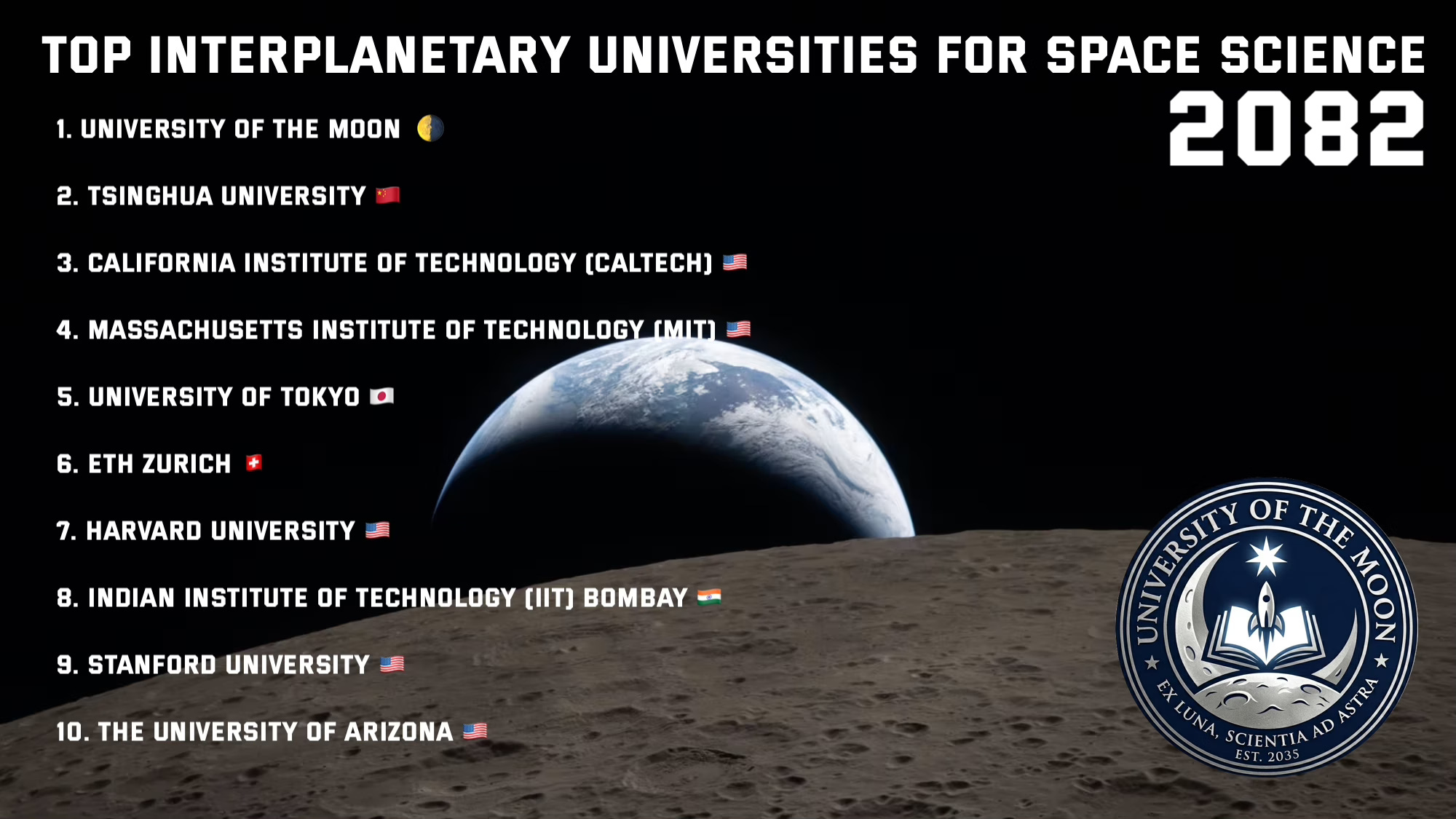
I understand a traditional campus does not work on the surface of the Moon, not with the technology of today. But universities are epoch surviving entities. What we establish today can have profound impacts human civilization—no different than John Harvard bequeathing his money to a school in a random outpost across the treacherous Atlantic Ocean way back in 1638. We are thankful for Harvard University today.

It should start small, run similar to some of the polar bases that we already have. But teaching and graduate student research should be key to fostering the next great space scientists. As the technology for livability improves, so too should students on Lunar State University (more name options). Hopefully, it could one day be a full standing free institution, a beacon of science and hope beaming down to the world. Just as 1638 is almost 400 years in our past, 2026 will one day be the same to 2426.
Commencing Countdown, Engines On
There might be some reading this who lament the idea of a Space Race. More competition may just drive us down the same troubled roads as the Cold War adventurism. But I would counter that it was not the Space Race itself that brought on Containment Theory, nor the Global Policeman of the 1990s, nor the War on Terror of the 2000s. These global entanglements have been a feature of US foreign policy since World War II. I think most Americans would prefer their tax dollars going to the Moon that they look up to every night rather than to bombing a country they cannot find on the map.
A new Space Race does not bring more war. Just like space cooperation did not end adventurism. I do not mind some cooperation. The International Space station as a site for collaboration is an important symbol for civilization. It has even been a site where we have overcome terrestrial quarrels in interstellar space. Carl Sagan’s Pale Blue Dot asked the world to reconsider the mutually assured destruction of the nuclear arms during the Cold War. We should continue this cooperation, just with some added rivalry.
Of course, the more the merrier. It’s not long just a two-man race. Instead, there are 60 other countries vying this time. India, the EU, and any other nation willing the suit up are all welcomed. We also have companies in the race this time, such Blue Origin and Space X. There will obviously be cooperation between the US space body, NASA, to the American private sector. But the lead should still be NASA as the national representatives. Those other entities are for-profit first, not country first.
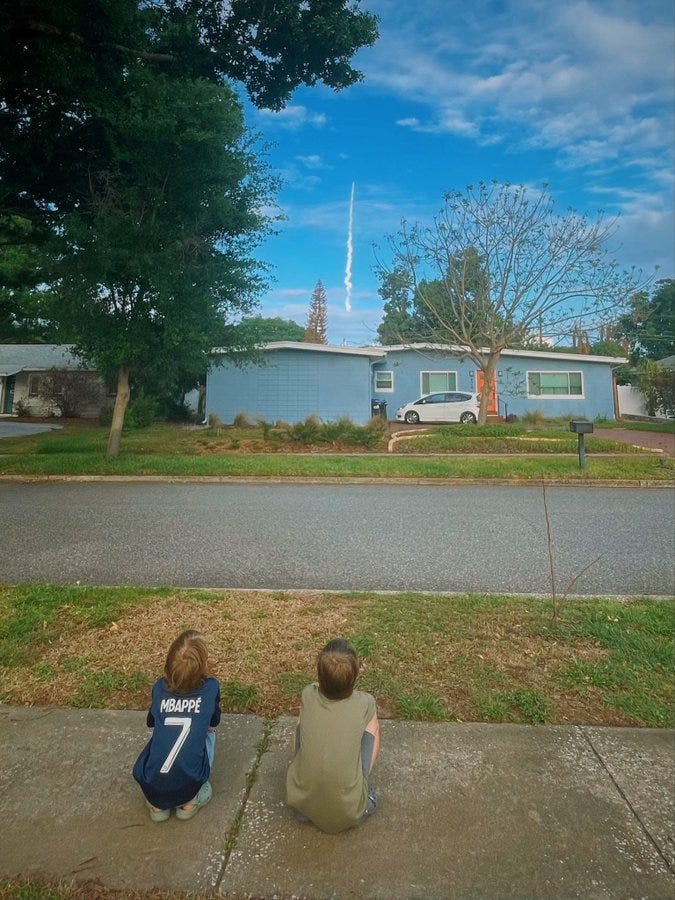
The central theme of the coming space exploration should be a race. There should be competition to juice excitement for science, technology, and human progress. It will fuel new bleeding-edge advancements in both the Chinese and American contests. The winners of the Space Race 2.0 will write the rules of space exploration for decades to come. Innovations from the race will benefit all of humanity.
The goal for Artemis II was 252,757 miles, beating Apollo 13’s distance record from 1970. We are finally following up on the vision of the future not unsurpassed in 56 years. The images coming out of this recent mission are already iconic, matching some of the majesty of the old Space Age. We should not lose this momentum; instead, we should press further.
Christina Koch, one of the astronauts on board, was quoted on BBC’s 13 Minutes Presents: Artemis II podcast, “The question is not should we go, the question is should we lead or should we follow.” Americans want to lead, they want to be first, they want to win the race. We can do it through science, technology, and educational funding led by the people’s owned NASA. This new Space Race can kickstart us out of our current national funk. Artemis II is just the first step.
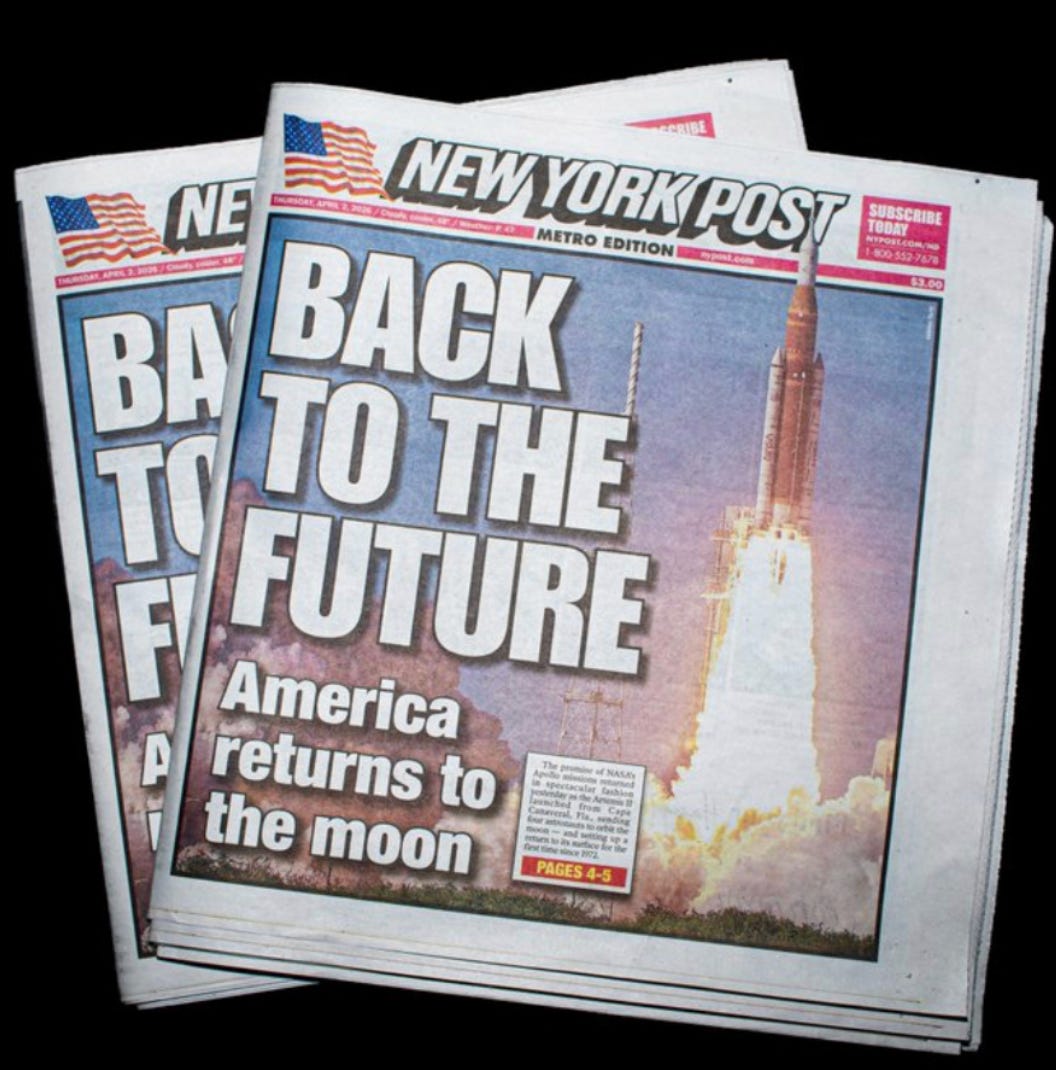
Even though the space race took place in the context of competition and the Cold War, I still think there was a humanist value to completing a tangible goal as a species. For some, it made it seem like we were all on the same team, and maybe we should not be killing each other.