


Note: Around the College Town is my weekly links roundup article on urbanism and education. These posts mostly cover news that may have fallen through the cracks rather than the big events.
Billionaires Revitalized Dead Colleges
This week it was announced that Jensen Huang, the Nvidia billionaire, and his wife, Lori, donated a $75 million gift to Vanderbilt University. The gift will not be going to the traditional campus in Nashville, Tennessee. Instead, this will go to fund Vanderbilt’s new art, architecture, and design campus in San Francisco, California.
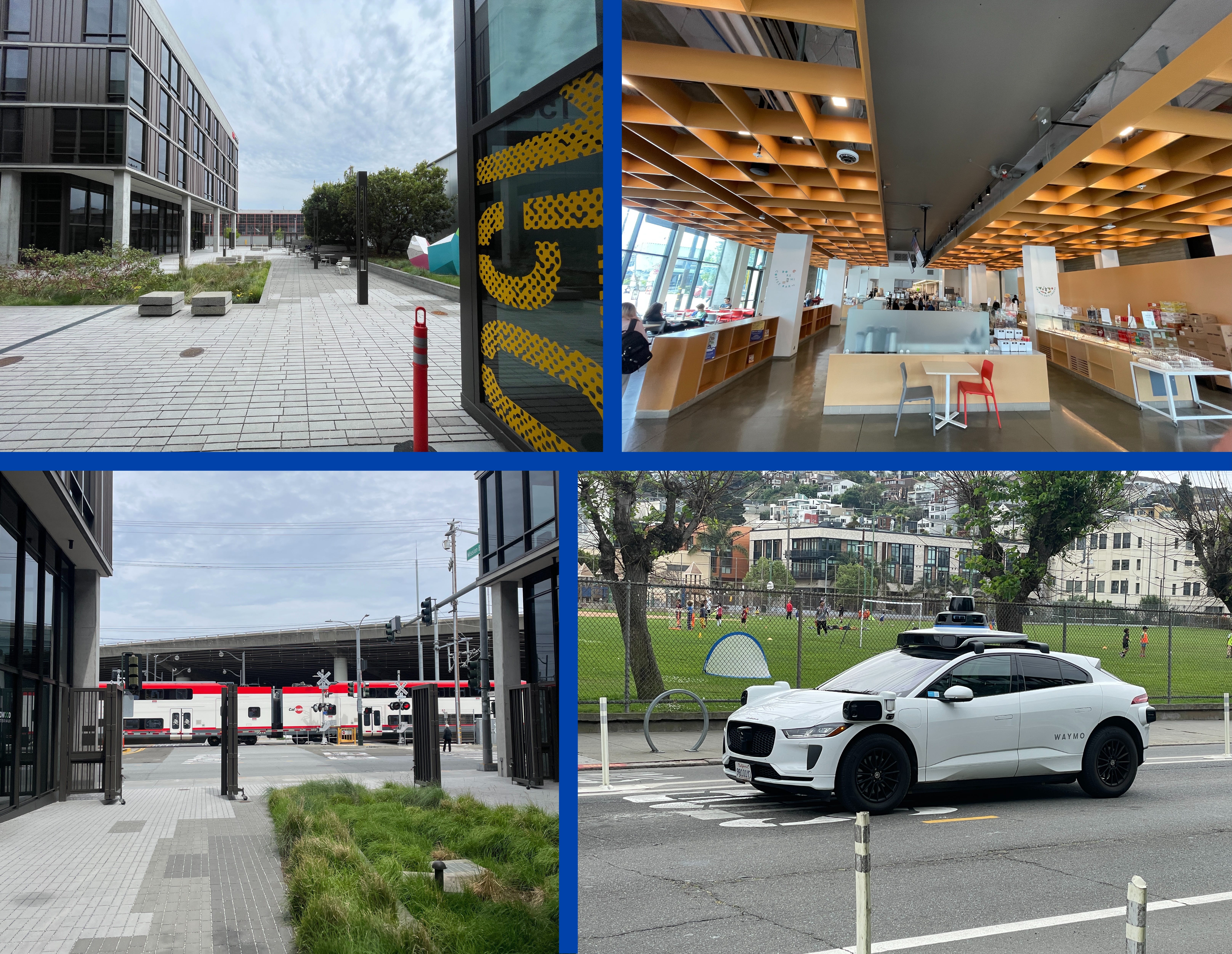
The site where the new Jen-Hsun and Lori Huang College of Art, Architecture and Design will be located is on the former campus of California College of the Arts (CAA), which is shuttering at the end of this upcoming academic year. The 119-year-old arts college struggled with enrollment and had a $20 million deficit. Vanderbilt agreed to buy CAA for an undisclosed amount earlier this year.
Importantly, this purchase is not a merger, nor even an acquisition. The institution formerly known as CCA will cease to exist. Vanderbilt has promised to keep some of the spirit alive by creating the “CCA Institute” and by keeping the Wattis Institute gallery open.
The CAA case is a wonderful location, easily walkable and bikeable in the booming city of San Francisco. Unlike some dying colleges, a lot of the campus space seemed like it was in good shape and recently refurbished. There is no doubt in my mind that with Huang and Vanderbilt leading the revitalizing, the campus will be a thriving jewel for the city and university.
Something Old or New?
Wealthy donors bequeathing colleges large sums of money is nothing new. These kinds of philanthropic efforts go back to the origins of higher education in the country with the likes of Elihu Yale and John Harvard. Vanderbilt is no exception, as Cornelius Vanderbilt, the railroad and transportation robber baron, made the initial donation to get the school up and running.
But perhaps a new emerging trend is not for upstart universities founded by billionaires, but instead revitalizing dead or dying college spaces. The most recent cases are alliances between the billionaires and strong universities. The Huang-Vanderbilt case is just the most recent. There have been others.
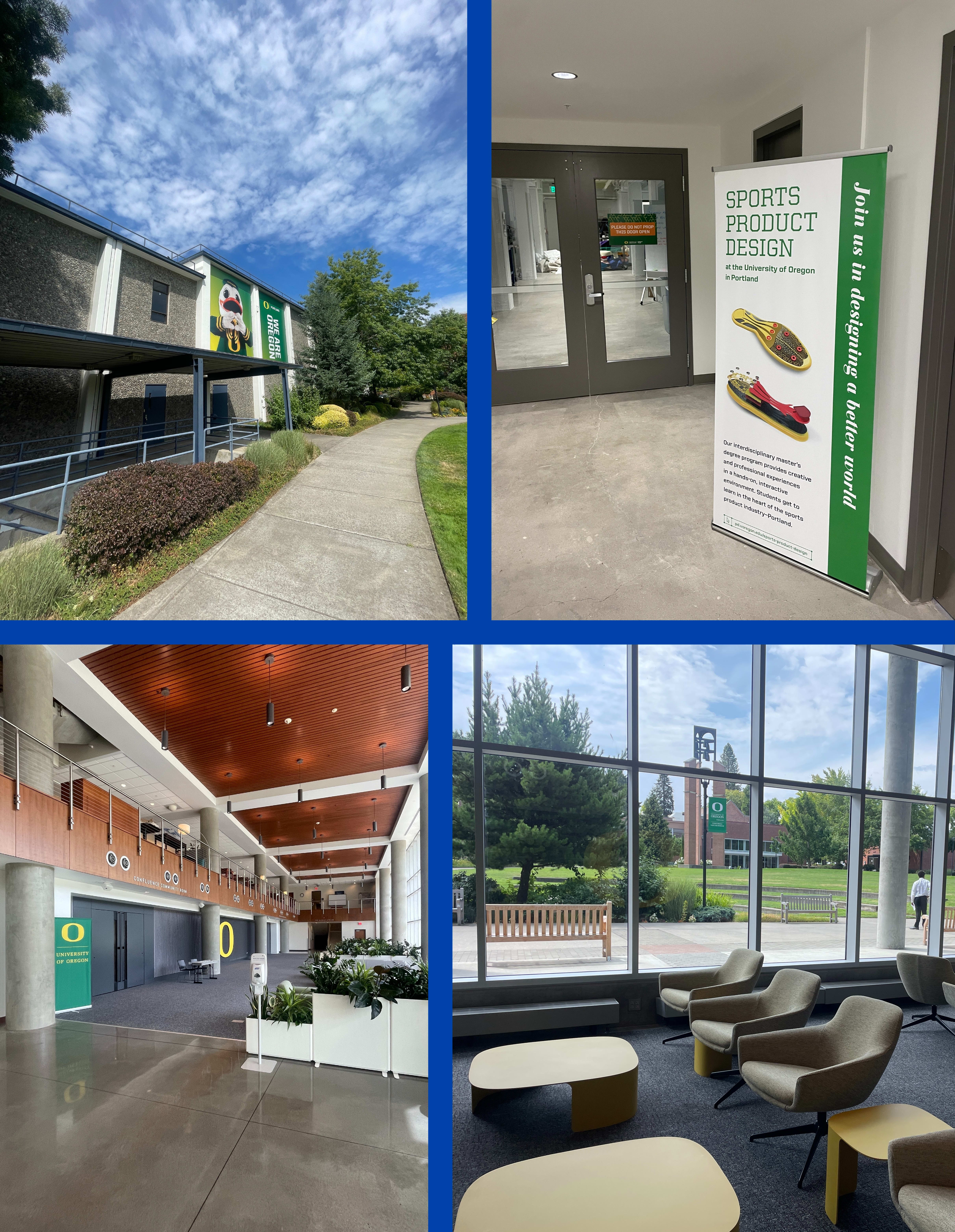
Steve and Connie Ballmer gave the University of Oregon $425 million, which helped to create and fund the Ballmer Institute for Children’s Behavioral Health at a new campus in Portland. The University of Oregon-Portland sits on the site of the former Concordia University, which shut down in 2020 after over a century of operations. I visited the new Portland campus, and it is one of the finest adaptive reuses of a defunct college that I have ever seen. Oregon invested some serious funding into the space, and it shows.
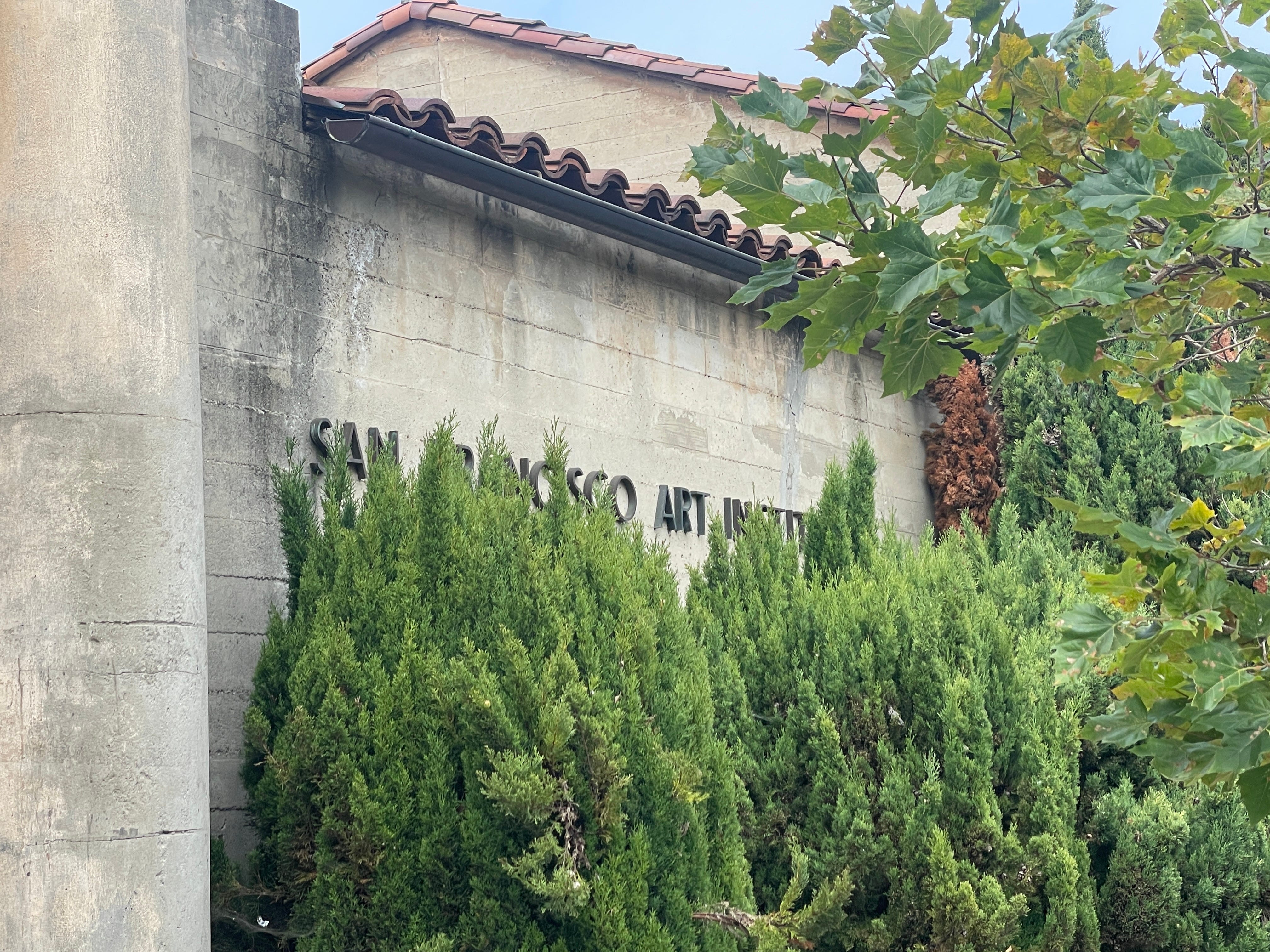
In another similar case, Laurene Powell Jobs, the widow of famed Apple founder Steve Jobs, funded a nonprofit that bought out the old San Francisco Art Institute. Rather than partnering with an established university, this new space will be called California Academy of Studio Arts (CASA), including saving the beloved local artist Diego Rivera's mural. It was in rough shape when I saw it last year, but I trust that Jobs will have the resources to revitalize the space.
Billionaires Can’t (or Won’t) Always Save Dying Colleges
Looking at this new trend, it brings up the question about billionaires possibly saving struggling colleges before they die. While this tactic has been tried, they do not always work. The Huang family had even formerly donated to CAA, reportedly up to $22.5 million. The gift was lauded as saving the college back when it was made in 2025. But in the end, the college still closed.
Hampshire College is perhaps one of the most famous institutions to shutter. The documentarian Ken Burns helped contribute to the fund that raised $55 million with hopes of saving his alma mater. Despite the efforts, the college announced its closure in 2026.
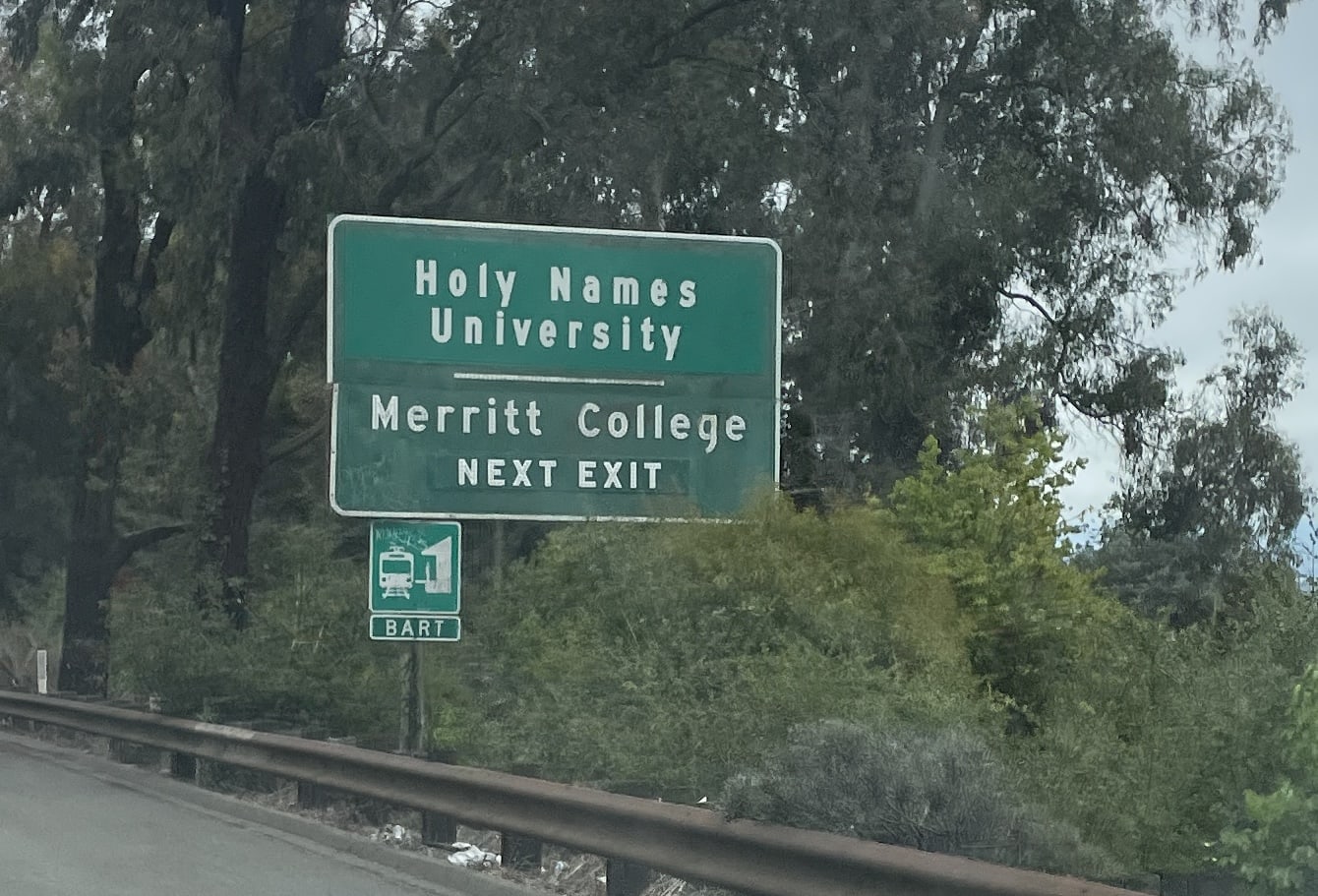
In a lesser-known case, Masayoshi Son, the billionaire Softbank founder, attended Holy Names College as an international ESL student before transferring to UC Berkeley. He even met his wife there! But he did not save the Bay Area college when it finally went under in 2023. He did donate to the Schwarzman Scholars Program at Tsinghua University, the powerhouse Chinese university.
Finally, I turn to Andrew Cherng and Peggy Cherng, the founders of Panda Express. Long before their Chinese chain restaurant empire, they were international students at tiny Baker University in Baldwin City, Kansas. While the college is still open, it has struggled in recent years. I always wondered why the Cherngs wouldn’t plop down a bunch of money at their alma mater, perhaps renaming it Cherng University. But they have only donated $50,000, as far as I can tell.
Instead, the couple and their philanthropic arms have focused on giving to stronger institutions. They gave the California Institute of Technology $30 million in 2017, the University of Missouri $5 million in 2024 (which is the master’s alma mater of the couple), Cal Poly Pomona $2.5 million in 2011, and even $450,000 to the University of Pennsylvania for the Panda Express Postdoctoral Fellowship in Asian American Studies.
Strong Get Stronger
I think the appeal for these billionaires in reviving a dead campus is to start something new. But by going through an already-established university, it gives more cachet and increases the chances of success. After all, a lot of namesake university patrons never lived to see their creations reach great heights. Leland Stanford Junior University wouldn’t become the Stanford we know today until the tech booms in Silicon Valley.
These revitalizing efforts have largely centered on campuses in or around major metropolitan areas. While this trend may give hope to communities with dead colleges, I think that spaces in rural areas will be a much harder sell. It takes some serious deep pockets to make these revitalization efforts work. Expect more of this in so-called “Superstar Cities” like New York City, San Francisco, LA, or Miami, not in small towns without the cachet.
These trends are just part of the Age of Conquest in US higher education. The biggest get bigger, the weaker wither away. I also extended to competative nature to broader American society in an adaptive version for The Chronicle, which helps to explain why billionaires prefer to partner with the top institutions. These recent cases probably warrant a deeper investigation into the broader landscape of philanthropy in higher ed and beyond.
Video by me.
Links I’m Reading This Week
Education
NYU Tokyo? New York University is discussing the possibility of a new branch campus in Japan. My guess is that this does not happen, but rather a smaller study center. It will cannibalize too much of the NYC Shanghai appeal.
In other New York news, a New York state school district is getting a robot teacher. I do not foresee these replacing us anytime soon, but it is an interesting development nonetheless, especially with the dueling forces of defunding and anti-Ed Tech sentiments.
BU agrees to give the city of Boston over $100 million. Non-profit universities do not pay taxes, so sometimes they are seen to leach off of public service. These kinds of deals are becoming more common.
Over in education housing news, Santa Cruz cannot retain teachers due to housing prices. It is a common problem in high-cost-of-living California. Some districts have even opted to build teacher housing. I wish we would just build more generally.
In higher ed housing news, A two billion dollar student housing development is coming to the University of Florida.
Columbia University buys beautiful gothic dorms. Funny enough, the building was formerly Union Theological Seminary, which is a Columbia affiliate.
Loyola Chicago may turn a shuttered Catholic school into housing. These types of adaptive reuse cases are rising as more schools shutter.
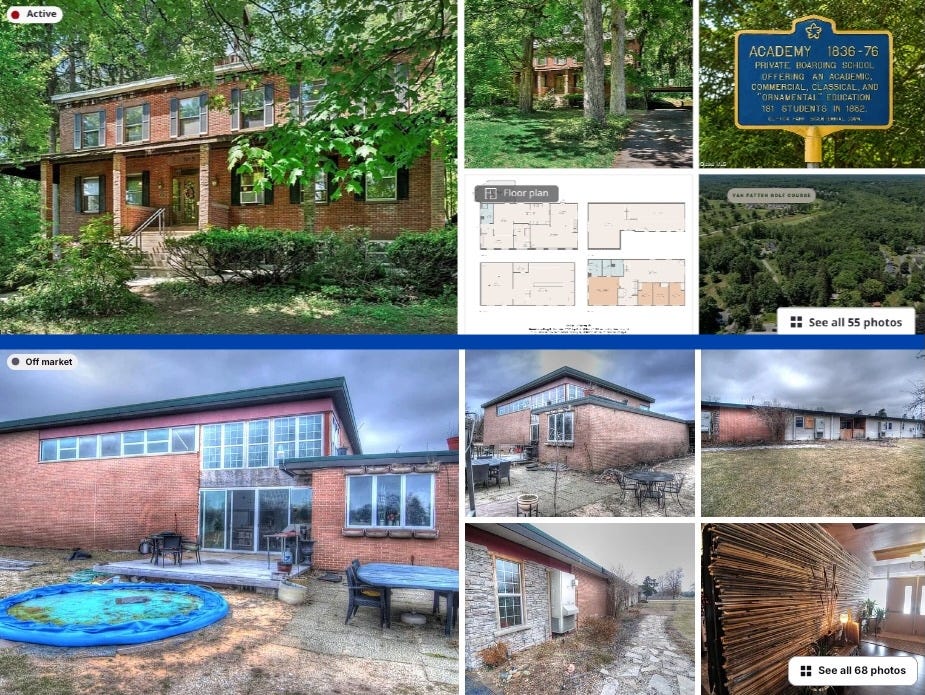
Even regular people are getting into the adaptive reuse in this space. Live in an old boarding school or shuttered school. Both are quite reasonably priced.
On the other end of the spectrum, if you have 17 million sitting around, you can buy Thomas Jefferson’s childhood home. I would love to see it turned into some kind of living museum or educational center.
Urbanism-ish
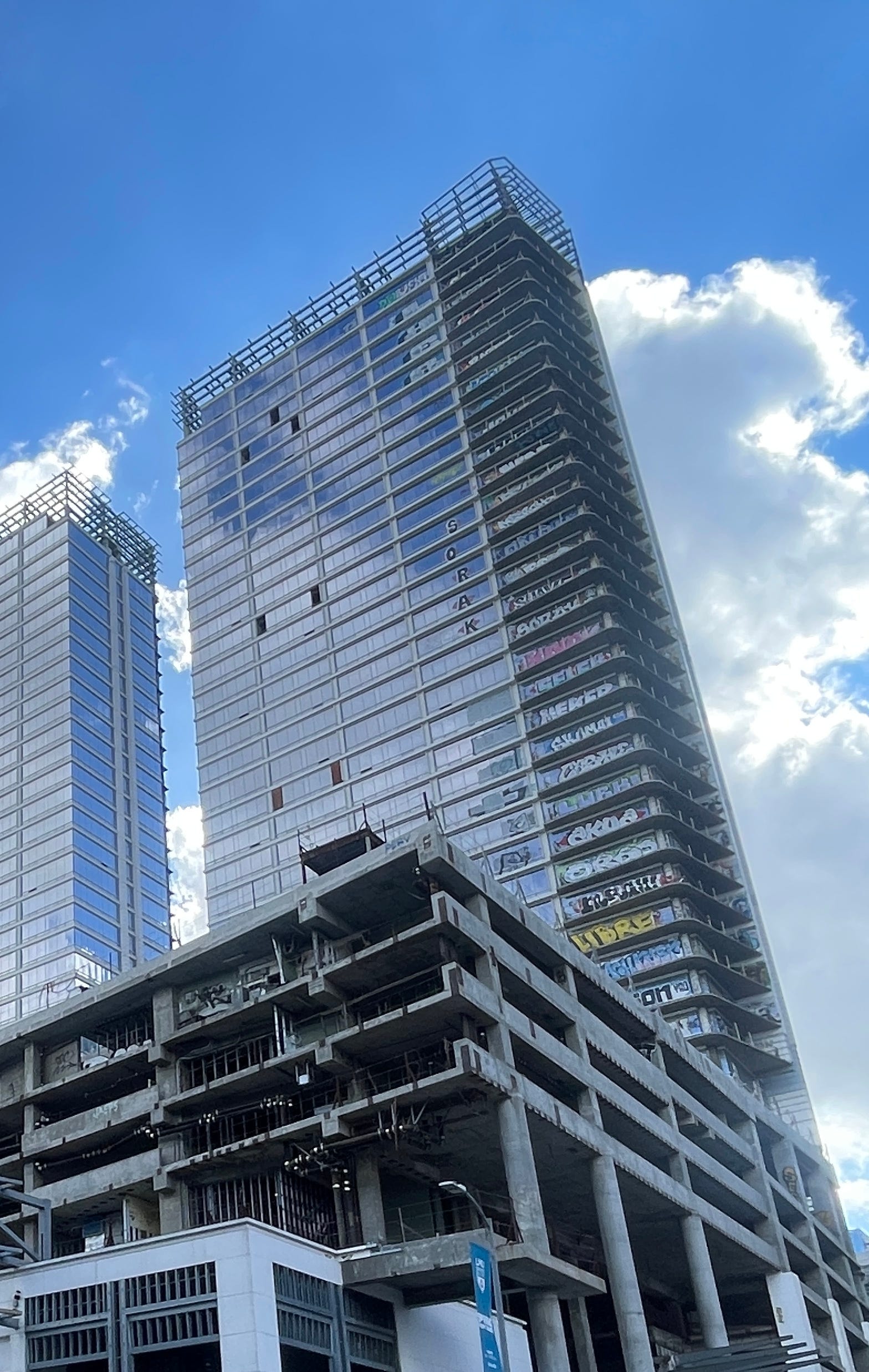
LA might finally rid itself of the graffiti towers. It’s embarrassing that the locality has allowed it to languish this long. Poor governance.
LA Mayor wants transit system to be free. I am already on record as anti-free buses. A more efficient and frequent system is a much higher priority. LA does not have this.
We don’t have to accept a poorly run Los Angeles. LA is trying to build more bus stop shades to prepare for the Olympics. I’m glad we are getting these, but it’s kind of sad that it takes hosting a global event to make it happen.
One local writer makes the case that a denser LA doesn’t have to be an ugly one. Hear, hear!
Finally for the LA news, if you are so sick of the city, then how about hitting rural California? Gold mining is becoming hot again in the state.
Switching gears from my current home to my former home, OKC might get a commuter rail system. The renderings look great. This would be a huge boon to the area.
In self-driving car news, trial lawyers are against self-driving cars because they make so much money from car accidents. Disgusting.
Likewise, Uber is trying to slow down the adoption of self-driving cars. I guess they are falling behind the race between Waymo and other industry leaders, so they are looking to slow down progress.
Closing Time… Sweep Your Own Bike Lane
Guerrilla urbanism (or tactical urbanism) is when people take over duties from localities to fix streets, roads, and other public infrastructure. Sometimes, these acts can get people arrested. Nonetheless, the dereliction of governments leads people to become vigilantes with efforts to clean up bad urbanism.
I recently found a new company selling do-it-yourself bike lane sweepers, aptly called Bike Lane Sweeper. These can easily be hooked up to a bike and then driven over a bike lane, removing various debris from the path. The costs range from $3,100 to $5,500, including a hybrid upgrade. The company targets bike and urbanist advocacy groups who take on this guerrilla urbanism. But they also hope that municipalities will take interest, too.
The BikeLA subreddit cued me onto this new company. A local outfit called Bikerowave Coop has a Bike Lane Sweeper in its arsenal, clearing out streets on Venice, from Lincoln to Sepulveda, major bike thoroughfares. The poster even offered a review of the product in the comment section, and organized by me below.
Pros:
“There is no competition, there’s literally nothing else I can do… for this size and weight.”
“It’s actually kind of fun to use, and he gets a ton of people engaged and happy that somebody’s doing something about the problem.”
“It can be towed behind, literally any bike, as long as you keep it under 10 mph.”
“…taking up minimal space.”
Cons:
“A new one is pretty damn expensive.”
“You can’t pick up bigger objects like a fast food container cup, or other larger objects that can’t fit under the front of the unit.”
“It can’t handle several inch deep debris in one pass, you’ll have to come back and do a couple passes on the deep stuff”.
“It kicks up quite a lot of dust.”
“It’s not good at catching every single thing on the very edge of the curb.”
So what do you think? Is the Bike Lane Sweeper the answer to much-neglected bike lanes in the country? I definitely would like to see more of these operated in my area. Universities, too, could have a few of these to clean up parts of campus.