


Note: Around the College Towns is my weekly links roundup article on urbanism and education. These posts mostly cover news that may have fallen through the cracks rather than the big events.
I’m still in the Halloween mood with this one. Make sure to read last week’s full article on the holiday:
Where Are All the Trick-or-Treaters on Halloween? They Were Never Born

All those kids who would be knocking on your door this Halloween were never born.
Haunted House Adaptive Reuse Corner
This week on Adaptive Reuse Corner, I am leaning into the Halloween holiday. Rather than asking you your favorite adaptive reuse, I am polling for the spookiest adaptive reuse. Think about it as the place that would kind of freak you out to sleep over. I’m calling this week’s edition the Haunted House Tour.
Just to recap the previous edition of Adaptive Reuse Corner, we have our first tie. As the host of this show, I am going to be the judge in the tie-breaker. To continue our Halloween theme this week, I’m going with the old Masonic Temple. That place would be one to see a possible ghost.
This Haunted House Tour of Adaptive Reuse Corner is ordered from most expensive to cheapest. Unlike in previous editions, I am going to limit myself to just five for this spooky competition. That is the max number of choices on Substack polling, too. On to the nominations this week…
First up is a former opium den in San Francisco, CA. This place might look fancy, but it has a pretty haunted history. Along with the drug use, it also acted as a brothel at one point. Obviously, the place has been refurbished since those days. According to SF Gate, the mansion has been featured in the Netflix mystery drama The OA. You can live your own murder mystery for just $25 million


Next up, we have a bed-and-breakfast in Denver, CO. This Victorian mansion built in the 1890s is home to the iconic Lumber Baron Inn. The site of a double homicide, locals think the place is haunted. It was also featured in the Netflix paranormal reality show 28 Days Haunted. If you have always dreamed of being a proprietor of a creepy inn, à la Psycho (1960), then this one can be yours for just under $3 million.


Continuing onward on this haunted house tour, I now bring you to a church in Cincinnati, OH. Built in 1866, the Gothic Revival architecture features cathedral ceilings and stained glass windows. The old church organ also remains. It is certainly a wonderful remodel, but some of the features make me think the owners may have been a secret vampire coven. Why would you paint the entire thing black, and what is up with the arrangement of the chairs?! This is the perfect kind of macabre for What We Do in the Shadows, a steal in that neighborhood for just $1.2 million.


We now come to the lower tier with a convent in Butte, MT, at around $750K. A brick structure built in 1917, the space has been a convent, school, and domestic violence center. Funny enough, the property is being sold as a single-family residence because the city denied an application for it to become a coding academy. ‘The Monsters Are Due on Maple Street’ in the form of your NIMBY neighbors. One is quoted: “Parking to this day… it’s a nightmare in the area.” The NIMBY Halloween parodies write themselves.


Finally, we have the most affordable housing option on the Haunted House tour: a former church in small-town Arkansas, priced at under $40K. I cannot find much information on the church itself. The conversion is a little rough, but it has apparently been converted into a five-unit apartment complex at some point. It looks to be in the middle of nowhere, down a long, narrow, creaky road. It gives off some real Texas Arkansas Chainsaw Massacre vibes. Be warned.


Which one of these is the spookiest adaptive reuse? Comment below or vote in the official poll on my Notes feed. Happy Halloween!
Links I’m Reading This Week
Education
GamblingPrediction platforms are opening up bets for admission rates to top colleges. Cue up a future higher education scandal in 3…2…1…Bryan Penprase has recently joined Substack. He’s posting about the future of higher ed.
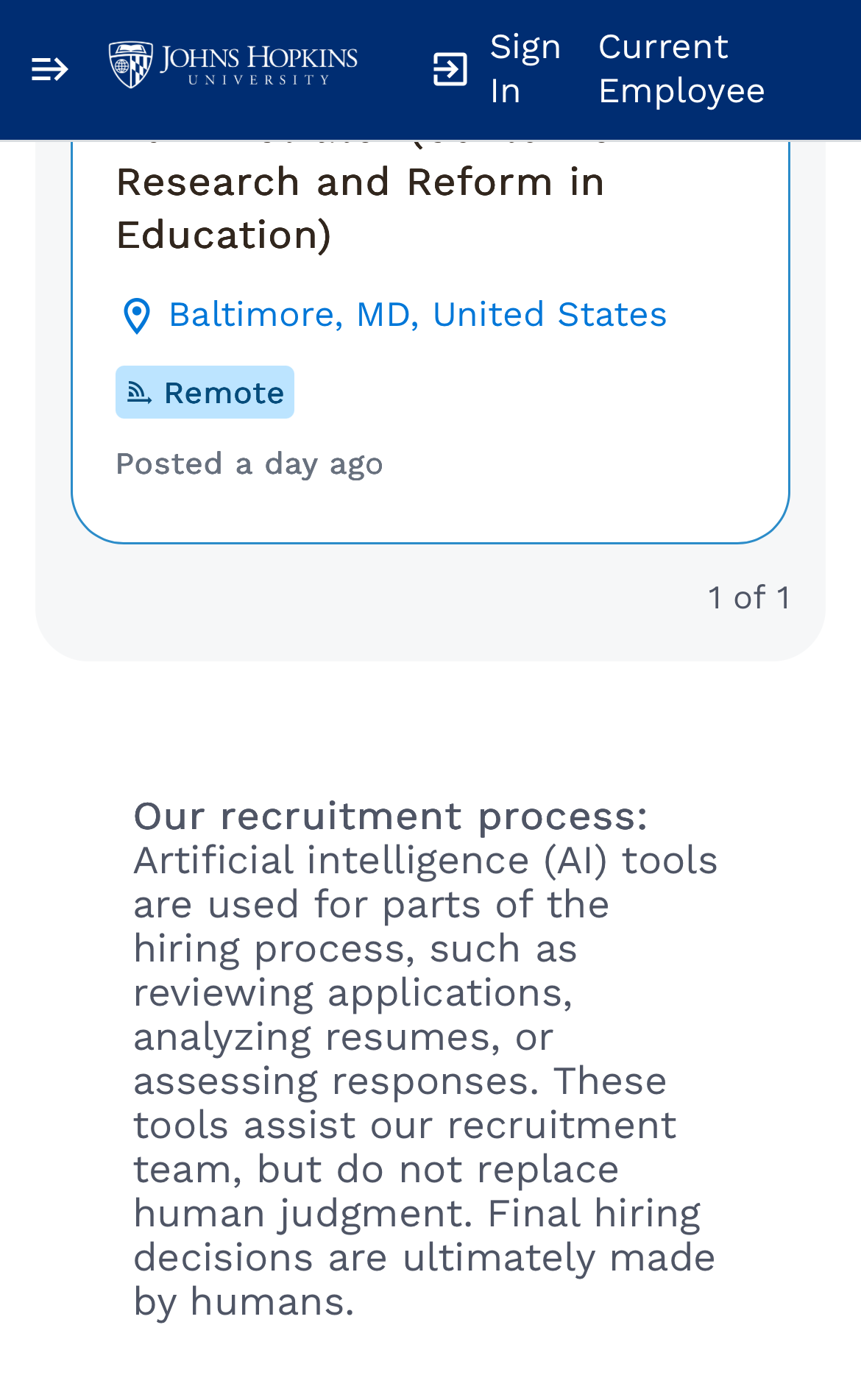
I often pass along jobs to my students that I see posted on social media. Interestingly, this week I spotted one from Johns Hopkins that disclosed that AI would be used in screening. I’m glad they are admitting this, but I do not like the trend.
In student housing news, some students at UC Santa Cruz are reportedly living in garages. I guess that’s better than in your car, but not by much.
More from California: new laws in California mean more student housing around colleges and universities in the state. NIMBYs are probably losing their minds.
UCLA student newspaper rightly blames city government/ Karen Bass for the housing crisis. Love this message from the author:
UCLA might be an easy target for student grievances, but that doesn’t mean it’s the correct one. Students must shift their complaints to our elected officials and the broken system they maintain.
There are similar stories across the country: a dumpy, run-down building near new BYU could become housing. But the local community is concerned with… surprise, surprise… parking.
Residents of a Philadelphia suburb who live next to a college are frustrated by student activity, so they passed a local ordinance targeting student housing. This is Villanova’s new campus, but the space has long been a university, as the university just replaced Cabrini University, which closed recently. Not very neighborly of the neighbors.
In another campus newspaper article, a student at the University of Houston complains that their dorms are way overpriced for what they get. This is an issue with modern higher ed. Dorms are considered a prime revenue source. So sometimes students get squeezed.
Colorado Mesa University received a massive $10 million donation specifically focused on expanding on-campus housing. Cool to see a big donation that isn’t to the latest trend (looking at AI initiatives) and instead to the meat and potato operations of a university.
Mass timber construction seems to be becoming a trend in the student housing space. They seem to look nicer than what is typically built, so that is welcome
A dead college campus in Wisconsin may be getting affordable housing. This is a growing and welcomed trend. Just got to get past the regulations.
In more closed college news, people are salivating at the entire campus in Michigan is up for sale. It looks nice, but be careful out there, guys!
Three administrators connected with a now-defunct college are indicted for allegedly stealing $20 million. I always hear about possible corruption regarding college closures, but this is the first criminal case directly tied to a college closure I’ve seen.
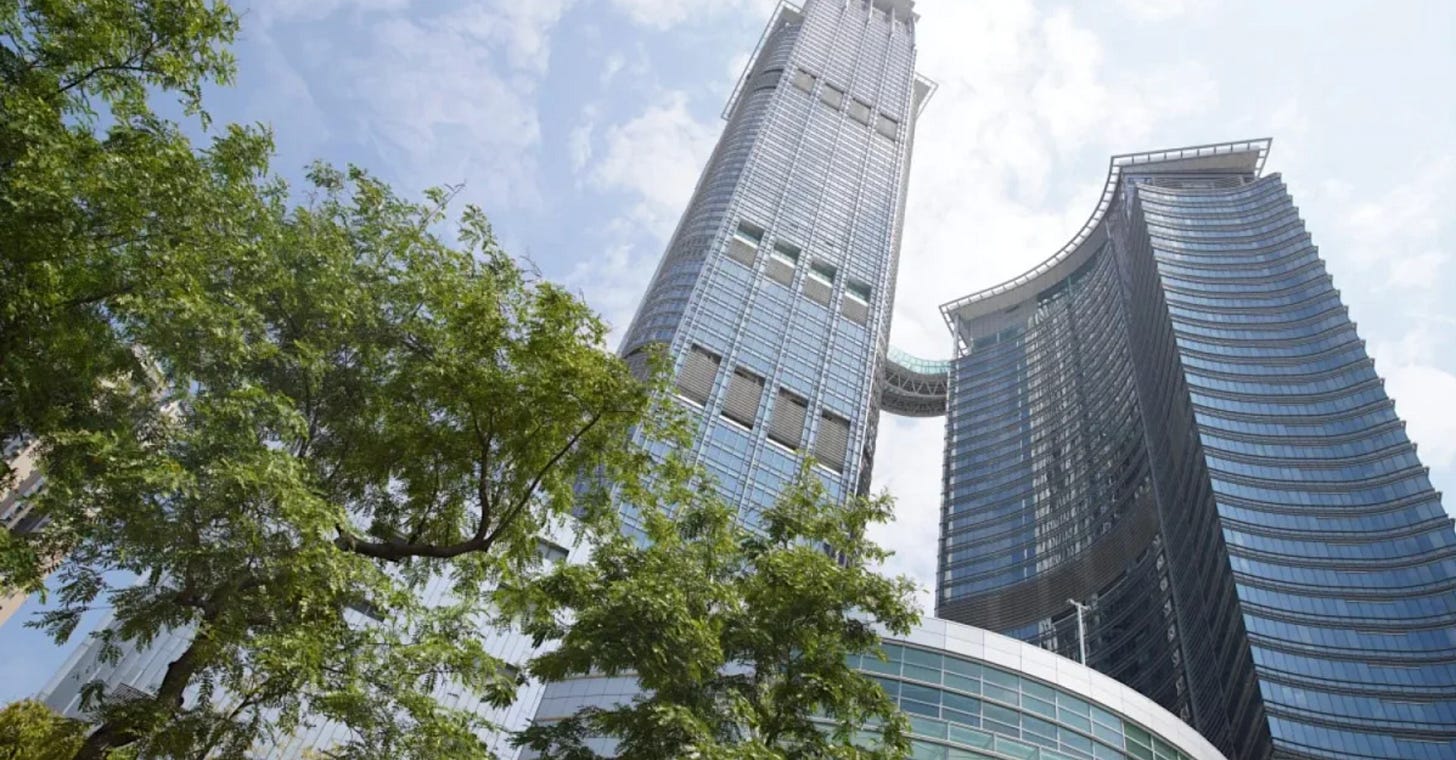
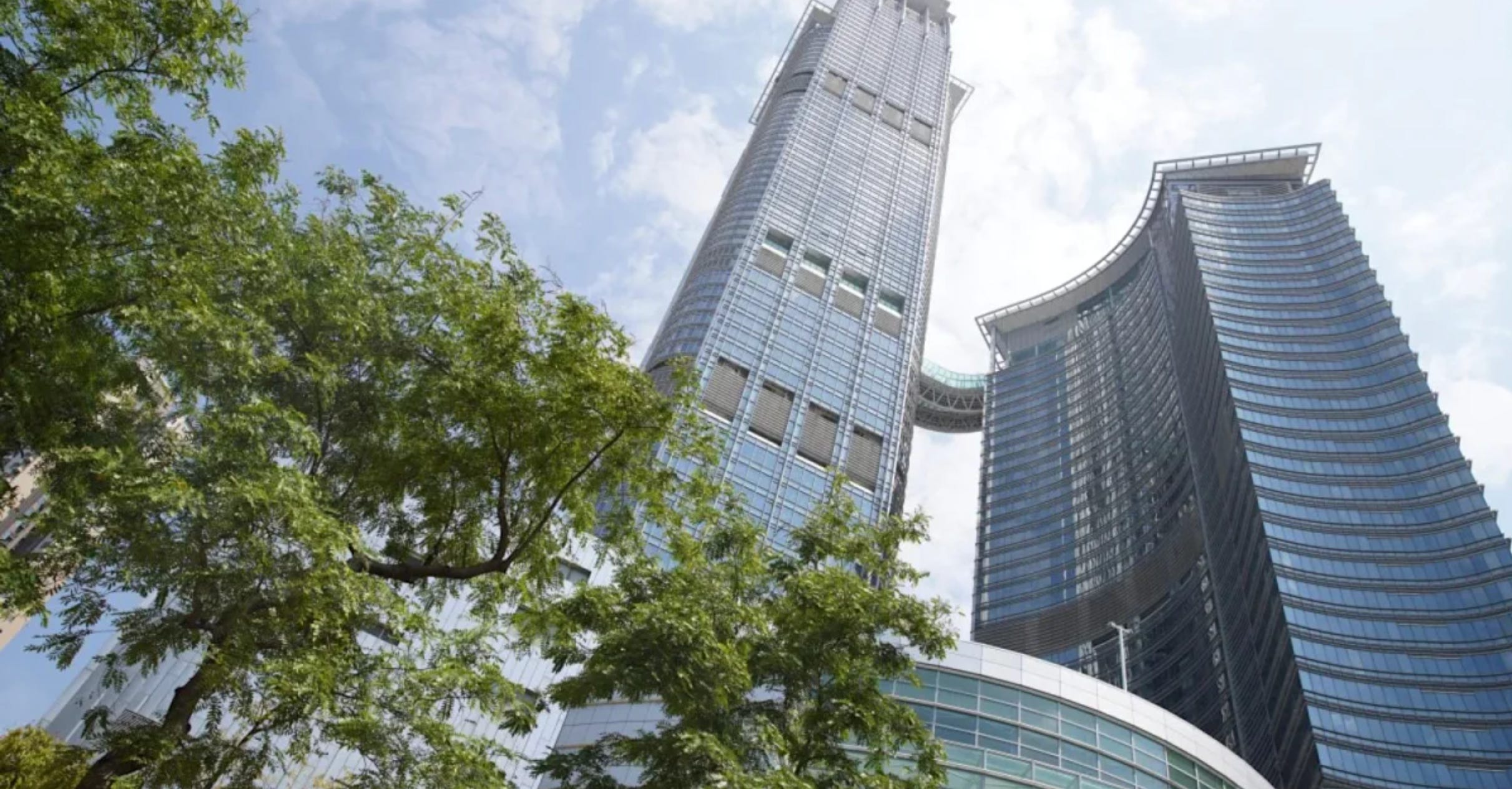
Looking abroad, a luxury hotel in Hong Kong becomes student housing. Wow, it would be pretty cool to live there.
Japan’s women-only universities are switching to co-ed due to population struggles. We have already lost most single-sex institutions here in the US. Few, if any, will be around in 40 years.
Dorms in Senegal use local vernacular design to be flexible to student needs. Simple yet look pretty nice for students.
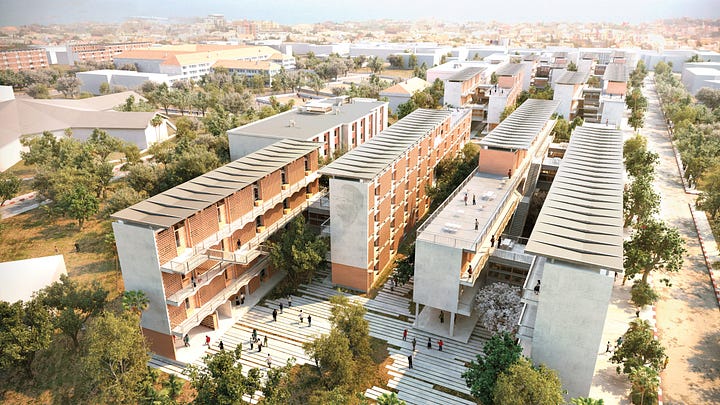
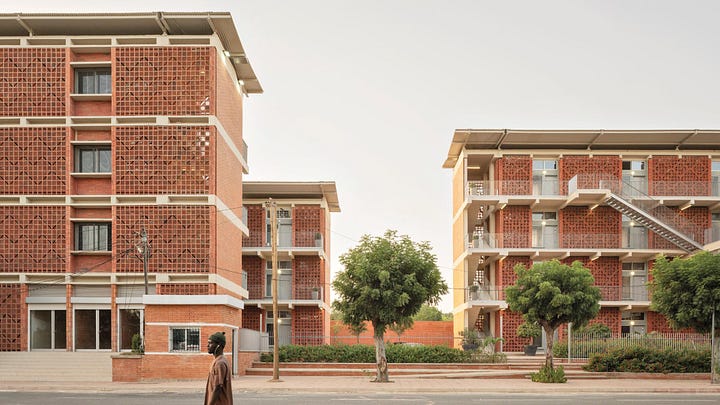
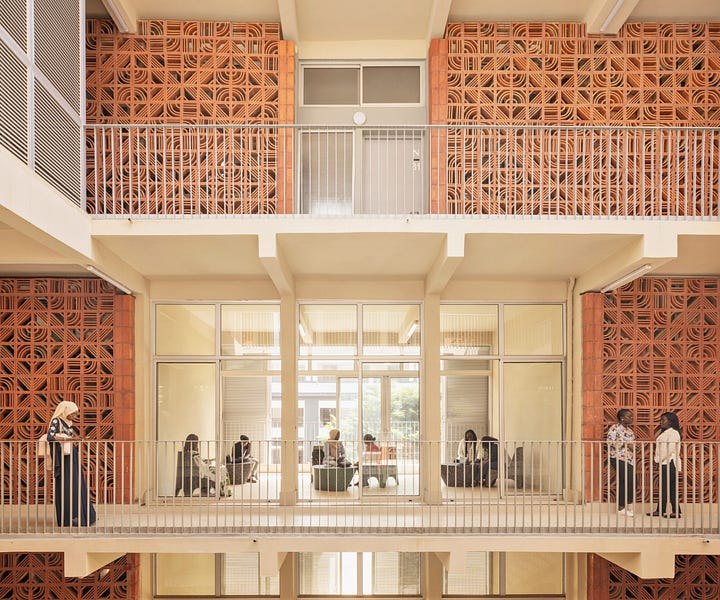
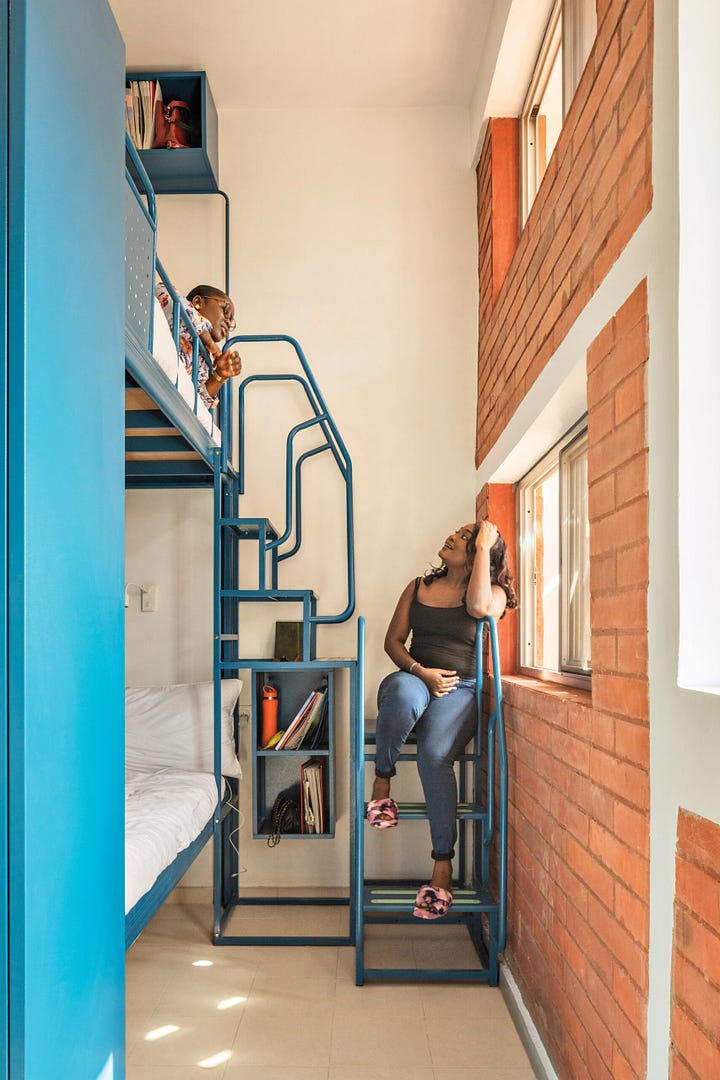
Dorm at Cheikh Anta Diop University by Hardel Le Bihan Architects Urbanism-ish
useful.bike showcased the 2nd Annual Spooky Ride. I love it. We have to make sure Halloween doesn’t become a driving holiday.
Andrew Burleson at Free Range City offers a way to make suburban neighborhoods better for kids and families: just put the cars in the back. Agreed, I’ve long thought we should bring back alley parking. Driveways and garages kill neighborhood connection.
Millennials vs. Boomers is like some eternal Batman vs. Joker war. Fortune outlines the latest battle in the war, with housing taking center stage in this recent battle:


Baby boomers are setting up a showdown with millennials, aging in place and plunking down hundreds of thousands on renovating their homes
Ryan Puzycki on the City of Yes discusses how California cities try to get around new laws that are targeted at building more housing. Basically, localities are attempting to break state law with obstruction.
Some are fighting the good fight. Michael Natelli of BUILDPLACES released a new platform for connecting builders across the country who are contributing to better urbanism. I see some familiar faces that I know here from Substack. Cool project.
I am also flagging a new book from the Rural Indexing Project. Just some good old-fashioned Americana with this one.
 Rural Indexing Project@ruralindexingWe made a book! RURAL INDEXING: A COLLECTION OF AMERICAN BUILDINGS, SIGNS, AND SYMBOLS arrives from Rizzoli in March 2027. Our favorite themes & subjects from the 1000s of places we've visited since 2010—450+ pics, many never published before. Preorder: linktr.ee/ruralindexingp…
 7:45 PM · Oct 23, 2026 · 19.1K Views8 Replies · 61 Reposts · 596 Likes
In some more rural development news, Japan’s Fujitsu is building a quantum computing research facility in New Mexico. Good high-paying jobs in research and operations will follow along.

In transportation news, why are women so against self-driving cars? as reported by Jerusalem Demsas in The Argument. I don’t really understand why this is a gendered issue. I guess I need to investigate more on the topic, given my own affinity for the tech.
Relatedly, Chicago is expanding a program that auto-tickets drivers blocking bus and bike lanes. Good, get these bums out of the way.
Back in California, the LAX People Mover is getting delayed again due to “technical challenges.” Can we just fire this company and bring in the Chinese?
 Ken Layne@KenLayneThey’ve fried the LAX “people mover” before it ever started service.

 Michael Baylor @michaelbaylorImage from Reddit showing 1 of 3 electrical arcing events during testing of the LAX People Mover after $5B in taxpayer money for just 2.25 miles of track. No opening date in sight. Where is Karen Bass? https://t.co/c4Hwr9sJE7
 3:48 AM · Oct 18, 2026 · 238K Views25 Replies · 104 Reposts · 2.83K Likes
Speaking of places with good urbanism abroad, Seoul is getting self-driving buses. This is another reason why urbanists shouldn’t be afraid of AV tech. It should make public transit easier and better.
Northwest China received so many tourists during a recent holiday that local tourism authorities opened school dorms to travelers.
But some young Chinese tourists have become jaded by the low-quality tourist-trap souvenirs, according to Andrew Methven on Sinica.
Joe Baur of Without A Path chronicles his trip on Uzbekistan’s new high-speed rail. The richest country in the world is getting out-built by Uzbekistan!
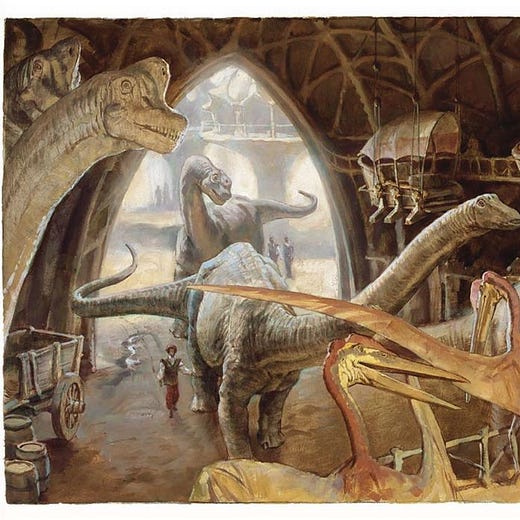
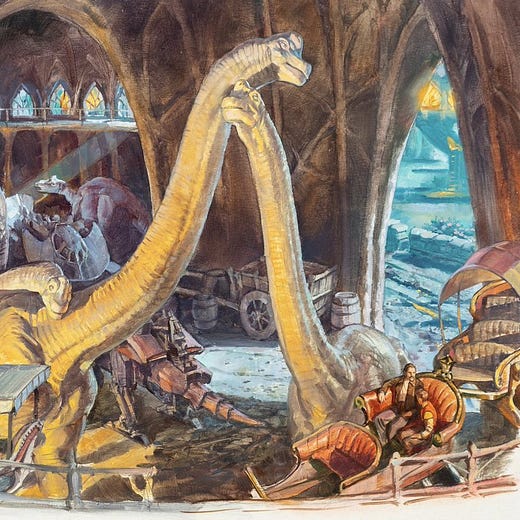
In some random news, the writer and illustrator of Dinotopia, James Gurney, gives a behind-the-scenes look at his creation on his Substack. I always loved this series as a kid; the world-building and design are just incredible work. It’s cool to be able to connect with the creator here.
 James Gurney@GurneyJourneyAfter a day out, how does a Dinotopian dinosaur spend the night? open.substack.com/pub/jamesgurne… @HeritageAuction

 12:10 PM · Apr 16, 2026 · 22.4K Views9 Replies · 97 Reposts · 820 Likes


Closing Time… Digital Archive of Book Photos
I am always looking for interesting and fun photos that I can pair with my Substack articles. I usually like to use my own photos or graphics. Sometimes I search through old books and magazines to find them. This new tool lets me do both at the same time.
The tool is called the Inside Out Library, a free online archive of historical illustrations, diagrams, or other imagery. All of the included images are in the public domain, at least according to intellectual property laws in the US. I spend a lot of time just searching and scrolling with various terms of interest.
The author posted it on the r/publicdomain subreddit, which I connected with when I wrote about Tintin entering the public domain a few years ago (along with the legal dust-up to my article). The poster mentioned that they used to work for the Internet Archive, though this is not officially connected with the group.


The creator describes how the Inside Out Library works as follows:
I only include books the holding library marks as public domain or “no known copyright restrictions”, or that were published before 1931.
Every image page shows the source’s rights statement and links to the library’s record, so you can check it yourself.
Over 99% of the images come from books published before 1931. Most of the rest are US government reports.
The site pulls from images inside scanned books via the Internet Archive, the Library of Congress, the British Library, the New York Public Library, museums, and more. It hosts around 1.7 million images so far. This is a lot of fun. I found some cool Halloween-themed images, which made the cover of this post. I will likely continue using it for future articles, too. Try it out. What did you find?