


Note: Around the College Towns is my weekly links roundup article on urbanism and education. These posts mostly cover news that may have fallen through the cracks rather than the big events.
The Department of War’s War on Universities
The US Department of War released a public memo announcing a probe of 30 universities for “unauthorized technology transfer, intellectual property theft and adversarial exploitation.” The memo called for these institutions to do “immediate and comprehensive reviews of their academic, financial and research collaborations with foreign entities of concern.”
The Department of War cites an ongoing investigation into broader academia through a so-called “adversarial influences infiltrating” American universities. In particular, the “rebranded Confucius Institutes” have been flagged. The US has long been concerned about those cultural diplomacy programs connected to the Chinese government, with most of them being shuttered.
Now, I do not have a problem with military and intelligence agencies attempting to protect the country from actual threats. However, these efforts by the current Department seem just lazy and uninspired. It appears that the brass has just control-F’d Chinese or Russian institutions from the websites of various American universities. That is not intelligence.
I was also thinking that perhaps this was just retaliation against elite institutions that are seen as the enemy by the Trump administration at large. But that is not the case, as many of the Ivy League schools are missing, and places like Northeastern State University in Tahlequah, Oklahoma, are included.
I have already written about my qualms with the administration’s “New and Improved Portal for Universities to Report Foreign Funding,” calling it “the dashboard that is a contextless mess.” That did not stop White House from touting how revolutionary and damaging to higher ed this data was. This new memo seems like much of the same, fantastical claims without much payoff.
The Dashboard That Cried Wolf

Through Section 117 of the Higher Education Act of 1965 (HEA), universities must report “gifts and contracts with a value of $250,000 or more annually” to the US Federal government. The section has been a rule for over 30 years since 1986, yet there has been little oversight until recently. In
I already included commentary about Bryant University in that previous article. The summary is that it is a low-level business and accounting program at a random Chinese university. This seems to be the case with many of these targeted institutions.
I’m not going to go through all 30 institutions and their partners (perhaps a future full post). Instead, I just looked at two from my home state of Oklahoma. The letter sent to the President of Oklahoma State was published by local media. Here is the opening:
The Department of War (DoW) is committed to fostering a collaborative academic environment while safeguarding the U.S. research enterprise from foreign exploitation. Oklahoma State University (OSU) appears to maintain an active connection with Fudan University. This entity is on the Department's most recently published list of foreign institutions engaging in problematic activities, pursuant to Section 1286 of the National Defense Authorization Act for Fiscal Year 2019, as amended (https://www.cto.mil/fy25-ndaa-section1286-list/).
Fudan is one of the top institutions in China. It does not surprise me that the school has some kind of connection to the military, much like our top American schools. But the institution is much more than that, with full comprehensive programs. I’ve been to Fudan a few times, once for a conference on liberal arts in Asia. Hardly anything diabolical. And that tracks with the connections to OSU.

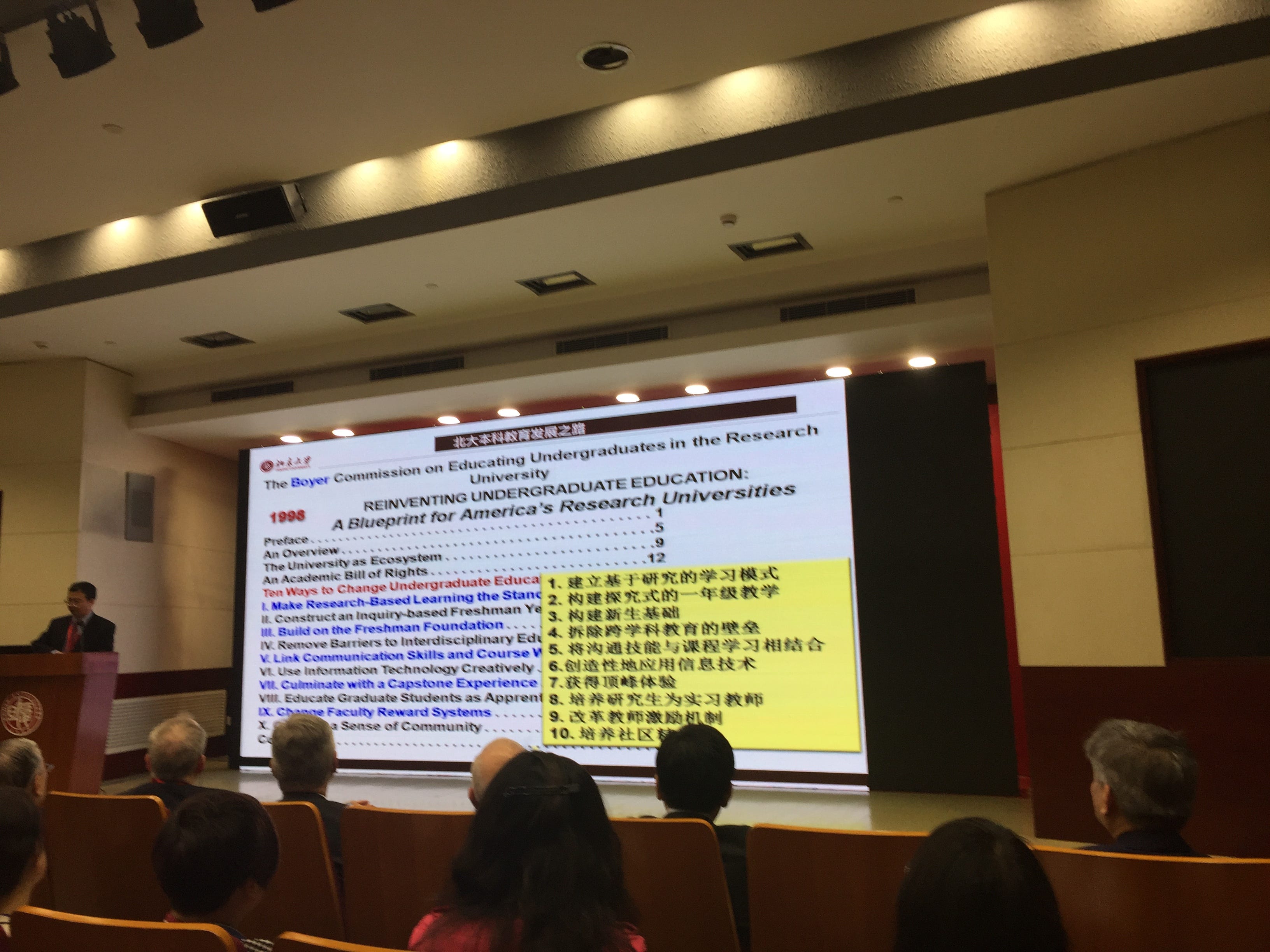
In 2011, the universities announced a partnership to “enhance their school's student affairs division and are especially interested in OSU because of its strength in student affairs.” They had seniors attend OSU’s International Symposium on Student Affairs, and had leadership keen on learning more about “Career Services, Residential Life, the Colvin Recreation Center, and the Edmon Low library.”
For Northeastern State University (NSU), the concern was with a partnership with Guangzhou College of Technology and Business (GCTB). Frankly, both places that most people probably have never heard of. I only know NSU because I’m from the state and did a summer camp there as a kid. No offense to either institution, but these places are not at the bleeding edge of technological innovation and advanced research.
This tracks with the programs actually taught. Professors from NSU were going to GCTB to teach undergraduate business courses like Leadership and Supervision and Negotiation and Labor Issues, Technology & Society and Project Management. The president of NSU defended the programs, saying they were “limited exclusively to undergraduate teaching and degree completion” and had “no research security risk… exposure of DoW-funded, sensitive, proprietary, or export-controlled research.”
This is all wildly mundane stuff. It is easily found and listed on the institutional websites. Yet, Pete Hegseth, the Secretary of War, wants the American people to believe he uncovered some kind of dangerous conspiracy. Perhaps one of the other 27 universities on the list does actually have some concerning partnerships. I just happened to choose the three with mundane business classes. Or perhaps there is just not a lot of there there.
This affair reminds me of the battles Senator J. William Fulbright fought in defense of his international exchange programs. He and Joseph McCarthy, the disgraced Senator who led the Red Scare, barbed over paranoid fears of anything foreign. Another Senator, Kenneth McKellar, pointedly warned that Fulbright’s “dangerous legislation” is “going to take our young boys and girls over there to expose them to those foreign ‘isms.’”
Of course, Fulbright believed in the strength of Americans and America. Luckily, his ideals won out. Now, these exchange programs are considered premier US public diplomacy efforts that advance our national interest abroad.
Deporting International Students for Social Media Posts is Un-American

Note: I have been hesitant to talk too much about national politics in College Towns because there is already so much coverage of these issues. I usually try to keep focus on local, smaller issues. But I feel compelled to write this post because I have published on the
Like Fulbright, I, too, believe in these same strengths in our country and people. The current detractors in the Trump administration only echo the same doom and gloom that lost out 70+ years ago. I ask now: Are our institutions so weak that they cannot have partnerships with institutions from abroad? Is our intelligence so poor that we have to wildly throw darts at every possible target?
If you actually care about foreign influence and espionage targeted at American interests, then this Mickey Mouse operation by the US Department of War should be concerning. This is not intelligence; this is a brainless witch hunt. We can do much, much better than this.
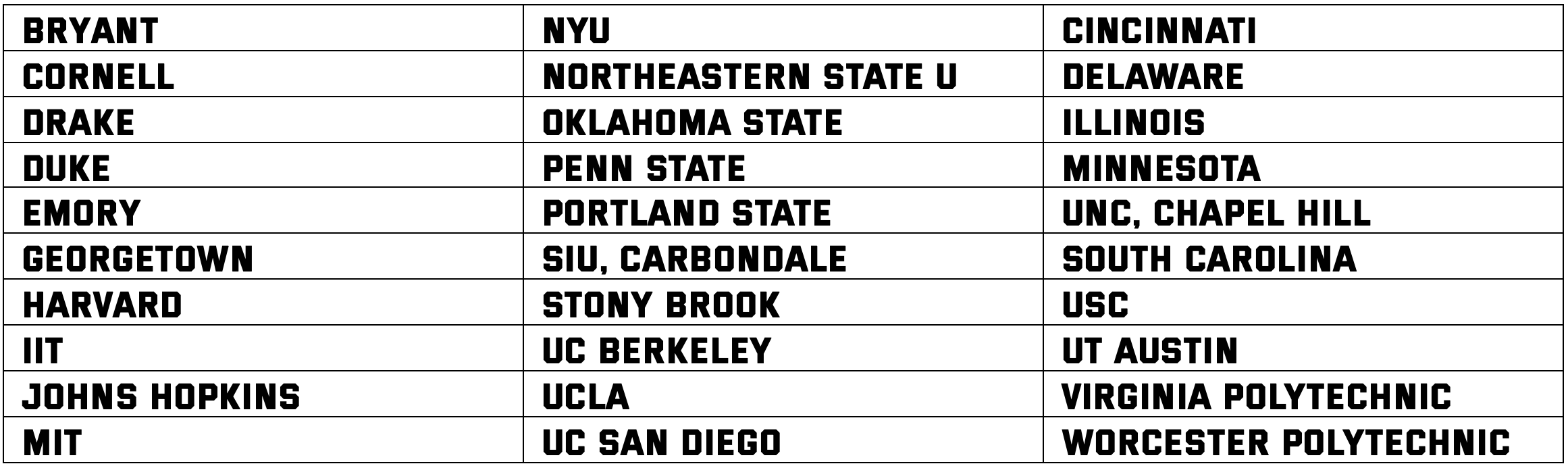
The full list of institutions in the memo:
Links I’m Reading This Week
Education
Not to be too Trump-centric today, but a Federal court ruled that Marco Rubio’s attacks on international students for speech violations were unconstitutional. I previously wrote that these actions were un-American; glad the courts agreed. Kudos to FIRE for leading the charge here.
Ok, back to the regularly scheduled urbanism meets higher ed promise: U of Arizona sees massive drop in freshmen, has to shutter some of its dorms. The K-shaped economy of American higher ed (I’ll have a future post on this).
Columbia’s campus is still closed to the public. Such a bummer that my alma mater is abdicating a key part of its public good.
The loneliness epidemic has hit college campuses. This is unconscionable to me: dorms, cafeterias, gyms, activities, festivals, events, sporting events, massive student body, clubs, colleges should be the antidote to the loneliness crisis.
UCLA is cutting campus childcare. I always thought universities should do more for families. This is going in the opposite direction.
St John’s College is changing its Bachelor of Arts in Liberal Arts to a Bachelor of Arts in Philosophy, Literature, and the Natural Sciences. This will be an interesting space to watch, as there seems to be a growing resurgence of this kind of classic education.
Sam Altman of OpenAI/ ChatGPT fame says college should only be 2 years. Terrible take from a guy who seems to be full of them.
More Americans are doing their undergrad abroad. I love this. I hope more American students continue this trend.
In more news abroad, I hadn’t realized this when it was first announced, but Saudi Arabia had planned for a university at the ridiculous NEOM megastructure. That is likely not happening with the collapse of the project.
Urbanism-ish
In annoying news from my current state, California, a dingy laundromat takes years to redevelop into housing in San Francisco. This is just the epitome of the problems in this state.
In more California news, Bakersfield Mall is charging for parking spots closer to the entrance. I don’t hate it! But the town seems upset. Should I let them know about the 700+ page book The High Cost of Free Parking by Donald Shoup?
Similarly, some countries around the world have pay-per-use elevators. Maybe this one I agree with the naysayers on. Elevators are much different than parking lots.
There was a lot of autonomous vehicle (AV) news recently. First, Tesla revealed its new robo-bus.
Toyota is getting into the self-driving game. Better late than never. I, for one, am hopeful about the Japanese foray into AVs. I would prefer not to have to rely on Tesla.
Next, Uber’s president sees self-driving cars as an existential threat to jobs. But driverless trucks are already here. This will be the next intense culture war battle:
The final piece of self-driving news: it seems that women are most against driverless taxis. I have no theory of mind on this. Is it just an artifact of the survey design? Or is there something actually to this? I would love to hear your thoughts.


Adaptive Reuse Corner
Note: Given how much I love seeing real estate and adaptive reuse, I am breaking off these posts into their own links subsection. I call it Adaptive Reuse Corner. Enjoy.
I found a bunch of fun adaptive reuse this week. Sticking with the education theme, a middle school becomes a home in Michigan. This price is pretty steep for Michigan, but you would get your own basketball court! I can see the appeal.

If you don’t want to live in an old school, I have a couple more options for you. How about living in an old hotel, silos, cathedral, bank, or jail (pictured in order below)? These are all really fun, and some seem pretty reasonably priced!

I think my personal winner for today is this beautiful church redevelopment in Oakland. It is truly a stunner. I could certainly see myself living in these apartments:


And to close out the segment, I know this is not exactly adaptive reuse, but I had to flag this listing. Who wants to live in the Obelisk from 2001: A Space Odyssey? I think I’ll pass on this one.

Closing Time… Goodbye to the Bohemians
There is always a romanticism around New York City. The classic story of a starving artist moving to the city from rural Ohio, moving into a dingy artist loft, and making it work on a shoestring budget. But that kind of true Bohemian lifestyle has mostly faded away as housing costs rose.
In more recent years, those kinds of artist lofts are more myth than reality. But there are still a few long-timers clinging to that old way of life. There is a new book chronicling this part of fading New York entitled Loft Law: The Last of New York City's Original Artist Lofts.
Joshua Charow, a documentary filmmaker and photographer, spent five years gaining access to these old lofts to interview “the mystery artists living inside,” as he calls them. With some persistence, people were happy to share their experiences. “I’ve been here for 58 years,” said one of the featured artists; some of the residents were in their 90s.
I am happy that someone is documenting some of the last remaining Bohemian spaces in New York City. As one of the artists said, “Our world as we know it now is disappearing.” And it is true; this kind of old world is just not something the younger generations can experience today. Charow's entire YouTube channel is worth a watch, taking viewers for a glimpse inside.
This all got me wondering: where do the new Bohemians go? Is there anywhere in the country with available inventory of loft space, with a critical mass of people/ galleries, living a car-free lifestyle, and all doing it cheaply? I am not so certain. Perhaps some deindustrialized Rust Belt city like Cincinnati. What do you think?
The Adaptive Reuse Corner is a great addition to your newsletter!
https://www.nbcnews.com/politics/justice-department/chinese-couple-charged-smuggling-biological-pathogen-us-rcna208658
Considering this happened last year I fail to see anything wrong.