


Halloween is one of my favorite holidays. I adore the proud American tradition of trick-or-treat that emboldens young kids and instills civic bonding. I have fond memories of Halloweens past from my own childhood, along with later in life seeing younger generations with that same joy for the festivities. But trick-or-treating seems to be eroding as an American tradition for a variety of reasons.
This is my fourth annual Halloween article discussing the trick-or-treat tradition. In the first article that predates College Towns, I argued in Strong Towns that we should protect the tradition, suggesting local communities coming together to block car traffic on Halloween night. The next year, I defended my derision of the lamer alternative trunk-or-treat that has become popular in recent years (see below). Last year, I discussed how destination neighborhoods, fueled by social media, pull trick-or-treaters away from their traditional territory.
I’ve pinned the demise of our Halloween traditions on bad urbanism, car-centric culture, destination neighborhoods, and social media. But the sociology behind the tradition is even more complicated than that. This year, I am covering another factor behind fewer trick-or-treaters: fewer kids. The erosion of the trick-or-treating tradition in the US is just part of our rapidly aging society.
Defending Derision of Trunk-or-Treat Halloween

Last year I caused a firestorm by advocating that we save trick-or-treat and not accept trunk-or-treat. I respond to the criticism I received in this post.
Where Have All the Trick-or-Treaters Gone on Halloween? Destination Neighborhoods

Urbanism and car culture play a role in eroding the holiday tradition, but so too has the consolidation of trick-or-treat to destination neighborhoods via social media.
Peak Population, Peak Halloween
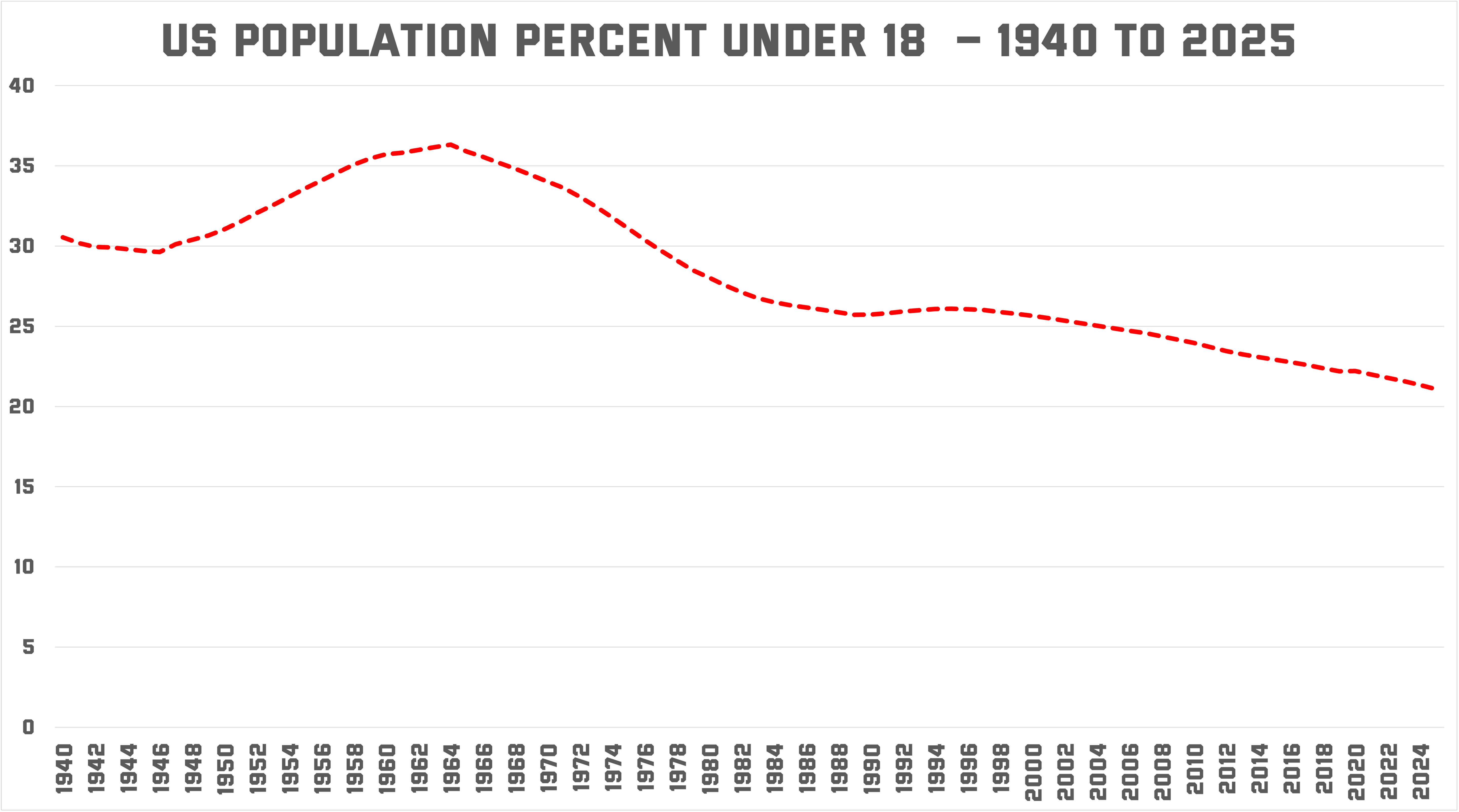
Baby Boomers, born between 1946-1964, had a kind of golden age of Halloween. This cohort was a massive generation, the biggest by far in American history at that point. By the end of the 1960s, there were almost 70 million Boomer kids, accounting for over 36% of the entire US population at the peak (see chart below). The lifecycle of the Boomer became central to how we conceptualize American society.
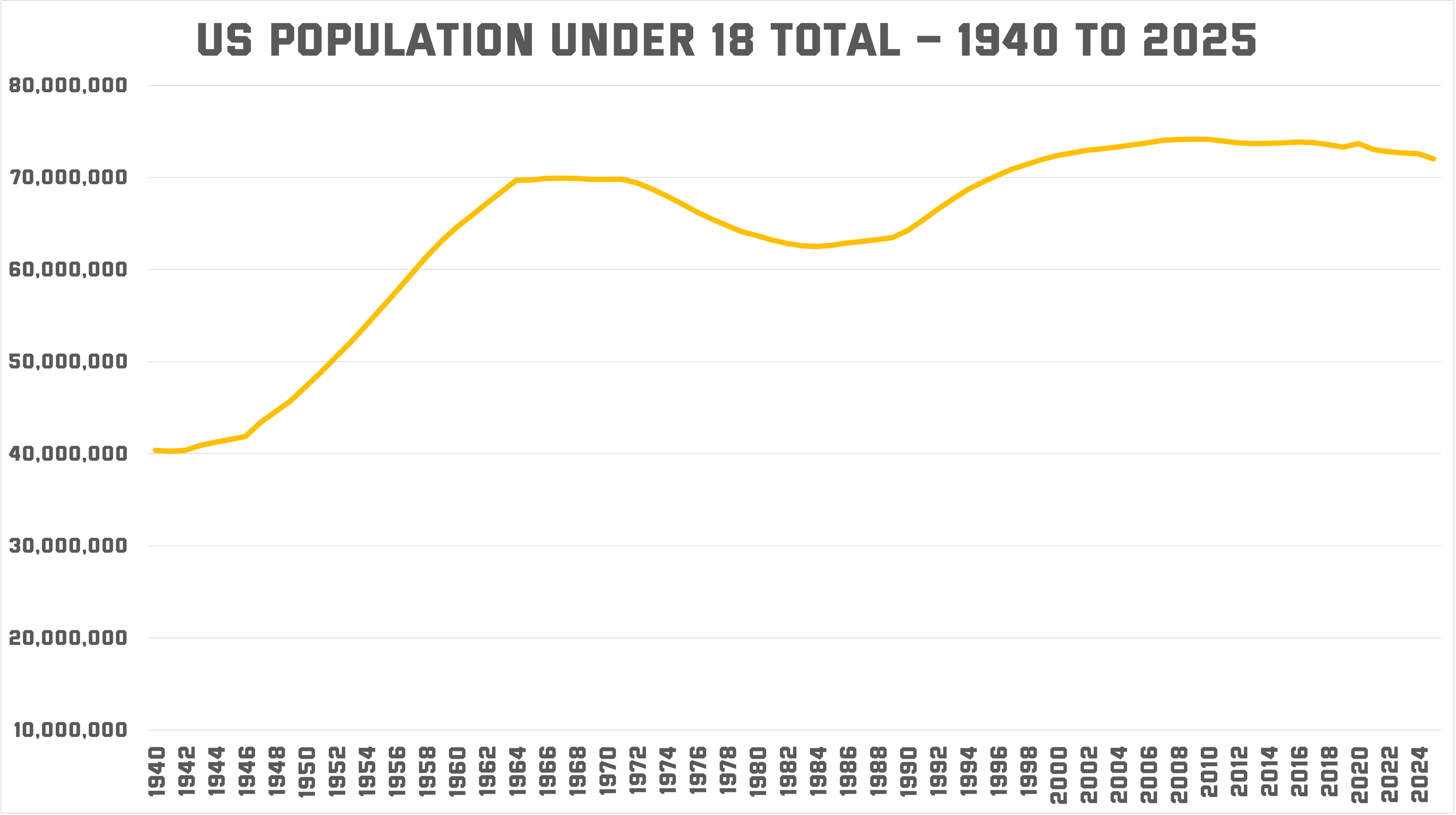
While trick-or-treating has much older roots, the modern American tradition was forged during the childhood of the Boomers. The country was coming out of sugar rationing during the World War II and Great Depression eras, with a booming economy, a boom in babies being born (hence the generational name), and the rise of the suburbs. Halloween is the ur-suburban holiday, which is no coincidence since it arose with the Boomers who were the first generation raised in the newly built single-family home neighborhoods. Their trick-or-treat was wholesome, like a Peanuts comic strip.


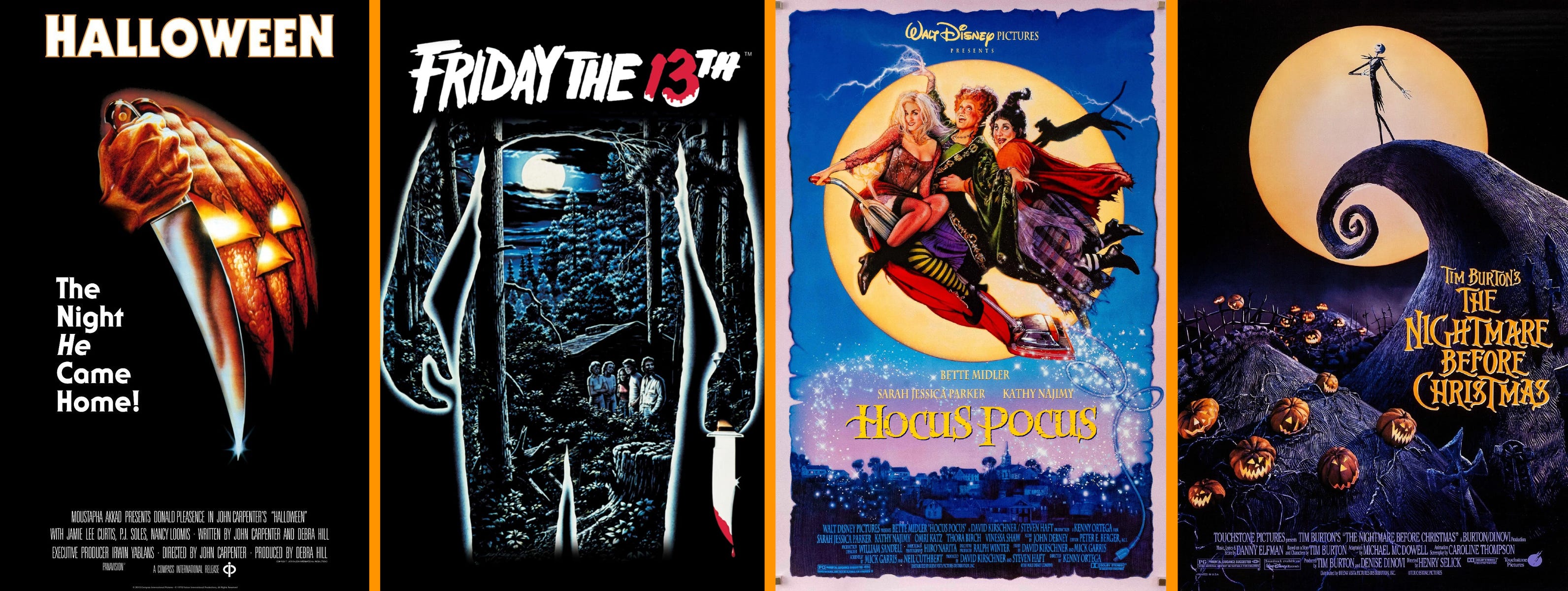
Of course, the Boomers could not stay young forever—despite what they might believe. Their successors, Gen X, were a much smaller cohort (born between 1965-1980). By the late 1970s, the total number of American kids actually began to decline, dipping to 62 million in the mid-1980s at roughly 26% of the American population. During this generation’s childhood, Halloween took on more horror themes through the rise of slasher films like Friday the 13th (1980) and Halloween (1978).
The shrinking population of American kids would not last. The Millennials (born 1981-1996) mark the largest generation of young people in American history, being the children of the Boomers, hitting 74 million by the end of the 2000s. During Millennial childhood, Halloween reverted to a classic, sillier feel, harking back to their parents’ childhood through films like Hocus Pocus (1993) and The Nightmare Before Christmas (1993). In general, the 1980s, 1990s, and 2000s saw the maturation of Halloween into a more commercialized holiday, from candy to costumes to decorations.
Despite the large raw number, the percentage of the underage population remained much smaller at around just 24% for Millennials. Both the total number of American kids and their share of the total population began to decline after the Millennials. The Zoomers (born between 1997-2012) shrank further to 73 million and around 22% of the American population by 2020.
The current youngest generation, Alphas (born 2013 onward), is only getting smaller, as Millennials didn’t have that many kids (sorry, mom). Whatever comes after will be even smaller. Perhaps these numbers do not seem all too dissimilar, and there are still millions of kids out there. Yet it's the dilution that lowers the cultural impact.
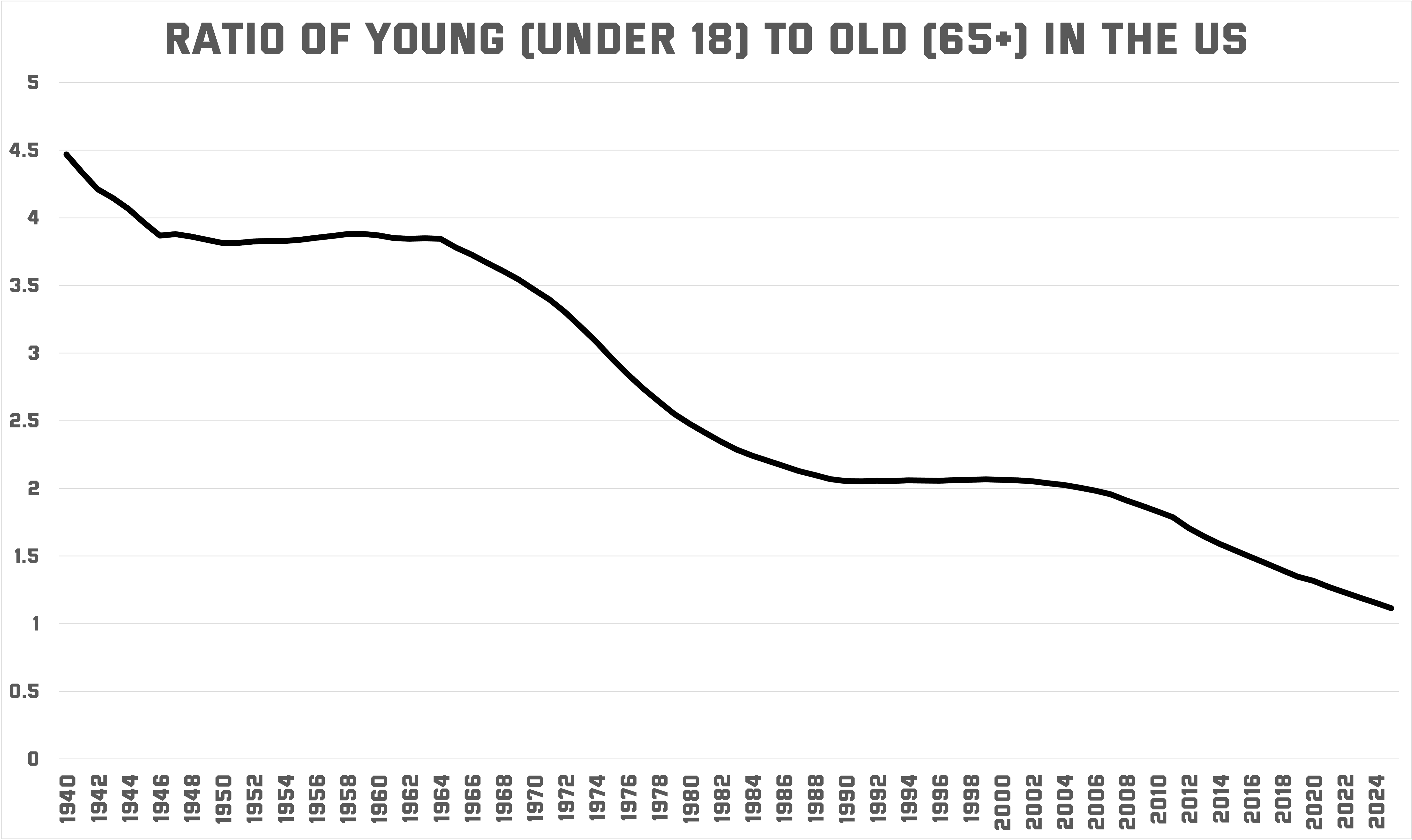
Looking at the ratio of young Americans under 18 to those above 65 in the chart above, the country has been on a long descent. For Boomers, there were roughly 4 young people to 1 old person when they were kids. That was halved to 2 to 1 for both Gen X and Millennials. Today, that ratio is closer to 1 to 1. Childhood experiences are just less important culturally in a much older society.
The reality is that we have already reached peak childhood in the country. Our past was much younger and livelier; the future will only get more stale and quiet. This means we've already reached peak Halloween because the density of kids is dissipating. It is unlikely to bounce back.
Disney Adults, Halloween Adults
Given the population is so much older than it was compared to previous cohorts, society is getting different cultural focuses and emphases. Kids, in this environment, are losing their centrality. They are taking a back seat to larger, older cohorts, including in domains that were formerly for children.
In the past few years, we have seen the phenomenon of the Disney Adults. These Disney uber fans are usually middle-aged people with a lot of disposable income, no kids, and a massive affinity for the Mouse. There are TikTok videos and social media posts chronicling their epicureanism, sometimes to the dismay of parents who feel they are taking spots from kids. Disneyland, opened in 1955, was really designed with the Boomer child in mind, and the theme parks just grew with Gen X and Millennials. Today, kids and families are only part of the larger pie of Disney’s target audience, rather than the entire pie like with previous generations.
A related trend in aging American society is the rise of cards and toys as highly sought-after collectibles. Certainly, baseball cards have long had their collectors going back decades. Even Toy Story 2 (1999) was about Woody being kidnapped by a toy collector. The intensity has only risen as a money-making venture of resellers, clouding out cards and toys as child playthings. Toys and cards bring in serious cash. We see stories of Costco having to limit the number of Pokémon cards to stop resellers from buying them out. These were previously the exclusive domain of kids.
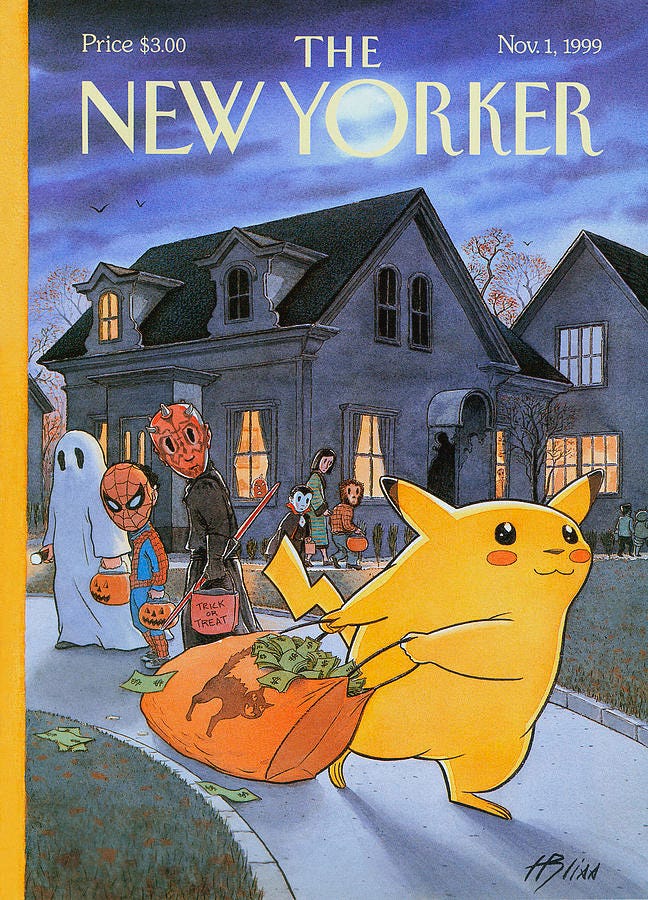
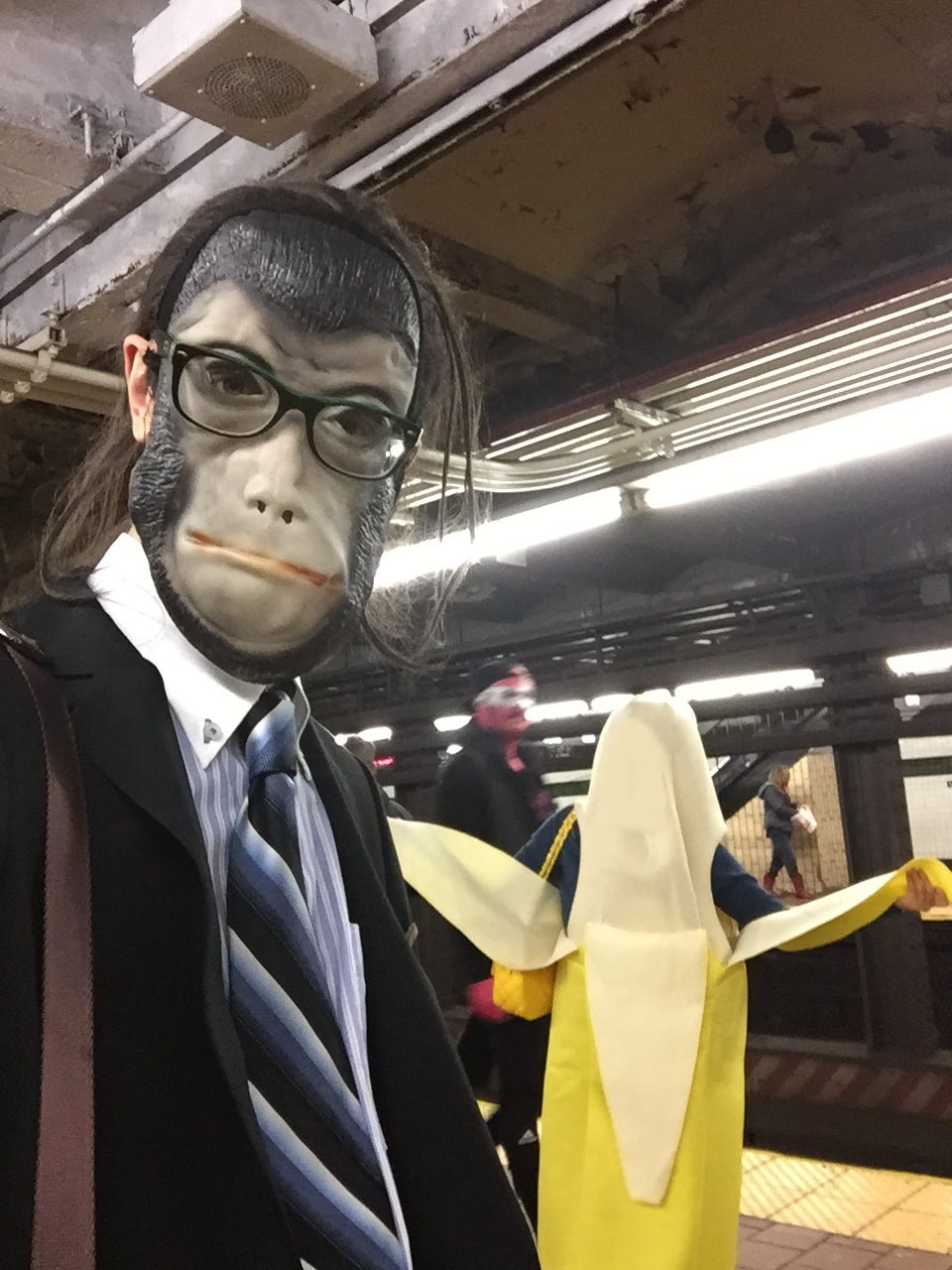
This same phenomenon can be seen in the way we celebrate Halloween. Yes, there is still some fun trick-or-treating, especially in destination neighborhoods. And I will begrudgingly accept trunk-or-treat as an alternative better than nothing. But the holiday has really become a party for adults. Workplaces hold costume contests, bars have costumed dance parties, people organize pub crawls in their costumes, and all types of other (adult) debauchery. In this older society, Halloween has become more about adults than kids.
Bad Urbanism is Still Part of the Problem
In a previous edition of my annual Halloween article, I made the case that parents were rationally responding to our dangerous streets. They were eschewing trick-or-treat in favor of trunk-or-treat as a safer alternative. Sprawl and street design are certainly urbanism issues impacting the holiday. The aging population only adds to it.
In an ideal world, families would move into a house to give the kids a good childhood, including yearly trick-or-treats on Halloween. As the kids age out, the parents should give up their house to their kids, moving into a smaller granny flat out back, or selling to another young family looking for a home. But because much of the country has blocked so many homes, there are not a lot of smaller houses for seniors to move into these days.
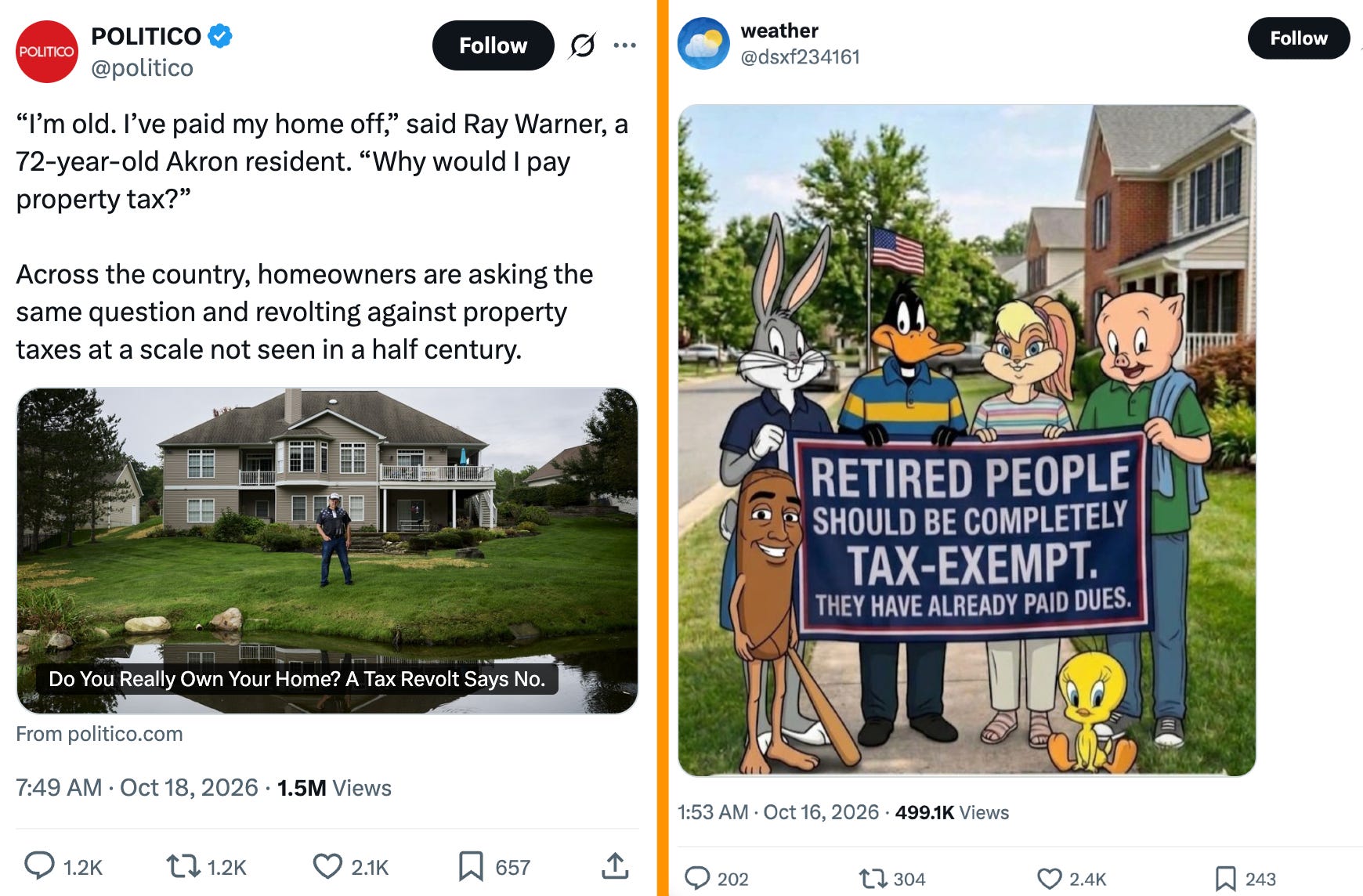
In the current climate, Boomers are not downsizing at expected rates. They are staying in place or, in some cases, even buying bigger homes. There is a big push to end property taxes on seniors. This means that not only are housing prices higher, but young families are also burdened with more taxes due to seniors opting out. We have seen this in both liberal and conservative states, with Proposition 13 in California and Florida lawmakers proposing senior property tax exemptions.
These housing issues have also factored into the lower birthrate for recent generations. As housing prices rise and rise, along with other debt, Millennials and Gen Z have put off having kids. The cohort who was supposed to be born back in 2010 simply were never born. Given these trends, it will only get worse.
Schools are the canary in the coal mine. Districts across the country have been bleeding students. The country is now seeing a trend of school closures not just in big cities but also in suburban and rural areas. Reflecting the adultification of society, some shuttered schools are being turned into breweries. There just aren’t enough students to go around. If an area does not even have enough students to fill a classroom, it is also going to struggle with trick-or-treaters.


Elementary and middle schools have often been the lynchpin to Halloween, hosting scary parties and allowing kids to dress up. Sometimes, teachers may even pitch in to give less affluent students costumes. In turn, the kids then return home and continue celebrating in their local neighborhoods. Not to mention, on the school day after Halloween, classmates all brag to each other about their candy haul.
In previous generations, a neighborhood may have been lively and festive, flushed with kids returning from school and traipsing around in the evening. Eventually, the kids grow up, and their parents don’t move. With fewer homes, they move to sprawling Arizona or Texas. All that remain in the original neighborhood are old people. Schools close and potential trick-or-treaters thin out. With fewer and fewer each year, households stop participating. The ones who remain go off to a destination neighborhood instead. This is the cycle of erosion for the American tradition.
What Comes Next? Día de los Muertos
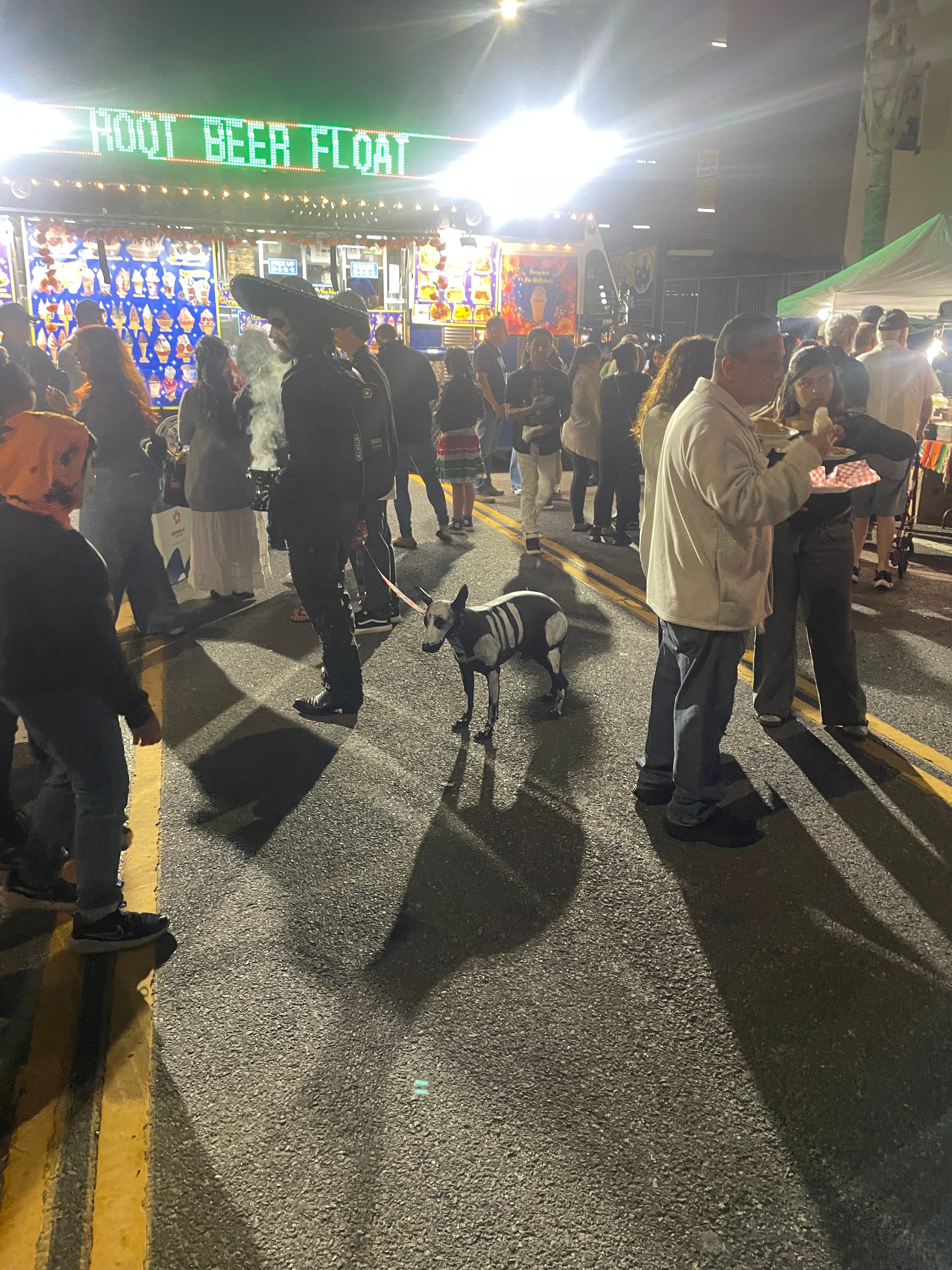
Traditions come and go in various cultures. And one that is coming that feels like it might end up becoming a new Halloween tradition is Día de los Muertos, AKA Day of the Dead. The holiday originated in Mexico and has proliferated to parts of the US with large Hispanic populations like California and Texas.
The 2020 US Census recorded about 62.1 million Hispanic Americans, with 18.8 million under the age of 18. These youth account for 30% of the entire Hispanic population, closer to the numbers the country saw when the Boomers were kids. This population is just more youthful compared to the American average. While they don’t all celebrate Day of the Dead, the holiday is proliferating.
In some ways, Day of the Dead reminds me more of older Halloween traditions before it became more secularized. Halloween used to be known as All Hallows’ Eve or All Saints’ Eve, connected with Christianity, and brought over by the Irish and Scots in the 19th century. There are clear religious and spiritual elements to the Day of the Dead, such as the aspects honoring fallen family members. Likewise, the costumes are strictly about skulls or specific spiritual depictions.
Halloween used to be more spiritual, too. Early Halloweens in the US were more about ghosts and stories to scare children into behaving rather than pop culture. The secular costumes came with the post-War Baby Boom and the childhood of the Boomers, followed by Gen X in Star Wars costumes, and later Millennials as Ninja Turtles. The Day of the Dead has already been captured in our popular culture through the Pixar film Coco (2017), which is getting a sequel in 2029.
My guess is that Day of the Dead and Halloween will eventually merge into one holiday, one that is a very American holiday. Just like the mixtures of cultures that gave us what we call Halloween, various European traditions melted together to become our traditional ghost stories, jack-o’-lanterns, and trick-or-treating.
Some might be angry that this is the so-called “replacement theory.” But that is not what’s going on here. Instead, there is just a clear difference in birthrates for long-time Americans and more recent Hispanic immigrants (Asian immigration has not actually seen this). These differences are mostly due to affluence. Once a society becomes more wealthy, its people stop having as many kids, an almost universal phenomenon.
In the end, Halloween will survive; trick-or-treat will, too, in some form. The American tradition will again gobble up customs brought from abroad, along with its new costumes. The tradition will just be different due to our aging population in the country. What is clear is that the US has already hit peak kid, and along with it, peak Halloween.

