


Note: Around the College Towns is my weekly links roundup article on urbanism and education. These posts mostly cover news that may have fallen through the cracks rather than the big events.
University to Shutter 200-Year-Old Museum
I’ve covered a lot of college closures here, which are actually somewhat rare, although becoming more common. What is not rare is universities making cuts to departments or programs. Something like this happens every day. But some cuts are more painful than others.
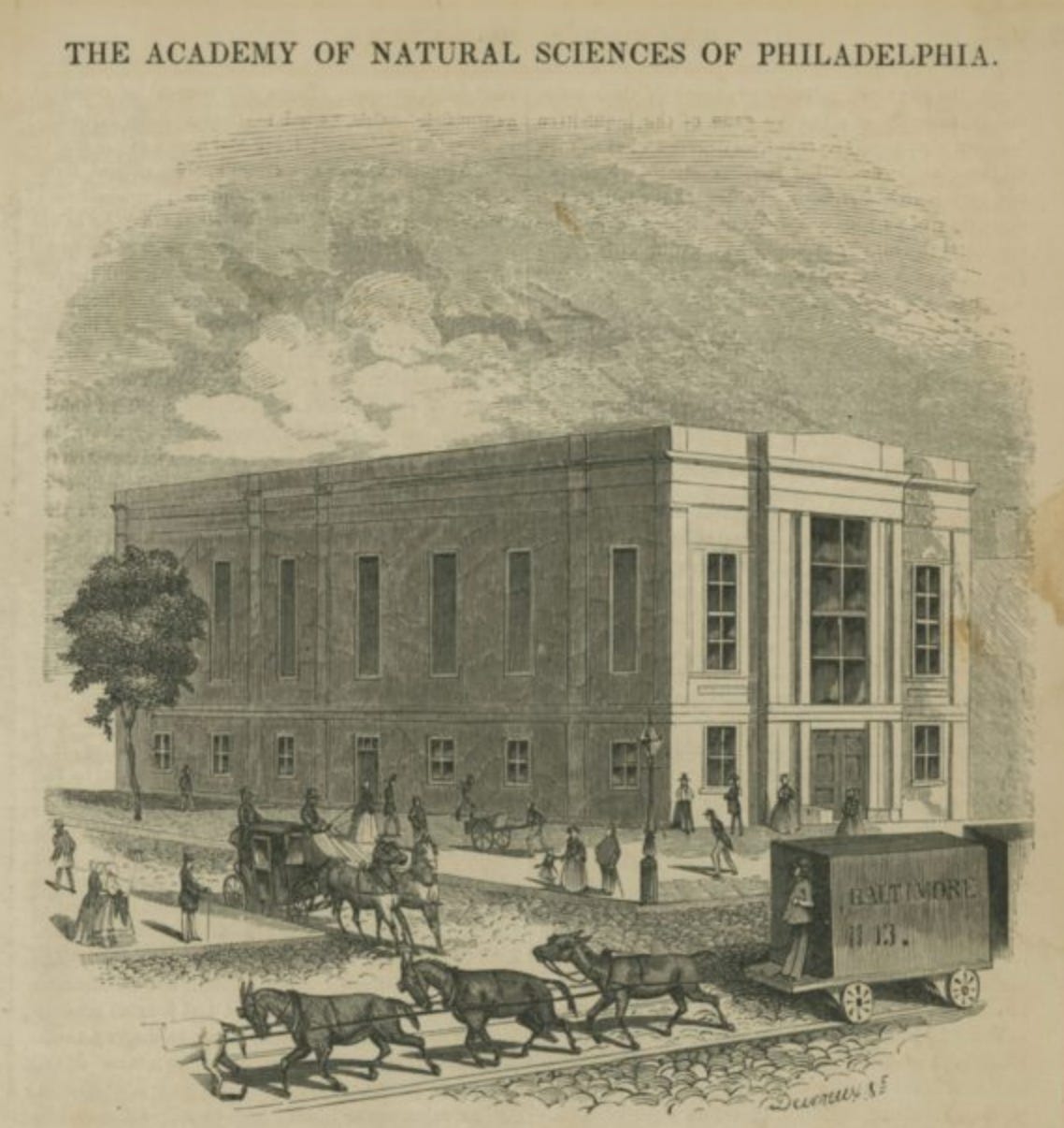
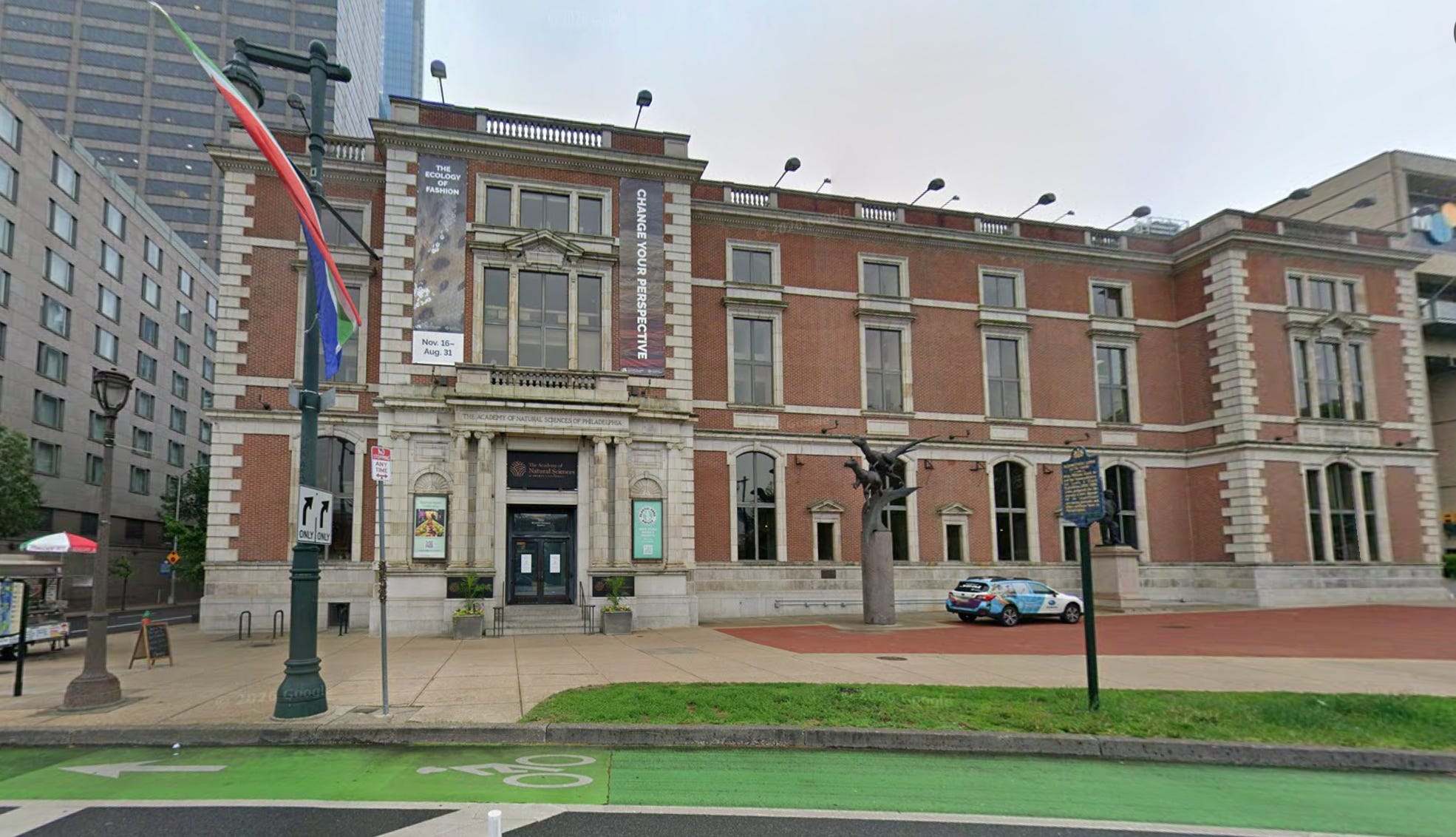
Drexel University in Philadelphia announced that it would shutter The Academy of Natural Sciences. At over 200 years old, the Academy is the oldest natural history museum in the US. Formerly called the Academy of Natural Sciences of Philadelphia, it was founded way back in 1812!
Drexel has been in rough financial shape the last few years. In 2024, the university announced a $63 million operating deficit, partly due to a 15% drop in the incoming freshman class. Layoffs followed soon after. Now, the cuts seem to be continuing.
Closing such an important historic relic is a major blow to civic and even national identity. It does seem like there is local movement to save the museum. I hope they can do it.
The Drexel partnership was already the lifeline for the museum when the two institutions merged in 2011, back when the university was doing better financially. So there is perhaps a possibility of another entity helping the Academy to spin off into a stronger institution.
Universities selling, acquiring, or merging parts does align with my Age of Conquest in Higher Ed concept. Universities have become more business-like in recent decades. The corporate world has long seen hostile takeovers, monopolies, and conglomerative mergers. Higher ed is just having its own version now.
Sadly, museums are becoming a more common casualty in Higher Ed’s Age of Conquest. This year, DePaul University closed the DePaul Art Museum. Last year, Albright College sold off its Freedman Gallery for a needed cash injection. Fisk University, Randolph College, Rockefeller University, and La Salle University have all taken this art-selling route.
These issues can even hit public institutions. The University of Alabama closed its Mildred Westervelt Warner Transportation Museum in 2024, while the University of Arizona shuttered its Arizona State Museum that same year. The latter was supposed to only be temporary, but budget cuts have left the site in limbo.
While these kinds of university art deals are becoming more common, they still certainly draw outrage that can reverse the decision. Valparaiso University tried to offload its Brauer Museum of Art, but the backlash caused them to reconsider, and it remains open today. Similar stories happened at Brandeis University with the Rose Art collections at the University of Iowa with a Jackson Pollock painting. Hopefully, the Drexel-Academy story can be added to this list.

Links I’m Reading This Week
Education
Starting with some K-12 news: being in a top school district adds around 35% more to home costs. As someone who covers education and real estate, this is no surprise.
MIT’s summer program for high school students has a lower acceptance rate than the Ivy League undergraduate admissions. The college admissions arms race is vicious!
Back to college: the James G. Martin Center for Academic Renewal calls for a reinvestment in language education from US higher ed. I agree, but the problem is defunding and cuts. The job-ready craze does not align with national security.
UCLA is covering public transport funding for employees making under $100K. Interesting, I always thought universities should do more for families; this is a good development.
Minerva University, the experimental online and study abroad institution, is opening a full university system to expand its reach. They are quite a unique model in a sea of higher ed standardization.
Another unique model comes from American College of Building Arts (ACBA), in Charleston, South Carolina. The college is one of the few still teaching classical traditions in design, architecture, and construction.
In closing news, Stanford opened a research center in Korea five years ago; they are already shuttering it. If a school as affluent as Stanford cannot maintain this kind of program, then international education is truly in trouble.
Moving abroad, Chinese universities are getting into the global branch campus game. I can tell you they are ready to replace the US in the vacuum we are leaving behind on the global stage.
There is a new high-tech university in… Benghazi, Libya? The University of Benghazi campus has been shuttered during war, but has now been reopened after some stability. I guess the world is modernizing as we pull back.
Urbanism
Starting with self-driving news, videos of people sleeping while driving Teslas have regulators concerned. The company just seems totally irresponsible.
In another Tesla story, fire departments worry Cybercaps don’t have steering wheels. Even though American fire departments have had bad instincts for urbanism, I think I agree with them here. Must have tactile handles.
Tesla appears to have lied about fatal crash data. All of these stories have me worried that this company is sullying the entire self-driving sector.
In other transit news, Central Florida Times reports on a new Brightline along the Space Coast. This will mean Port Canaveral and the Kennedy Space Center Visitor Complex will be accessible by rail. Cool!
The city of Berkeley is getting sued for trying to add a protected bike lane. Honestly, things like this make me believe that California is just an insane place.
More complaining comes from Chicago, where NIMBYs are trying to derail the airport train. In a transit-rich city, this just blows my mind.
In a place that does it right, a Japanese railway company makes more money from real estate than the trains. But that’s fine! The real question is why don’t we replicate that model here?
In general urbanism news, the history of preference surveying is quite interesting. This is how we know people prefer traditional architecture over modern buildings.
Frank Lloyd Wright house rotting in LA. It’s always wild to think how much we can let cherished things spiral here.
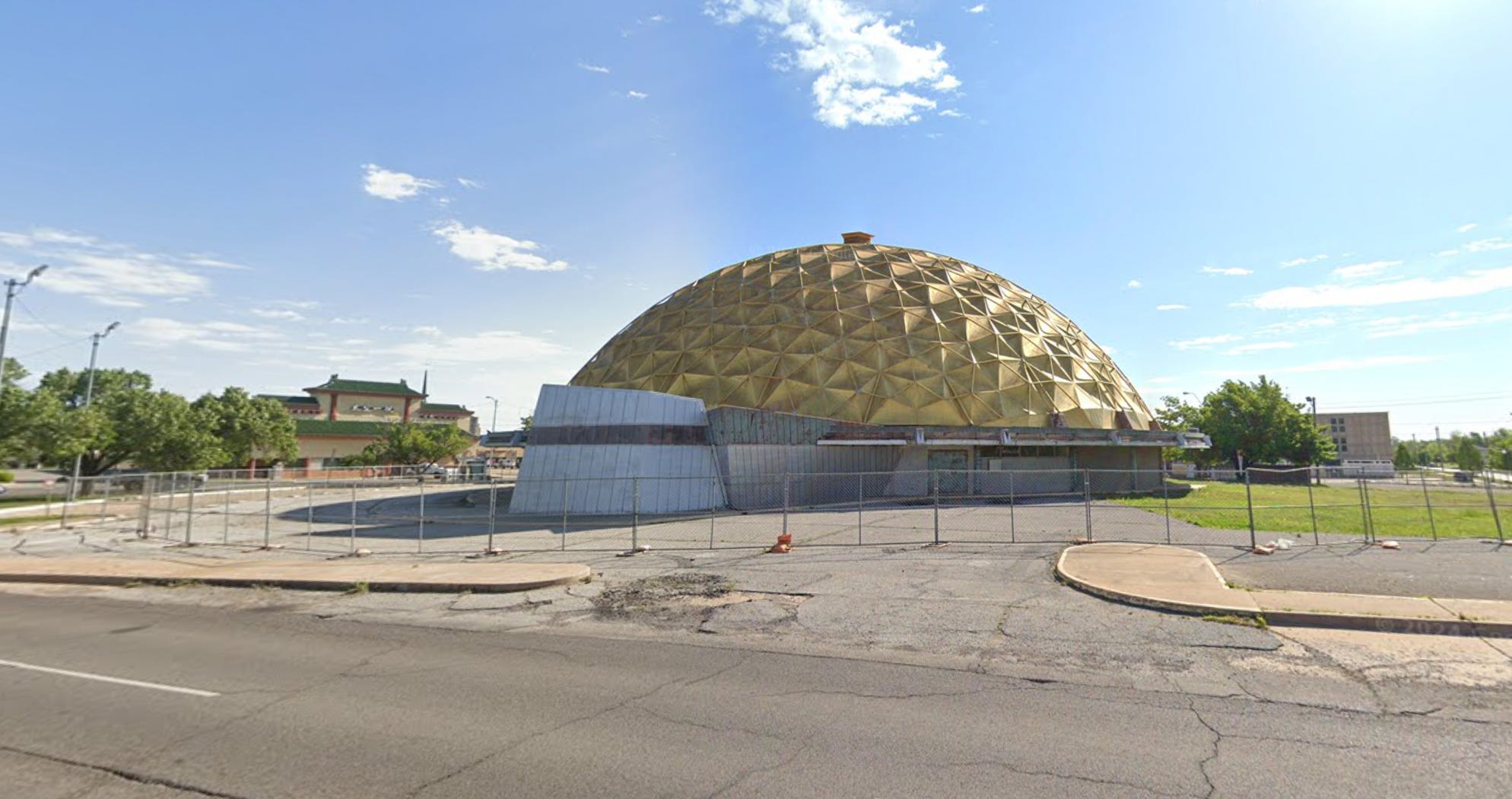
Famous gold dome in my hometown of OKC sold at a police auction. This place was always iconic but also very dumpy. I do not remember its golden age. I hope someone can get it back there, but I have my doubts.
Adaptive Reuse Corner
Back with another edition of Adaptive Reuse Corner! In this segment, I feature fun real estate finds that were once something else before being turned into a house. I’ll run a poll of the properties during the week. Last edition’s winner was a stunning cathedral conversion in Pennsylvania.
This week we have a lot of fun options. The first two are former commercial properties. One is a cafe in Washington (A) that the realtor thinks could make for a good single-family conversion; the other is what looks like a former bank in New York (B) that was already converted. They range from $100K to $150K, but both are in the middle of nowhere.
Next up, we have two schools, one in Kansas (C) and the other in Pennsylvania (D). While both have gorgeous bones, they also seem to be in pretty rough shape. The Kansas one doesn’t even have heating/AC. Good luck with that.


On the other end of the spectrum, you can buy this church in Chicago (E) that has already undergone an absolutely stunning conversion. But you get what you pay for in a great city at $6.5 million. Something a bit cheaper with the same kind of workmanship comes from an old mill in Virginia (F). The hard work is already done for under $500K.
The weirdest one I have this week comes from Texas, which is an old Boeing 727 in a hangar-like house (G). I think $1.8 million for the middle of nowhere in Texas is too steep, even if this is expected to fetch Airbnb rental income (Big Bend National Park is 20 minutes away).


I mostly want to focus on the US with this segment, but I randomly stumbled on a few conversions from abroad. I’ll just do a quick rundown for these: a water tower in Sweden (H), a container hotel in Czechia (I), a sea fortress in Denmark (J), and a castle in Ireland (K). Wow, all very cool. Europe seems to have some really interesting adaptive reuse.


The last one I want to feature is not a home conversion, but rather an old general store that became a town library, via John Kokoris’ X post. Rockton, Illinois—anyone ever been?


Note: No ‘Closing time’ today. This edition of Around the College Towns is already dragging. See you next week!
NB: Drexel also pulled a similar move with the City of Philadelphia's "Philadelphia History Museum," which had been known for most of its existence as the Atwater-Kent Museum. Drexel absorbed the museum's many thousands of historical artifacts and records in what was a transfer from public to private hands. The city agreed to this transfer because Drexel allegedly had better resources than did the city to curate the artifacts, but the fate of the Academy of Natural Sciences makes me wonder how the city's historical collection will fare in Drexel's hands.