


Since I have been writing about the school car pickup line culture in the US, people have asked me why do parents tolerate such annoyance. It is certainly a nuanced problem, but one clear aspect is that our streets really are dangerous for anyone outside of a car. Sadly, my own community provides an illustration for how our “deadly street design”, as Strong Towns calls it, encourages the school car pickup phenomenon.
On Tuesday, November 18, Luis Adrian Morales-Pacheco was walking to his bus stop, taking him to Niguel Hills Middle School in Dana Point with his older brother. Sadly, Luis did not make it to school. A driver, who was reportedly drunk and/ or high, slammed into Luis and his brother while they were waiting to cross the street at a pedestrian island.
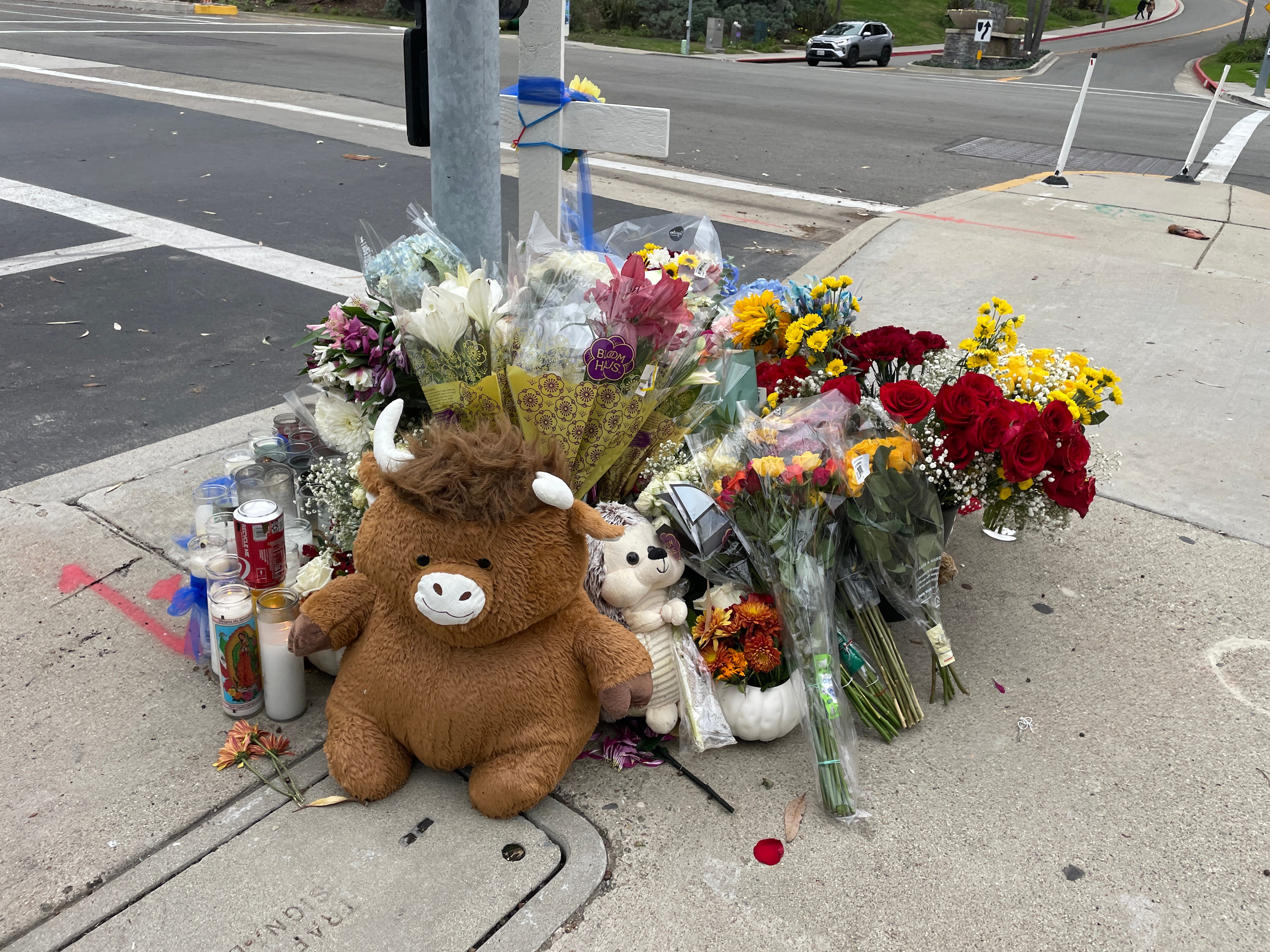
This all happened in the next town over from where I live. The school where the boy was going is in my same district where I send students to shadow for my research practicum class. So I know firsthand how terrible this place can be for pedestrians—everything is designed around moving cars fast, with anything else an afterthought.
Knowing this, I wanted to see the spot of the “accident.” And I put accident in quotations here because while the drunk driver certainly should be blamed, so too should our terrible roads and rules that empower such people.
The School Car Pickup Line Is a National Embarrassment

I teach a lot of international students about the US education system and our schools. Whenever they go into our schools for the first time, one of the things that always shocks them is the school car pickup traffic lines. These lines are ugly, annoying, dirty, and they have become a common mainstay in American schooling.
The Deadly Intersection
The deadly intersection is located at Park Lantern and Dana Point Harbor, in the affluent beach community of Dana Point, California. The intersection is right at the entrance to the beach on Park Lantern. There are a lot of pedestrians and bikers in the area. The city touts the area as such:
Dana Point Harbor is a major commercial and recreational hub, featuring a variety of shops, restaurants, and marine-related businesses. The Lantern District area, located along Del Prado Avenue, has been the focus of redevelopment efforts to create a more pedestrian-friendly and mixed-use environment, with a mix of retail, dining, and office spaces.
Yet, despite the area being near the beach next to a commercial zone with considerable biking and walking, the space is almost entirely designed for cars moving fast. It has four key problems:
Slip Lane
Flexipoles
Breakaway & High Vis
High-Speed Streets
You can watch my full video of this intersection below or read the rest of the article:
Slip Lane
Luis Adrian was standing on a pedestrian island because the street offers a slip lane to drivers coming out of the beach onto Dana Point Harbor. Slip lanes are built so that drivers can move faster and more efficiently, but this also means that cars are less likely to yield to pedestrians. This kind of design puts pedestrians in conflict with drivers moving at dangerous speeds.
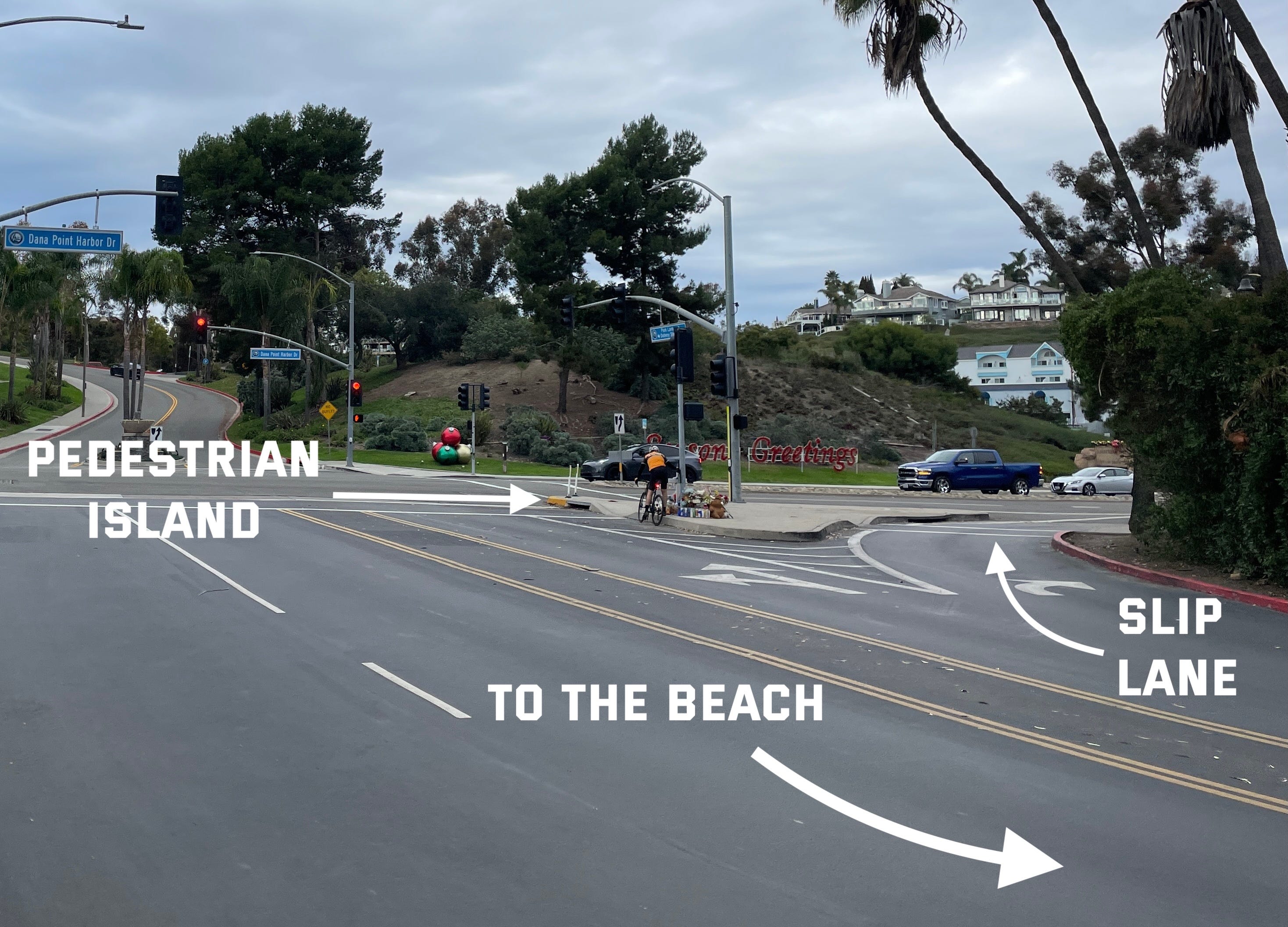
Because of the slip lane, pedestrians are forced to stand out on an island in the middle of traffic. Cars are moving fast and without impediment on all sides. In fact, tire marks can be found on each curb of the slip lane, indicating that people are pulling out of the beach and not paying much attention. Anyone on foot or bike is at best uncomfortable here, and at worst, dangerous. That fateful day proved the worst to be the case.
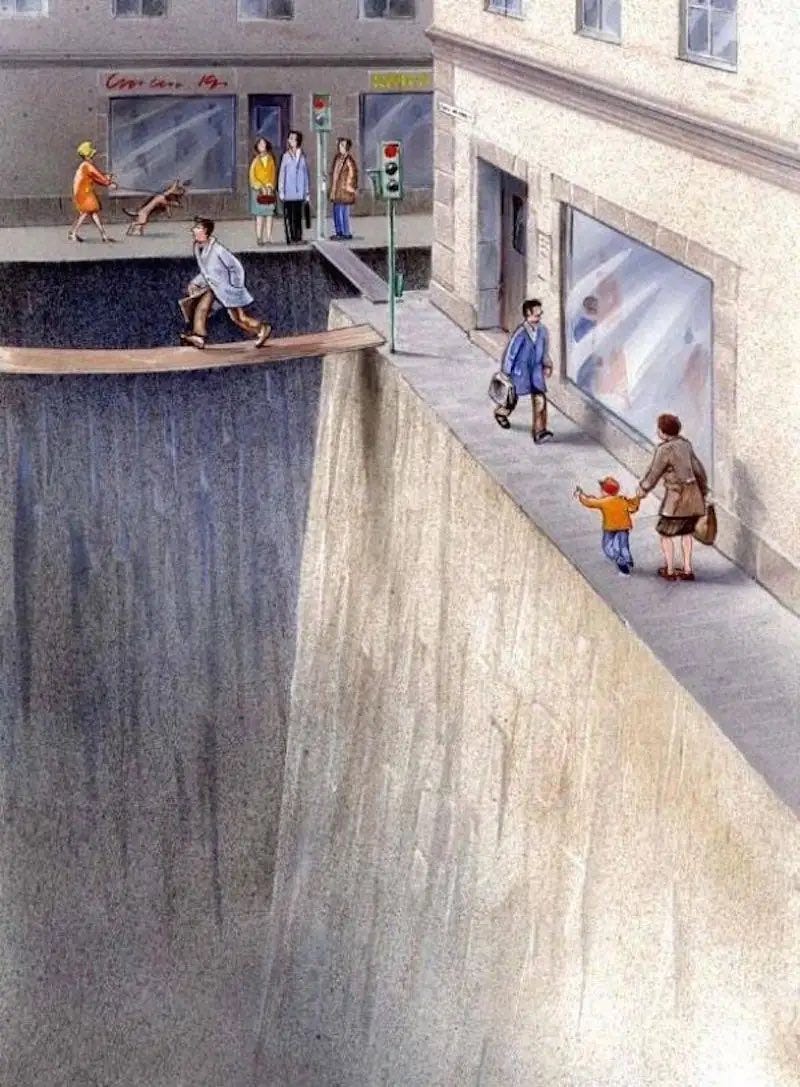
Flexipoles
One of the first things that I noticed when looking at the intersection was the flexipoles. These little cheap plastic poles are used as signals to drivers that some kind of barrier or object is around. That object in this case was the pedestrian island.
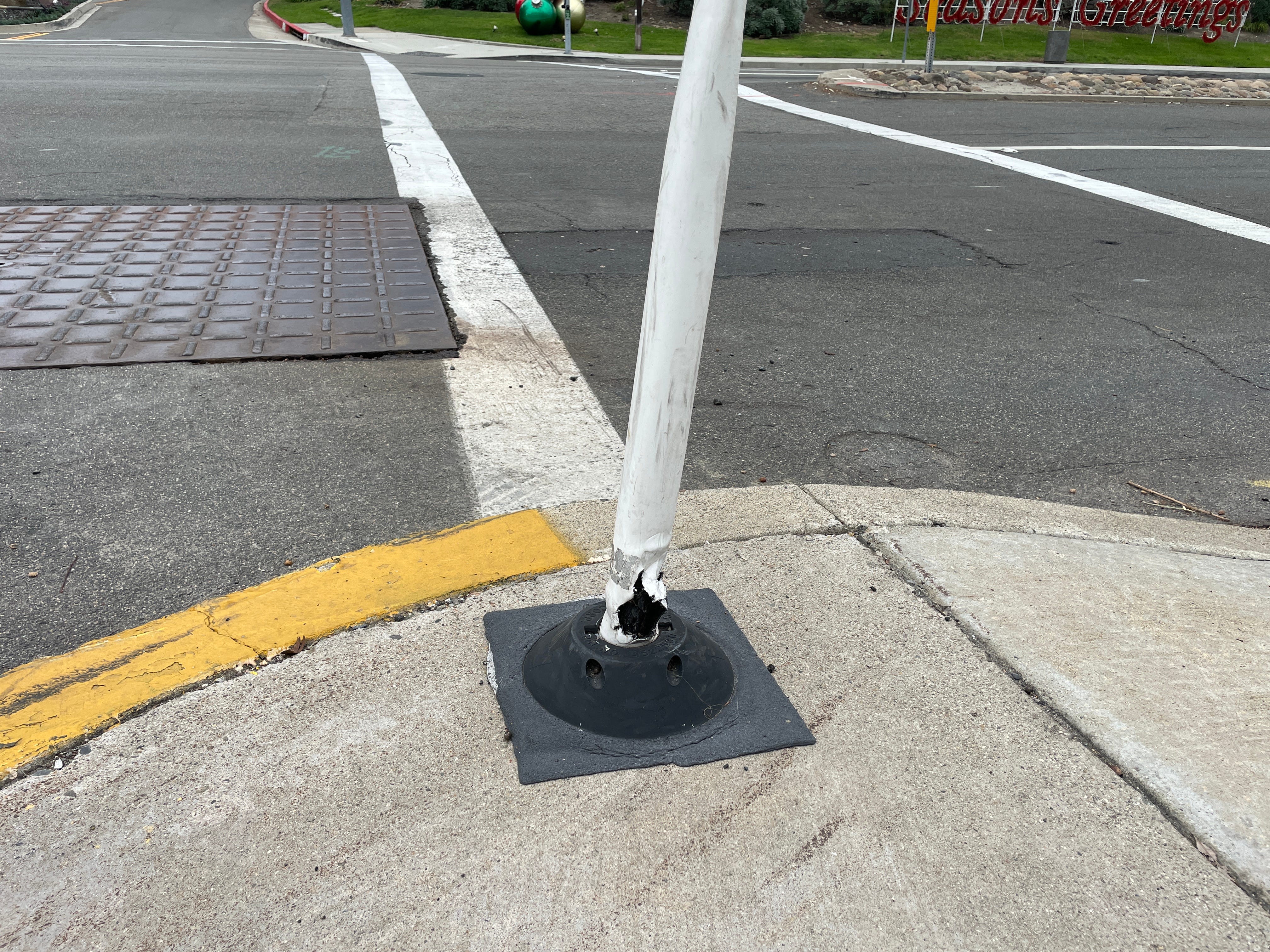
Flexipoles are not protection. They do not protect pedestrians or bikers from multi-thousand-pound vehicles moving at 40+ miles per hour. It is quite the opposite! Flexipoles are designed so that drivers can drive over them without doing damage to their own vehicles.
In Dana Point, drivers have hit this curb for almost a decade, as seen by Google Street View. Back in 2016, there were no flexipoles, and the curb at the island was mangled with obvious hits from cars. In 2017, three flexipoles were installed. Moving through the years, cars have obviously continued to hit the curb and the poles, as they sometimes disappear and reappear in the snapshot.
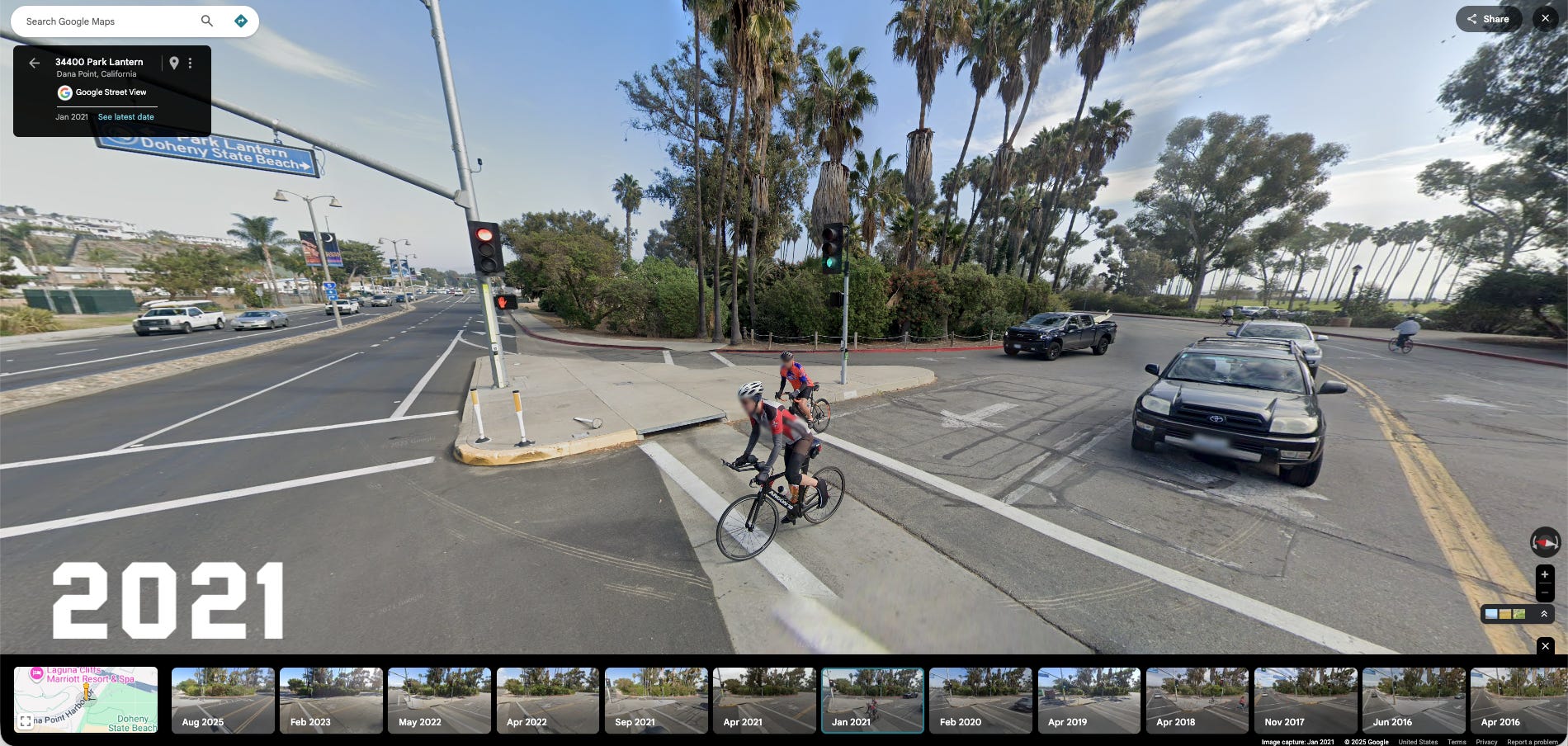
Even though the city had basically a decade of data showing that cars continually smashed into the pedestrian island, they chose not to make the space safer for people standing there. Instead, they kept the cheap plastic flexipoles so that dangerous drivers did not damage their own cars.
Breakaway & High Vis
On a similar note, the traffic signal that sits on the pedestrian island even hides a deadly design for everyone outside of a car. If a driver smashes into that pole, it will fall over and allow the car to continue through the crash. It is called a breakaway pole. This kind of forgiving design for drivers is standard in American street planning.
Yes, for a driver, this design is certainly safer. However, if anyone outside of a car is around when this crash happens, the design is much more dangerous. First, the pole itself creates a hazard by potentially falling on someone. Second, the out-of-control vehicle will continue its trajectory into potential bystanders.
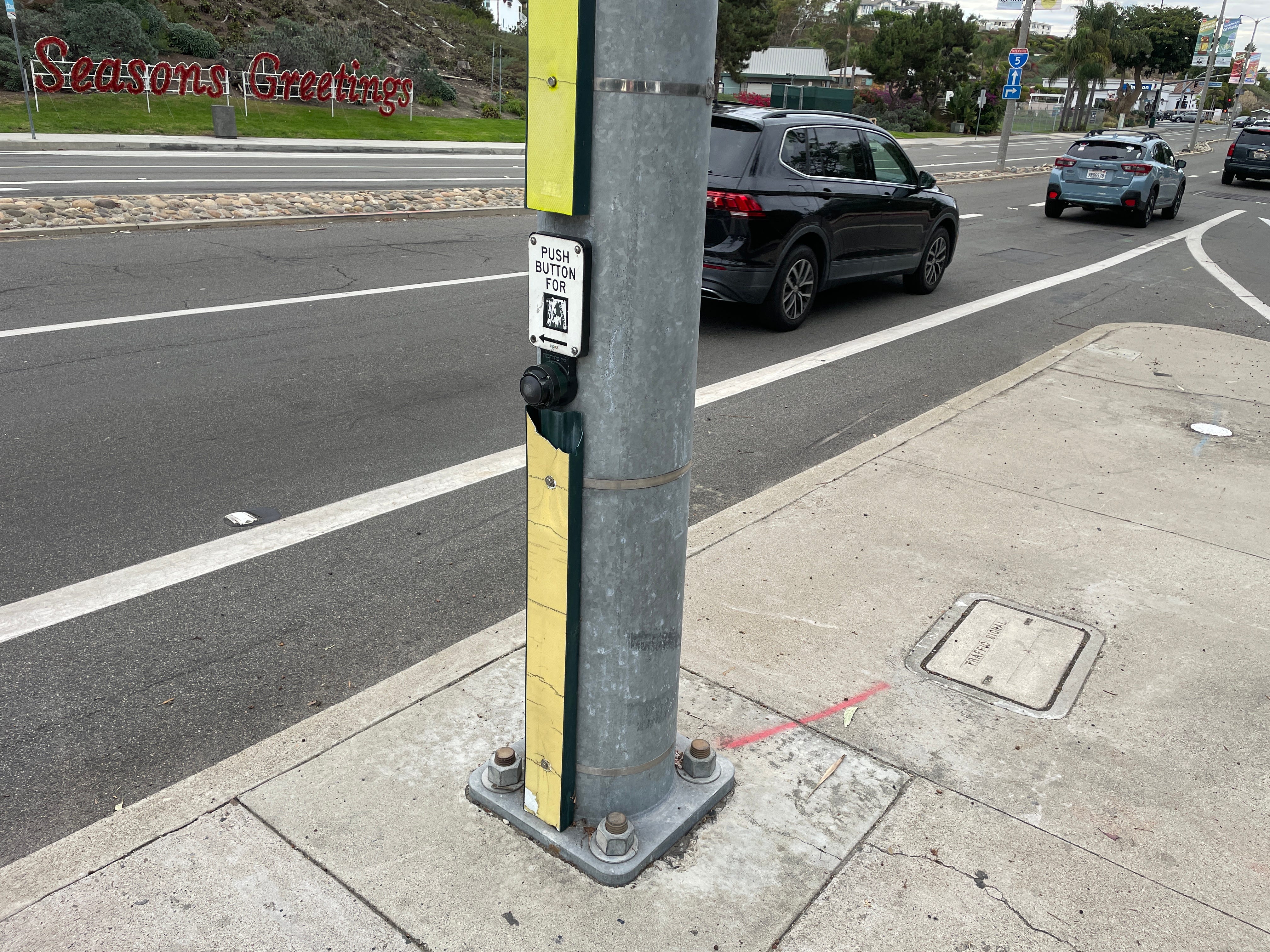
At this very pole, the city also has high-visibility material covering it, conceding that it is a potential target that drivers might hit. This high vis material is a big sign to drivers saying, “Please don’t hit this pole.” Yet, drivers still come close given the scuff marks and busted flexipoles. Even if a driver hits the pole, covered in neon yellow, with a flexipole around it, the breakaway design is still another protection for them.
Yes, breakaway design can save a driver’s life, but having them in heavily pedestrianized areas is also not advisable. The beach and this part of Dana Point are just that, a place where many people are walking or biking. This means that the safety of drivers has superseded everyone else at this intersection, including for Luis Adrian.
High-Speed Streets
A lot of the choices above are made with driver safety in mind. Yet the things that make driving safer make walking or biking less so. There is one thing, though, that makes our streets safer for everyone: slower speeds.
The area around the intersection is designed as a high-speed road. Cars are flying through this street at 40 miles per hour. For a driver, this might seem fairly slow. But for walkers, a car zipping within a couple of feet going this speed is unsettling. Likewise, getting hit at the speed is almost always deadly.
It is not simply about speed limit either; it is about design. The streets there in Dana Point are all fairly broad and wide open. They are designed more like a speedway rather than a popular pedestrianized beach area. It is no wonder that drivers constantly hit the pedestrian island and curb. Everything about the street design is telling them to drive faster.
Why Do We Placate Dangerous Drivers?
The driver in this case reportedly had a couple of DUIs even before this most recent tragedy. In one previous case, it was even stated that the driver hit cars in front of a high school. Someone is lucky not to have been killed that time. Apparently, the Watson Rule had been used to get on probation and drive again. This rule means that if there is a death resulting from another DUI, the driver would have to plead guilty to murder.
I am hoping justice can be applied in this singular case. But it makes me wonder why we even give dangerous drivers the choice. Only five minutes away, another driver with multiple DUIs reportedly killed someone earlier in the year. The next town over, Laguna Beach, is the drunk-driving capital of California. People are leaving the beach after drinking all day and driving home.
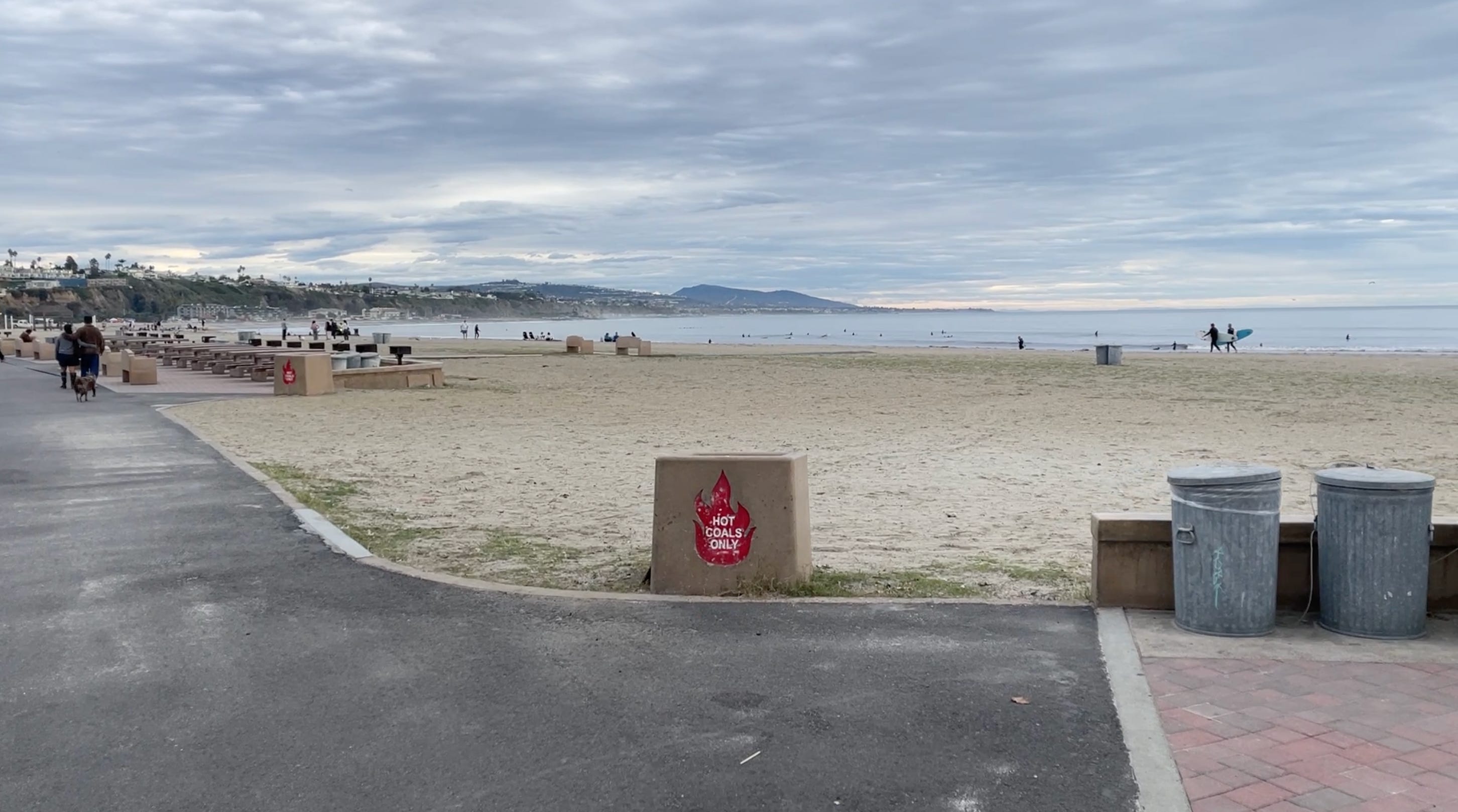
Over and over again, we make sure our streets are safe for drivers with multiple DUIs. Proven dangers are given more chances to drive again. Their poor choices are given priority over everyone else’s safety.
The intersection where the boy was hit was designed to be maximally forgiving to the driver with multiple DUIs. The city made the street wide open and a slip lane so they didn’t have to slow down. They installed flexipoles and breakaway poles so that when they did plow through a pedestrian island, the driver would be safe and damage to the car would be minimized.
What Can We Do?
All of the issues above are fixable. We can make our streets safer, starting with the intersection where Luis Adrian was killed. We must redesign our streets and spaces where cars and pedestrians intersect.
The first, and easiest thing, to do is to get rid of the slip lane. We do not want tipsy drivers flying out of the beach anyway. Let them take it slow.
Next, we must remove the flexipoles. Flexipoles should only be used as a temporary measure before more permanent barriers can be installed. They should be replaced with concrete barriers or heavy-duty bollards. In a place like the beach, the city can even match the aesthetic so that it doesn’t look chintzy anymore, too.
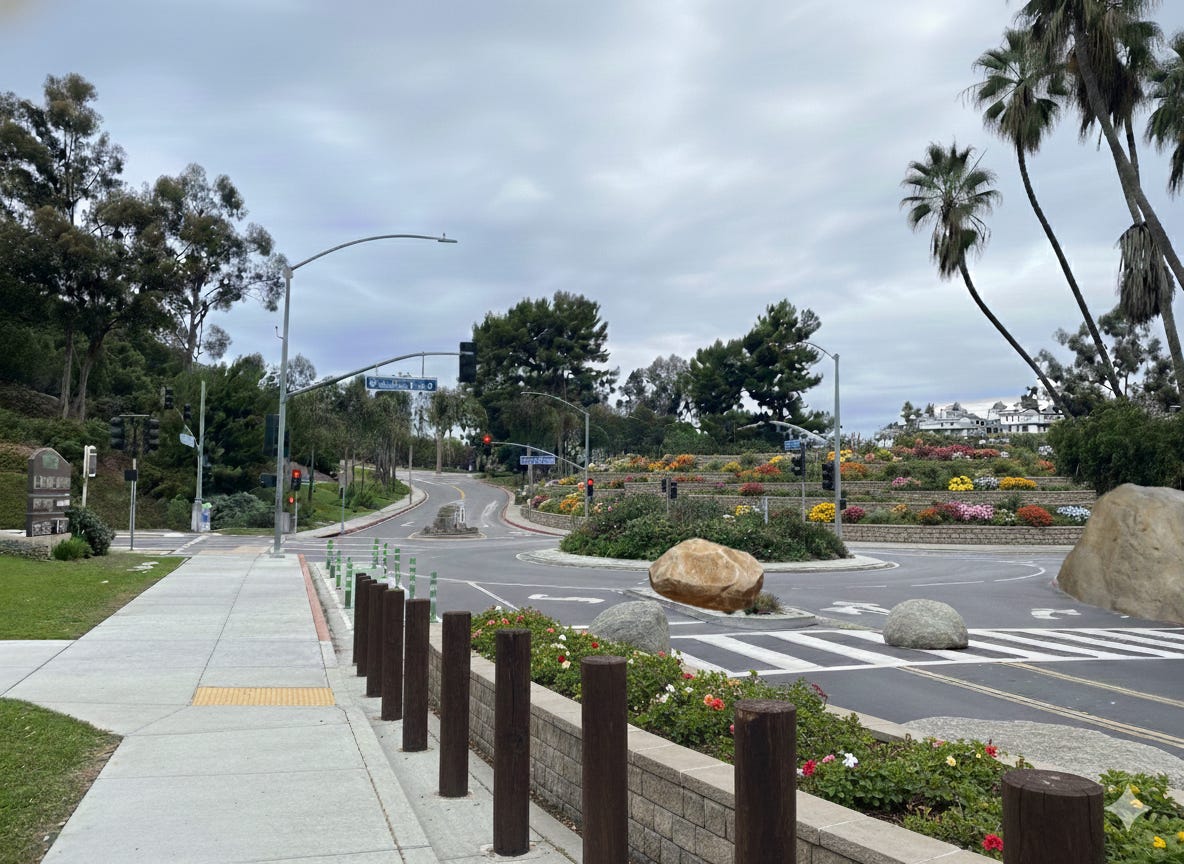
Adding the permanent barriers or bollards means the breakaway design is moot. Replacing the light with a traffic circle would be great, too.
Slow down the speeds around the area by narrowing the lanes. A speed limit sign will not do the trick. We need lanes narrowed with concrete, barriers, and trees so that it feels a bit uncomfortable to drive there.
Some of you may be saying, well that driver was drunk and/ or high, people like that will always create unsafe conditions. While I do agree, it is also important to note that what we want is a driver like that to wreck their own car much earlier, before they barrel over some school kids on their way to the bus. We want them to hit rocks and concrete, not flesh and blood.
But I also agree that we should take things like a DUI with a hit-and-run violation more seriously, which is reportedly what the accused had here. Why should we allow someone like this to have full range of the road again?
We should certainly pull licenses for a long period. If we do allow them to drive again, these kinds of drivers should have speed governors on their cars. They should also be barred from driving big trucks. Let them drive a small Mitsubishi Mirage or comparable model. Faster speeds and bigger models equate to more dangers. Better than all of this, they should simply just start taking the bus instead of having their privilege returned.
We need to have the courage as a society to do both: redesign roads and restrict drivers. If we want more kids walking to school again, these are the things we should do. Until then, many parents will be hesitant and, instead, will sit in the long school pick-up line each and every day.
Note: You can support the family of Luis Adrian Morales-Pacheco at their Go Fund Me here.
Thank you for this. It should be shocking to everyone that the simple steps you undertook to ponder what happened isn't automatically done by a municipal government every time a death occurs. Official acceptance of dangerous design is the real crime.
It's shocking how many memorials you see when you are aware what a teddy bear or a white bike by a sign/post means. Thanks for doing the groundwork to highlight the dangerous design. I hope they are able to get bollards into this intersection now. No one else should have to die (and no one should have died in the first place).