This article is the final installment of my United States Semiquincentennial Series. This series is a celebration of the country, its history, and the American people. See the previous editions on the Space Race, National Geographic, and the World Cup.
The topic centers on the show Deadwood. If you haven’t seen it (go watch it!), you can still enjoy the article for the history, urbanism, education, travel, and more.
Deadwood was a show that ran three seasons from 2004 to 2006, along with a movie in 2019, depicting life in an 1870s mining camp. The show, while dramatized, offers a glimpse into American history and our pioneering spirit, warts and all. The first season begins 100 years after the founding of the country, right during the Centennial, and 150 years before 2026’s Semiquincentennial.
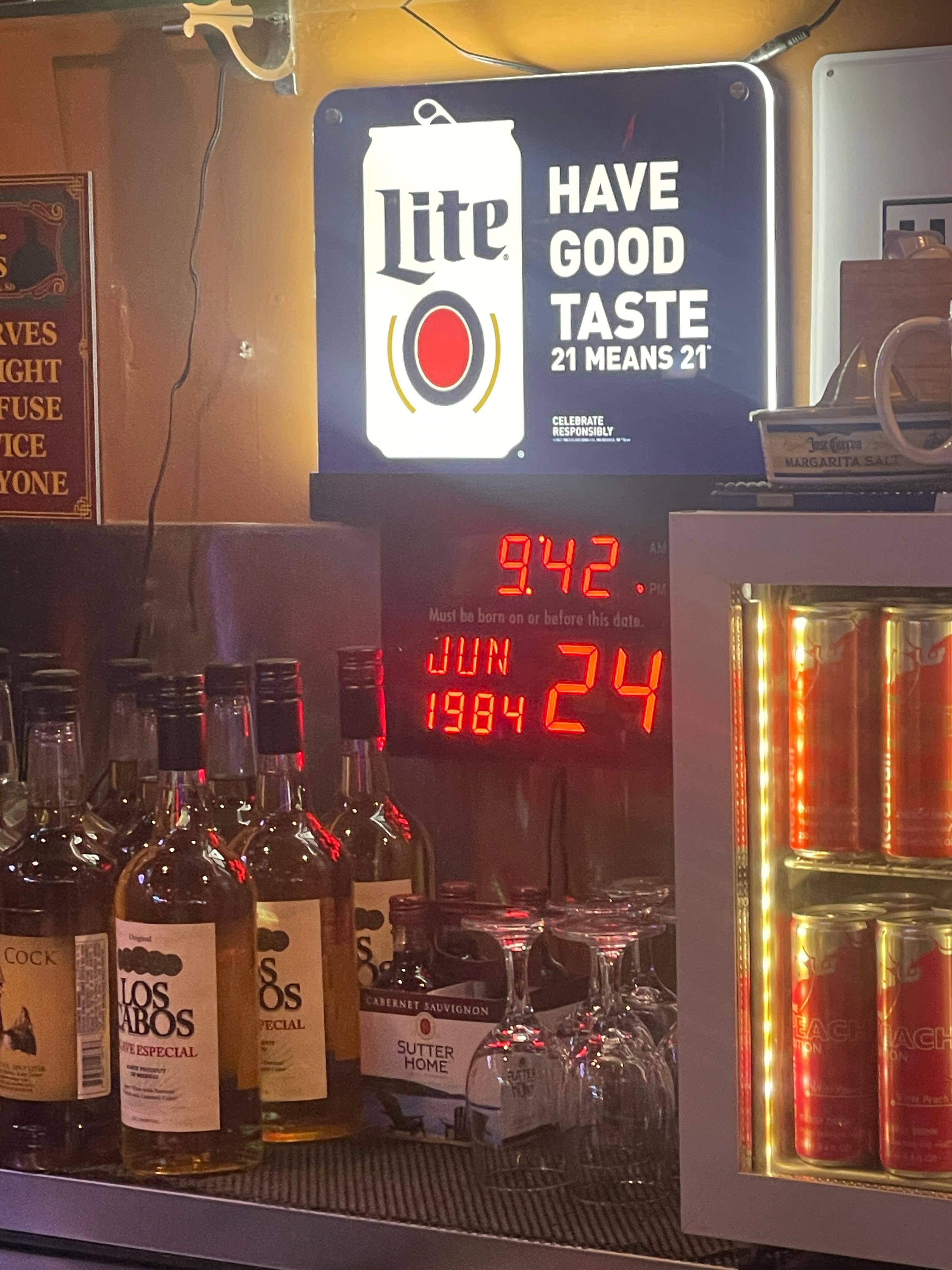
Unfortunately, Deadwood sometimes gets lost in the shuffle of other great HBO series of the era, namely The Sopranos (another all-time show that I will have an article on in the future). To me, Deadwood should be considered alongside the greats. My wife and I like it so much that we took a road trip to the real-life town of Deadwood, South Dakota, this summer.
The town leans heavily into the identity of the show. Although the reenactors I met weren’t usually the biggest fans, saying that it wasn’t accurate. Of course, HBO had to dramatize for TV. Nonetheless, comparing both the historical and contemporary aspects of urbanism and education in the town of Deadwood has a lot to say about the trajectory of the entire country.
19th Century Urban Planning
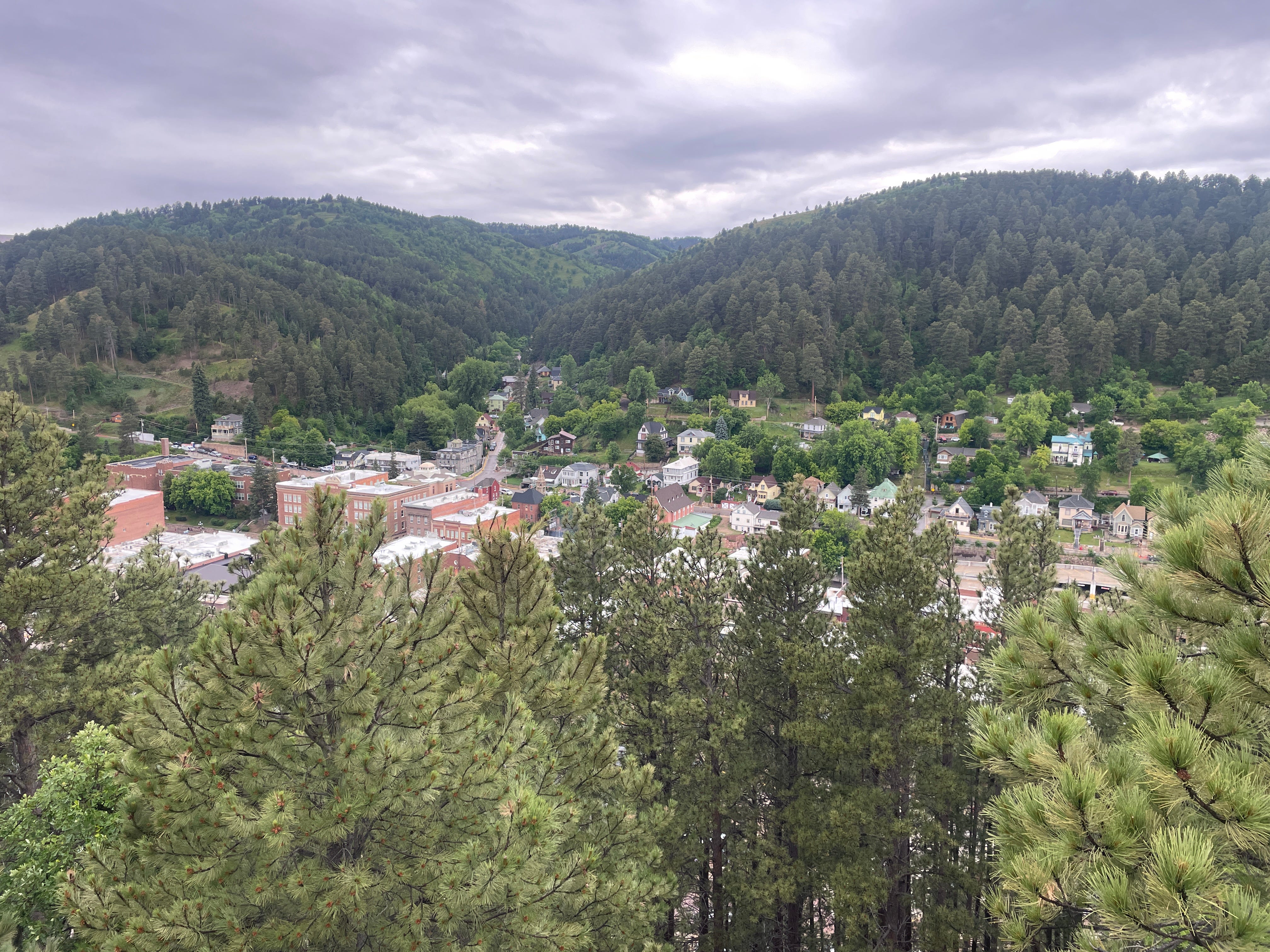
Deadwood gives the audience a view into the traditional style of American development. When we were first building towns, a street grid was laid out by the founders, with property plots marked off. As new people came in, they bought these lots and were able to build how they saw fit. This was the same with the pioneers and miners who first arrived in Deadwood Gulch in the 1870s, building it into the town it has become today.
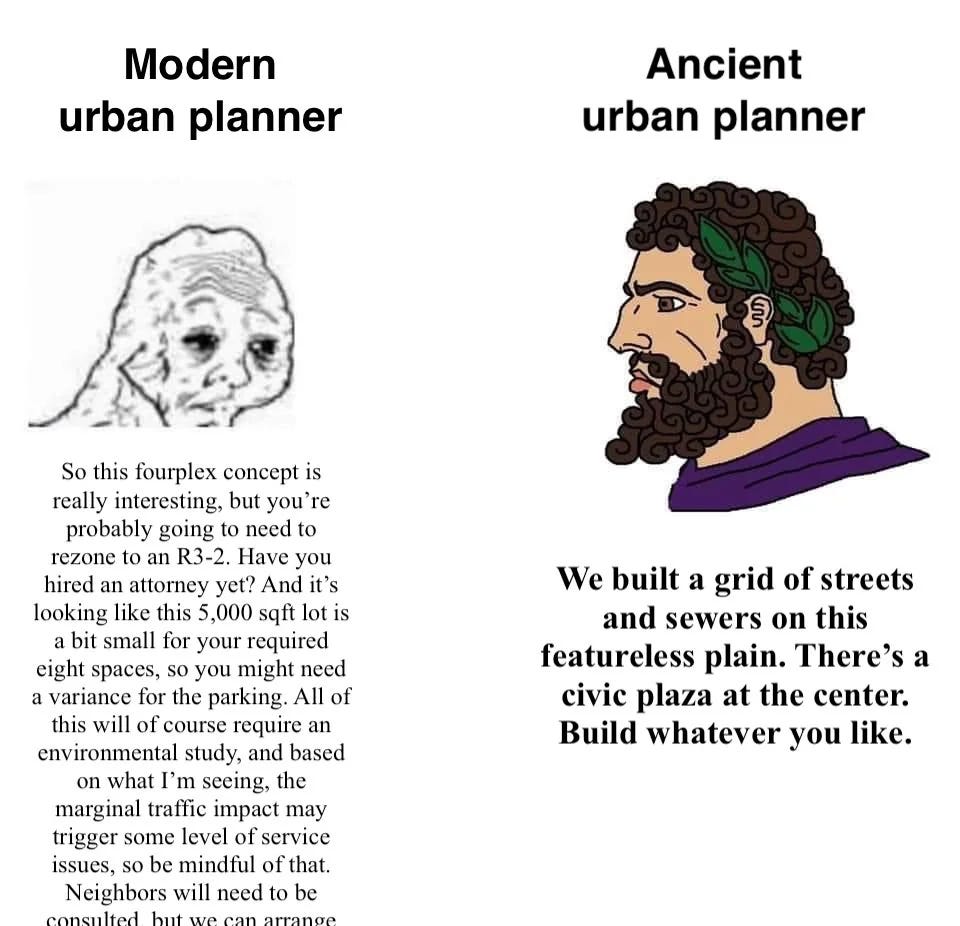
In the show, Al Swearengen and Tom Nuttall considered themselves the town founders, two true pioneers, in Al’s view. They were some of the first residents, chopping down trees to make way for civilization. The pair both had choice locations for their bars, with Swearengen taking a leading role as a kind of anti-hero in the series.
Deadwood illustrates the incremental approach that American towns once had. The muddy mining camp starts out with a lot of tents and non-permanent structures. Eventually, more businesses and people move in, such as Seth Bullock and Sol Star, building up the camp into a town. We see an evolution from the pilot episode to the end of the series, with everything in the town filling in, from bars, banks, schools, more bars, and even the fire brigade.
The real-life version of Deadwood experienced this same kind of growth that the show depicted. Once gold was discovered in the Black Hills, thousands of fortune seekers flocked to the area in hopes of striking it rich. Businesses and buildings popped up along Main and Broadway, classic American street names that can be found in towns and cities across the country. Craven Lee, who was not depicted in the show, was one of the key real-life founders, helping to establish the city’s grid layout. Lee survives through a street named after him, right where I stayed during my trip.


Residential areas grew when locals were pushed out by commercialization. It simply made too much financial sense to have businesses in the central part of town. One new residential area even pushed out an old cemetery, moving it further up the hill to make way for more housing. The Presidential District (aka Ingleside) became the wealthy enclave of Deadwood’s most fashionable. Some of the beautiful large Queen Anne-style homes survive.
That same cemetery now sits up a hill at the edge of the residential neighborhood. Admittedly, it is a slog to walk to, but it makes more sense than in the middle of town. Could you imagine if a city tried to move a cemetery today? The site itself has become one of Deadwood’s most popular tourist attractions. Both Wild Bill and Calamity Jane are buried next to each other there, along with Seth Bullock and his wife, Martha.
While the historic downtown and surrounding residential neighborhoods keep the charm that comes with walkable cities, autocentric development has encroached on these American traditions. The Family Dollar, which doubles as a grocery store, was obviously more recently built than the rest of Deadwood. The dead giveaway is that it’s set back far from the road, surrounded by a sea of parking. In a literal transportation progression, the site of the old livery stable is now the main parking structure. Not even a town as historic and traditional as Deadwood could stop the onslaught of post-War planning.
Perhaps the show portended sentiments of American NIMBYism to come. In season one, Al put a stipulation on selling a plot of land that limited the new owners, Bullock and Star, from establishing a rival bar with girls and gambling; they oblige. Yet, it is not quite universal zoning, as another rival, the devilish Cy Tolliver, does sneak into town anyway with the Bella Union. Al also initially detested the installation of telegraph poles and wires (he would come around to their usefulness).
In the follow-up film, the mining tycoon George Hearst returns as the villain. He was attempting to install telephone lines to the town. Charlie Utter blocking this installation is a central catalyst for the action. In this case, the bad guy is trying to bring what will eventually become a necessity while the good guy fights against it. Retrospect.


Even some of the real-life town’s founding lore says that Deadwood was staked because some miners didn’t like the rules in a nearby campsite. In the town today, for the gunfight reenactments they hold in the middle of the town on brick roads, they need to set out orange cones so some moron TikToking while driving doesn’t barrel into the crowds.
There is an American identity of being rough-and-tumble cowboys and ranch hands. This ideal is glorified in Deadwood. But the perceived rugged individualism is usually a false suburban identity. Modern America is simply an easier place to live compared to 150 years ago. Still, the spirit of Deadwood endures, even if the hardships have ceased. Our urban planners should be reminded of that.
Educating the Frontier
Education in the show Deadwood illustrates the progression of the town itself. At first, Deadwood was just a dangerous tent camp, where adventure-seekers wouldn’t dare bring their families. As the camp got more established, women and children started moving in, albeit still a dangerous place. How to educate children became a running theme in the show. It might seem strange that husbands would move their wife and children to such an unforgiving place. But this was indeed the reality of the real Deadwood.
Horace Mann started the Common School movement in 1837 as the state’s first secretary of its Board of Education. One-room schoolhouses began dotting the landscape across the country, even on the American frontier as we made our Westward expansion. Deadwood was no exception, building several grade schools and a high school in 1881. At that time, even graduating high school was rare, at under 3.5%, as shown in the chart below. Most adults (≈15%) ended up illiterate.

Schools then brought women to the frontier that was dominated by men. In the show, the town first brings in a teacher from back East. She barely lasted an episode, leaving after witnessing the newspaper being ransacked. The short tenure of teachers then was typical, relating to so-called Marriage Bars that prohibited married women from teaching. The show does not follow this real trend, and eventually installs Seth Bullock’s wife, Martha, as the town’s teacher.
It might not be so surprising that Deadwood had K-12 schools in this era, but the Dakota territories also had higher education during this period. College attendance was lower than 2% in the 1870s, meaning that Doc Cochran may have been the only character on the show with some kind of higher learning. In real life, Black Hills State University was established in 1883 in nearby Spearfish, just a few years after the series is dated. By the time the movie is set, what was then known as Dakota Territorial Normal School would be up and running.
These “Normal” colleges were typical across the United States during the late 19th and early 20th centuries. They were explicitly founded to train teachers. The name “Normal” fell out of fashion, and most of these institutions transitioned into full universities by the 1950s. Some famous institutions started as these Normal institutions, such as UCLA and Arizona State University. My alma mater, the University of Central Oklahoma, was also a former teacher training school called Territorial Normal School.
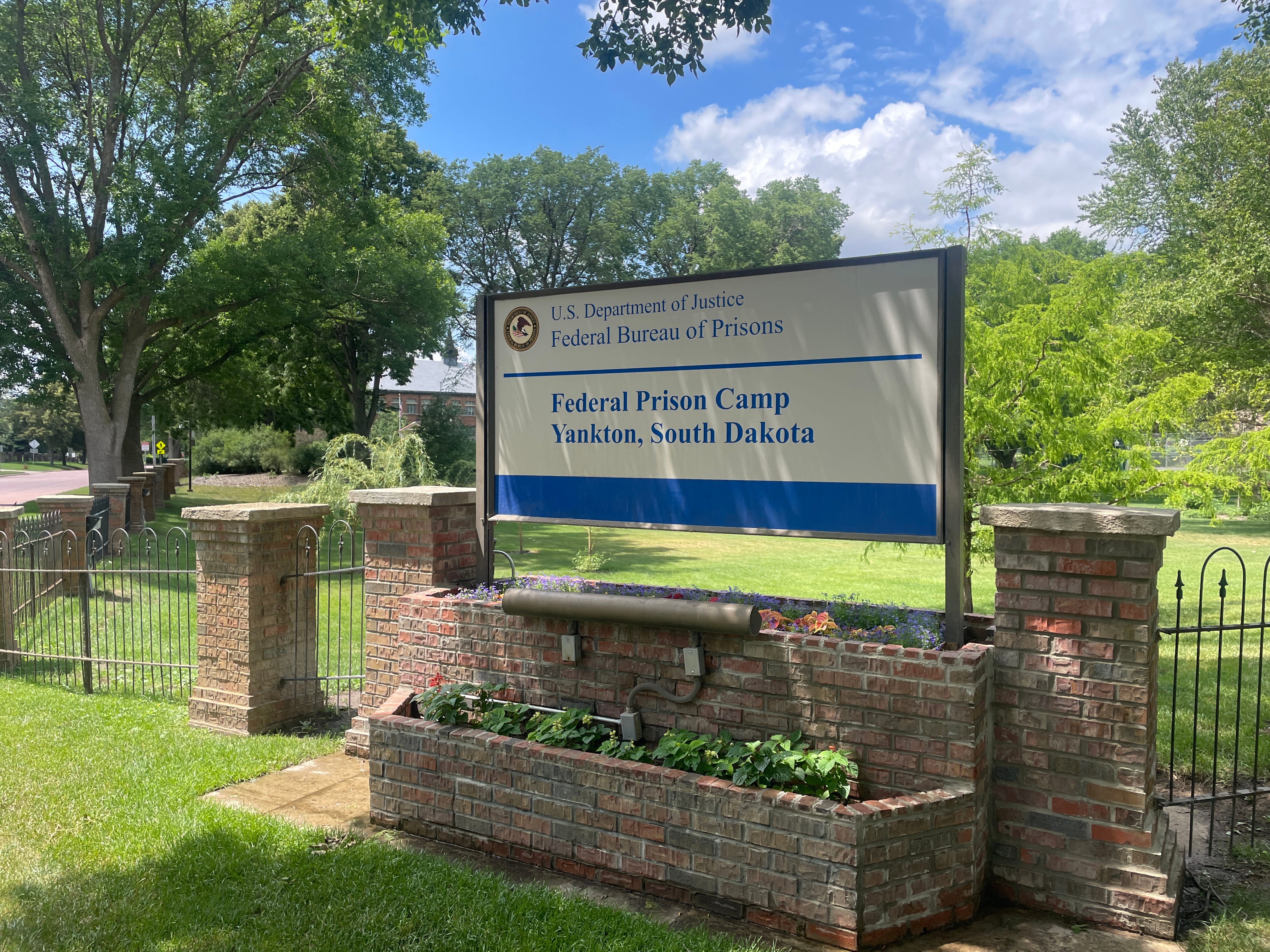
It wasn’t just teacher training institutions popping up during this era. Over in Yankton, the much-hated rival town in the show, Yankton College was established in 1881. The Christian college had a storied 100-year history, but eventually closed down in 1984. The campus has since been converted into a Federal Prison. Talk about adaptive reuse!
The educational numbers would continue to rise through the turn of the century. While high school took off in the 1910s, it would not be until the post-War boom that higher education attainment soared. If you want to see what happens in later decades in the 20th century, check out my article on Dazed and Confused.
The Education and Urbanism of 'Dazed and Confused'

Dazed and Confused is a 1993 movie that depicts the final days of the school year back in 1976, the US Bicentennial. It has become a cult classic because of its legendary cast, soundtrack, and overall vibe.
Today, there is still no higher education institution in town, only those in neighboring towns such as the Sanford Underground Research Facility in Lead. This facility is one of the deepest underground laboratories in the country, with bleeding-edge research on dark matter and neutrino physics. Likewise, Deadwood still has elementary and middle schools, but the high school has long been consolidated with neighboring Lead—certainly a sign of the times.
Newspapers Foundational to American Identity
Newspapers aren’t exactly schooling, but they have been crucial in providing an education to the citizenry, a principle dating back to the Founding Fathers like Thomas Jefferson. In a time and place where formal schooling was rarer, such as Deadwood in the 1870s, newspapers were central.
Alexis de Tocqueville, the famed French diplomat and philosopher, toured the United States in the 1830s. His musings offer key insight into the American sociopolitical background of the US during the day. One reason Tocqueville believed the US could stay so connected as a unitary identity despite spreading across a far and wide landmass was newspapers. Newspapers offered the country national cohesion during a disconnected period.
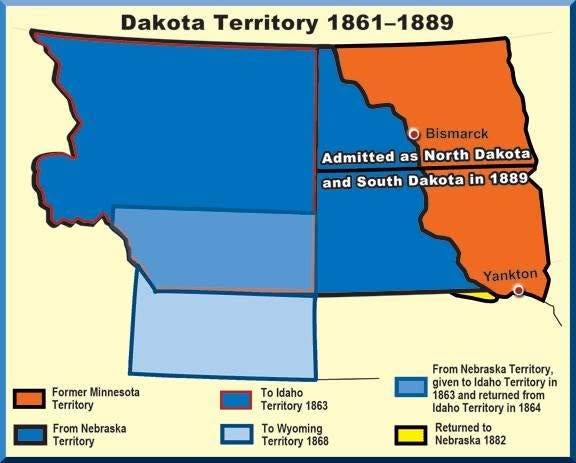
Deadwood, set just 40 years after Tocqueville’s journey, illustrates his point on newspapers. The Deadwood Pioneer, founded by A.W. Merrick, was an important institution for the town, with critical functions such as announcing town policies (as dictated by Al), reporting news (like statehood rumors), and keeping connections with civilization. Perhaps coming short on the last one: Dan Dority, Al’s right-hand man, complains there’s no baseball reporting in the newspaper.
In real life, the paper was actually named the Black Hills Pioneer, still founded by Merrick. It played the same roles as the fictionalized version. Although, the paper did not spar with Hearst, who was famous for his litigious strong-arming of rivals. Later, though, Hearst departed the Black Hills for good; he would purchase what became the San Francisco Examiner in 1880. When he was elected Senator, he handed it over to his son, William Randolph Hearst, who went on to be one of the most well-known newspaper magnates in US history.
Print catalogues were also key commercial outlets of the day. In season one, a piano gets delivered into Al’s bar via Montgomery Ward’s. This is the same catalogue that sold Sears Kit Houses, which debuted about 30 years after the show is set. Montgomery Ward’s survived as a department store until the 90s, dying with the lost malls of America. It had survived the Old West, but could not survive Amazon.
The written word remained a powerful American institution until other forms of media, first by the radio, then eventually TV, and now the internet. The excitement of getting a telegraph wire was depicted in the show. The telegraph operator, Blazanov, worked closely with Merrick and his newspaper. Al (eventually) recognizes the power of this information flow, co-opting both into the fold of his team.


In real life, Deadwood got a telegraph line to Cheyenne, Wyoming, in 1876. Deadwood Mayor. E.B. Farnam, who wasn’t as wormy as the show depicted, exchanged the first message with his counterpart there. Today, the Black Hills Pioneer survives, although it has changed hands numerous times and had various name changes.
Of course, the Hearst legacy survives in the media through Hearst Communications, which remains one of the largest media conglomerates in the country. Hearst’s wife, Phoebe Apperson Hearst, too, has left her mark on the civic cultural life with the Hearst Library and the Homestake Opera House, both in nearby Leads. I should also mention another captain of industry who left his mark from afar in Deadwood: Andrew Carnegie, whose library still stands there today. It is still beautiful.
An Immigrant Nation Show
The American mythos is built on us being an immigrant nation. This national ideal is heavily felt in this series. The show was set in a period of a boom for immigration that would last 40 more years. Many of the main characters were immigrants from abroad: Sol Star was from Austria, Seth Bullock was from Canada, and Al was from England. Other side characters include Wu from China, Blazanov from Russia, and Jack Langrishe from Scotland. The Irish, Cornish, Swedes, and Germans all make up a good portion of the miners and pioneers, loveably called “hooples” by Al.
While these immigrant roots are often celebrated in the show and the US in general, the levels of migration we see depicted in Deadwood would not last. Growing anti-foreign sentiments swept the country in the late 19th and early 20th centuries. The passage of the Immigration Act of 1924 put massive caps on migration, including from European countries.

The show also depicts the lives of the early Chinese migrants to the country. It was true that the town did once have a thriving Chinatown during this period. The plight of those coming from the Far East was much starker than that of the settlers from the East Coast. While it was no easy time for any population, the Chinese were treated as second-class citizens, sometimes just above slave labor for the so-called coolies, as illustrated by Mr. Wu’s operation in the show.
This was not a pleasant time to be Chinese in the US. The Chinese Exclusion Act of 1882 was passed just a few years after the show’s setting. There were consistent riots across the country where Chinese would be beaten and lynched, blamed for management undercutting their wages with foreign labor. These difficulties did not subside until after World War II with the passage of the Immigration and Nationality Act of 1965, which opened the US back up to immigration.
But just like the spirit that drove Americans and Europeans alike to Deadwood, the Chinese held that same conviction that a better life awaited them across the Pacific Ocean. The Chinese even call the US “美国,” literally translated to “Beautiful Country.” I know this label had to be about the natural landscape, because it certainly wasn’t about how society treated the Chinese at the time. Surrounded by lush mountains, Deadwood, the Black Hills, and the entire Dakotas certainly are the Beautiful Country.
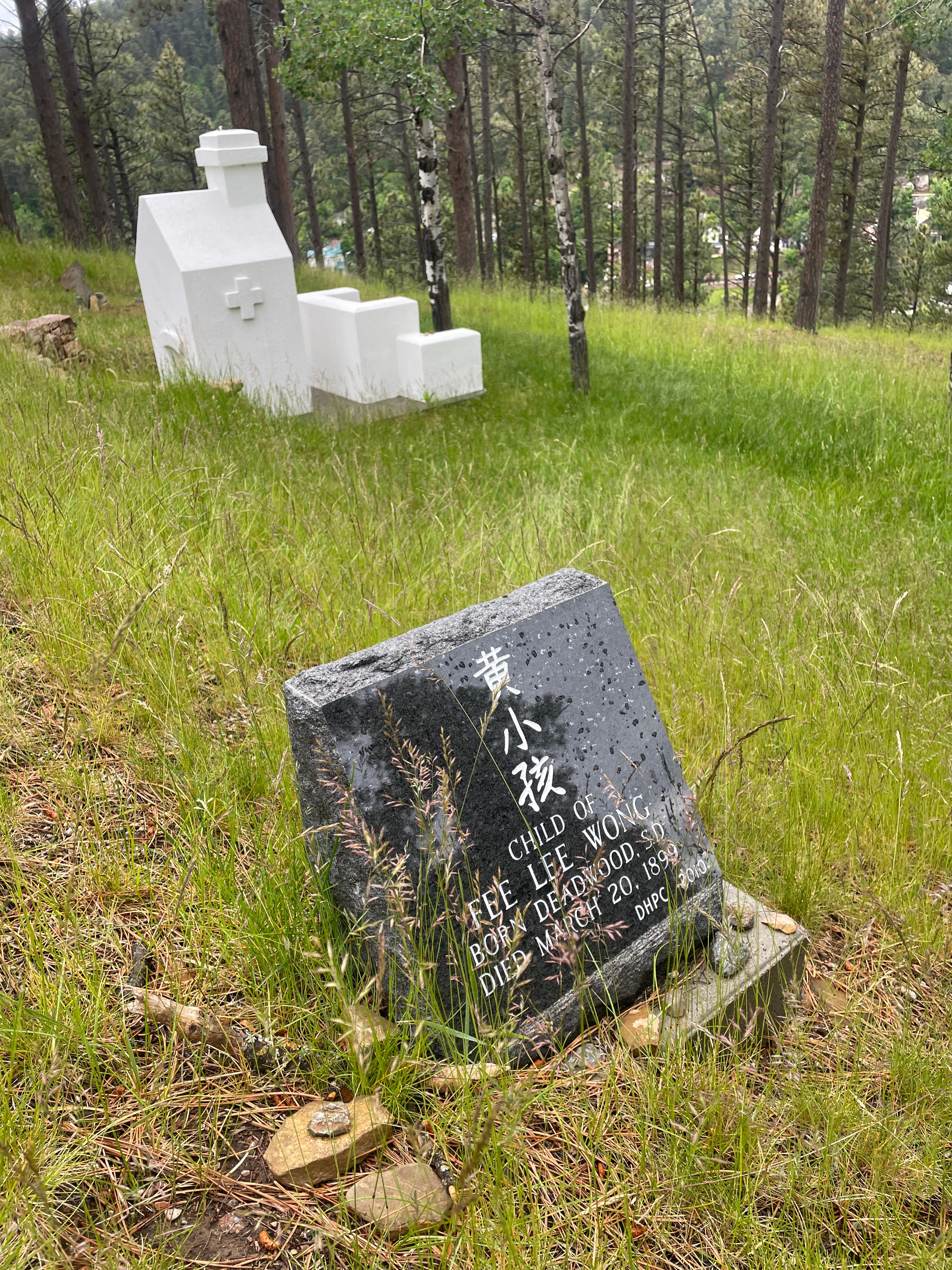
By the 1880s, there were over 200 Chinese in Deadwood’s Chinatown. At first, the Chinese migrants mostly focused on servicing the mining camp itself, such as laundromats, grocery stores, boarding houses, bakeries, and even opium dens. There was even a school to teach English to the migrants. In the film, Wu’s nephew speaks fluent English and acts as the translator. But the last of these early Chinese migrants to Deadwood moved away in 1931, with the Chinatown fading away with them. The old Chinese portion of the cemetery is all that remains of this community today.
American Tenacity
Being out in the Black Hills, you can really feel the pull of the West. Deadwood is an outpost among outposts. There isn’t much around other than the wide-open skies. The US has long had a sense of Manifest Destiny, the view that the small colonies on the East Coast would eventually spread from sea to shining sea. Of course, that was hubris then. But that hubris did indeed complete the destiny.
Deadwood was just one small example in a broad history of westward expansion. I’m sure the pioneering spirit of the day’s past made the region an even stronger draw. “The world ends when you’re dead; pain or damage don't end the world. Or despair or f*#%¡ü@ beatings. The world ends when you're dead. Until then, you got more punishment in store. Stand it like a man... and give some back,” Al says to Merrick, in a speech that oozes this tenacity.
During the time period of Deadwood, getting to the town wasn’t like a relaxing road trip through paved highways to a little resort hotel. It was a long, hard slog over rough terrain through dangerous conditions to arrive in the wilderness. The founders of Deadwood did indeed tame the wild, but the cost was staggering.
Countless lives were lost to this move, through disease, accidents, violence, and conflict. Native American civilization especially took the brunt of these forces, losing land, traditional territory, and an entire way of life. While the show Deadwood does not focus on Native American plight, the film Dances with Wolves, filmed nearby in South Dakota and parts of Wyoming, depicts the striking calamity that followed the Western movement.
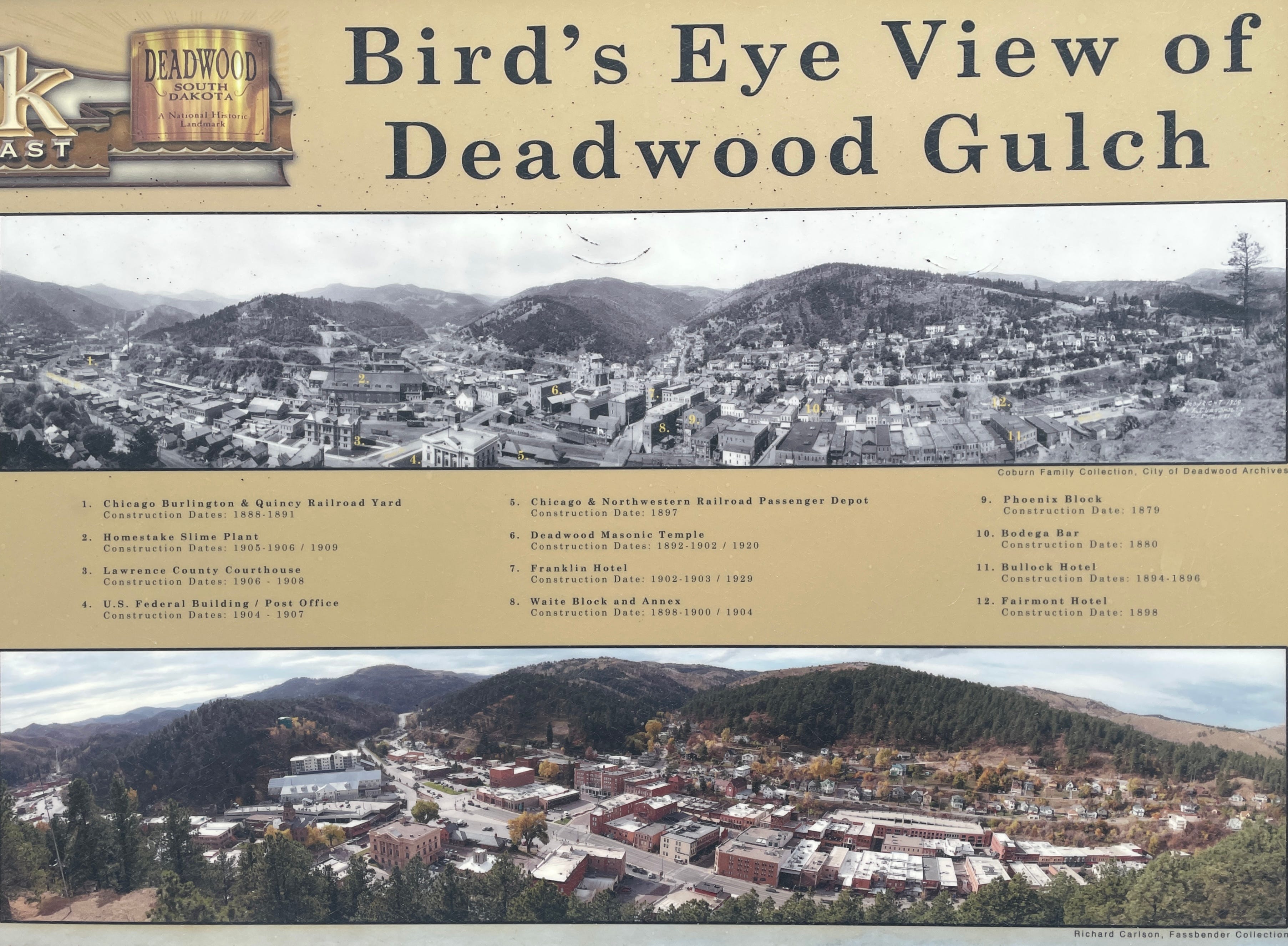
Another key feature of the real town Deadwood that wasn’t depicted in the show was the constant disasters that befell the area. There were constant floods, mudslides, and fires. Deadwood, the town, was destroyed multiple times by these disasters, with all of the structures built at the beginning of the town lost in fires. The entire town is actually raised above the ground floor where these structures once stood.
Yet the people who made this journey must have believed in this pull of the West. There was riches to be made, or at least a better life found, at the end of the trail. The follow-up movie to the show begins with South Dakota’s statehood in 1889—the cast’s triumph. The real town stands as a memorial to this spirit today.
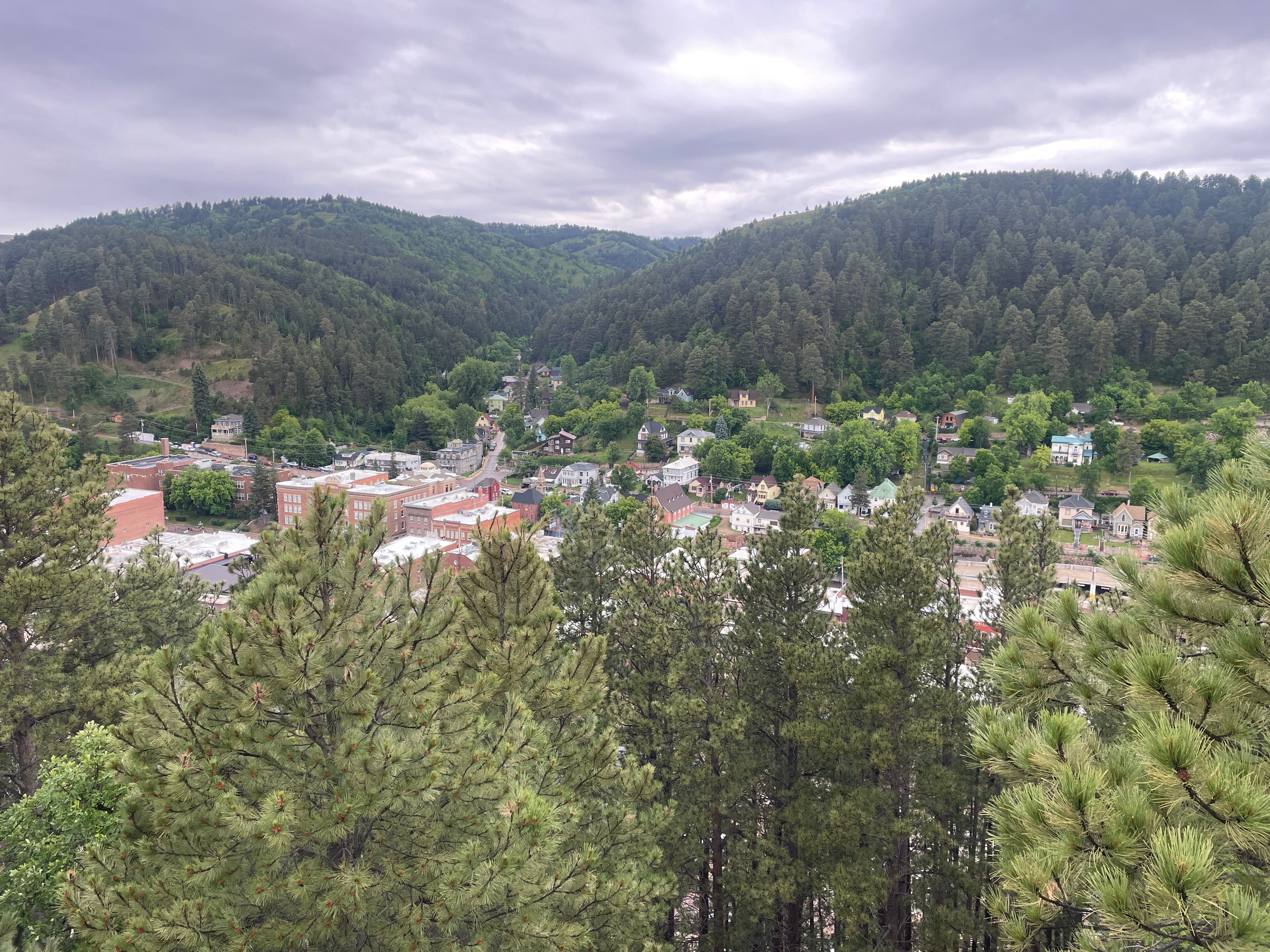
Deadwood does not survive in the exact same way as it once stood. Instead, it has been rebuilt multiple times over due to disaster and progress. Many of the historic structures that remain were built around the turn of the century, dating to the late 1800s and early 1900s. In the basement of Wild Bill Bar, patrons can see the exact site where Jack McCall killed Wild Bill Hickok, a crescendo moment for the show’s first season. The attraction sits in the basement because the town had to be raised to deal with floods. The structures from the rebuilds have been preserved, and the old downtown has been totally renovated.
Kitschy Americana Tourist Town Today
Much of the show centered on local businesses, especially entertainment, from gambling to prostitution. This same spirit is still around in the town today. Well, not the prostitution, as far as I could tell. But there were casinos everywhere. And the mountains that once attracted settlers to the Black Hills 150 years ago now attract visitors for skiing, like Terry Peak Ski Area.
At first glance, during my trip to Deadwood, I was surprised that it had turned into a cheesy tourist attraction. Every hotel seems to have a casino, impersonators walk the street performing for the visitors, and contrived versions play on the show’s success (such as Mr. Wu, using the likeness of the actor with no real connection to Chinatown).
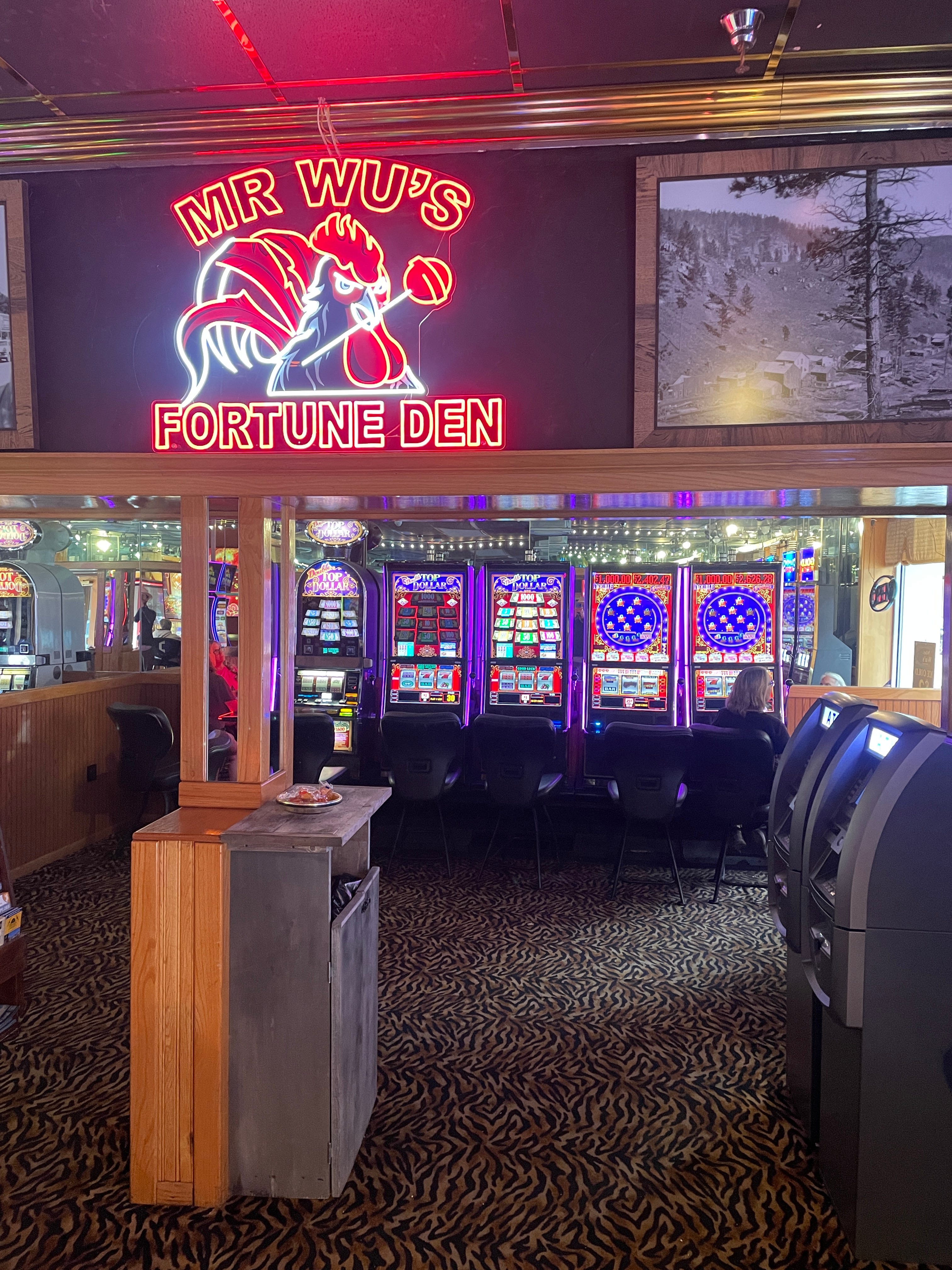
But what I found was fun. I like this contrived version of Mr. Wu’s! Sitting at the bar, drinking cheap whisky, hearing the whistles and dings of the slot machines all around me, while chatting with my wife, locals, and bartenders. The in-your-face cowboy bars with photos of Wild Bill, wagon wheels, and rope on the walls were actually fun. I was happy to give them my money, and they were happy to take it. It's all kitschy Americana, and I loved it.
In retrospect, I think becoming a tourist town makes sense in the trajectory of Deadwood. The show depicts a place that is obsessed with making money through gold, brothels, gambling, and bars. These are natural evolutions into the Disney version you can find there today, and it has even managed to stay a little rougher around the edges.


Deadwood is now a lovable place. Kevin Costner was actually so infatuated with the area when he was filming Dances with Wolves that he bought his own casino there. The town has leaned into the fanfare. In one casino, they had the show playing in the background. Too perfect.
This was no linear rise from the show to today. The town fell into disrepair after World War II, hollowed out by deindustrialization and the mines drying up. The Homestake Mining Company, founded by Hearst, had claims from the 1870s that technically lasted until 2001 near Lead. Deadwood was on the verge of becoming a ghost town until 1989, when South Dakota relegalized gaming there.


The population hovers around only 1,200 today, dwarfed by the incoming tourist numbers. There is affluence in being a resort town. Only 6.7% of people live below the poverty line, with the median housing value at $226,500 and $40,179 household income. The residential neighborhoods are beautifully restored, and I certainly saw my fair share of golf carts, snow skis, and giant trucks. Unlike the dangerous and chaotic times from the show, Deadwood now seems like a paradise for outdoorsmen.
The show Deadwood was just a dramatized version of the real town’s history. Both have a lot to say about American society. The town today remains a fascinating place. The history that the locals have embraced just adds to the enjoyment. I can say that going to Deadwood really took me back in time.