

Note: Around the College Town is my weekly links roundup article on urbanism and education. These posts mostly cover news that may have fallen through the cracks rather than the big events.
ALPR Cameras as a Campus Free Speech Issue
Are surveillance cameras on campus an academic freedom issue? Two Stanford University professors believe that they are. They pair wrote in The Stanford Daily:
It is crucial to understand that threats to privacy, academic freedom and freedom of speech and assembly are taking place in the context of extraordinarily weakened and severely compromised governmental institutions
The professors invoked the American Association of University Professors (AAUP), an association that organizes university faculty and academics, often against injustices of academic freedom. The pair echo a piece that came out early in the academic year by a post-doc calling for a cancellation of contracts with “dystopian” Flock Safety, an Automated License Plate Readers (ALPRs) company. He wrote:
ALPRs are tools of mass surveillance, indiscriminately capturing images of every vehicle that drives past them and storing the data for up to a month or more. It is equivalent to placing a GPS tracking device on each driver’s vehicle, providing time-stamped location data that can be used in warrantless searches to reconstruct your movements as you go about your lives.
I was ready to lambast this take when I first encountered it. I had mistakenly thought these cameras were the automatic ticketing variety. In my view, this kind of usage of traffic cameras is not a free speech issue, but rather a safety issue. However, the cameras at Stanford, and at many other universities, do not issue citations; instead, these Flock cameras are mostly about keeping tabs on who is coming and going to campus.
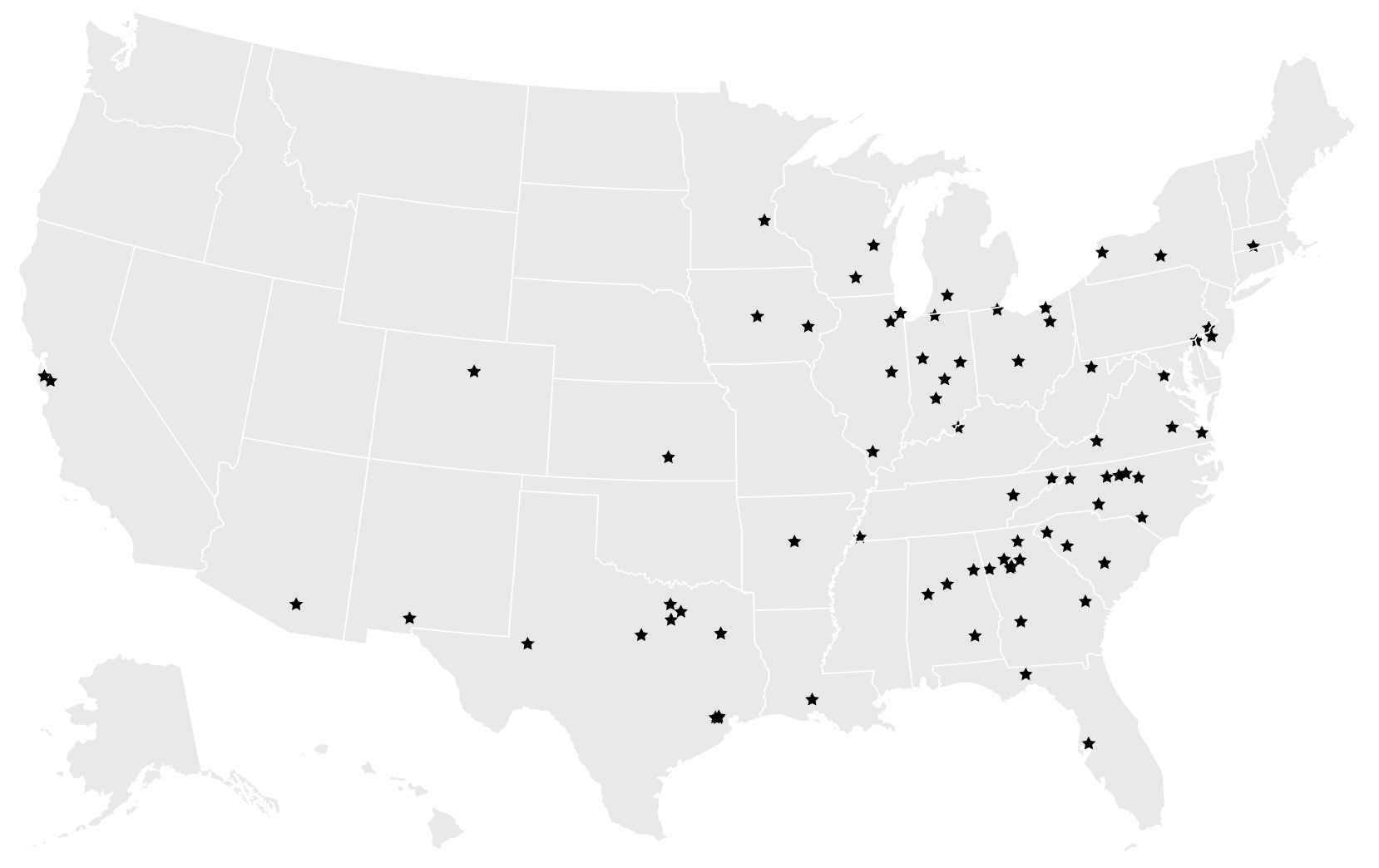
For me, these kinds of cameras are mostly a waste of resources if not used to actually enforce traffic rules. Despite what we hear from the media or from our paranoid neighbors on Nextdoor, students are more in danger of someone TikToking while behind the wheel than some random criminal predator or even an overstepping ICE agent.
Apparently, Flock cameras can be used in some cases to issue tickets, but the case seems more like a rare man-bites-dog type of article. It is not standard. I do agree there should be caution in over-surveillance. This is part of a broader safetyism in American culture, certainly a strong sentiment on college campuses.
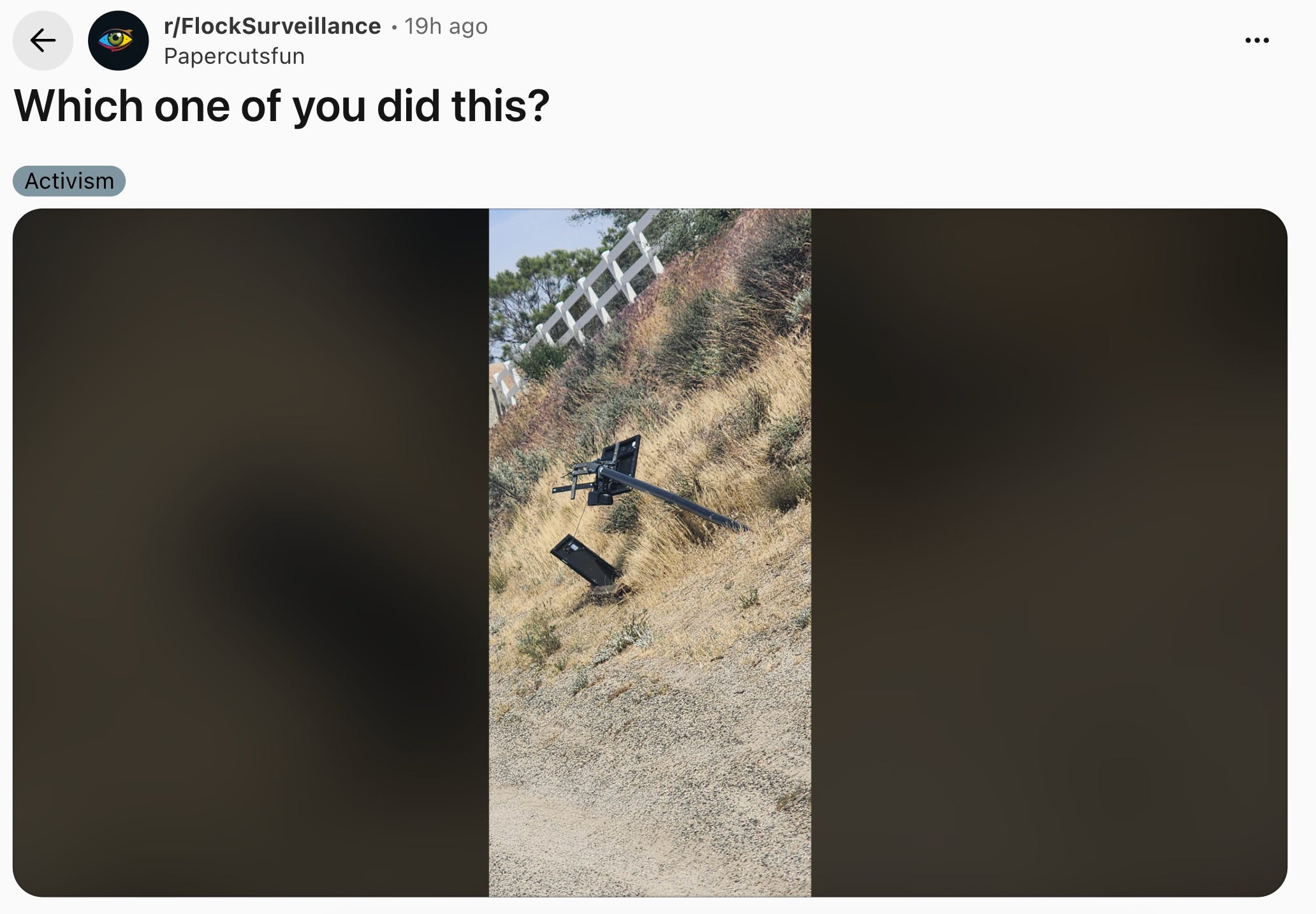
While conservatives have long criticized safetyism in US higher education, Trump has certainly used these same fears to drive national policy. The Stanford professors explicitly cite the recent ICE raids as prime examples of overstepping. In general, there is a lot of distrust towards this company, not just at Stanford. There is fear that the technology will be used in corrupt ways. There’s even a Reddit group dedicated to tracking the company’s contracts, celebrating damaged units, and sharing tips on how to spot them.
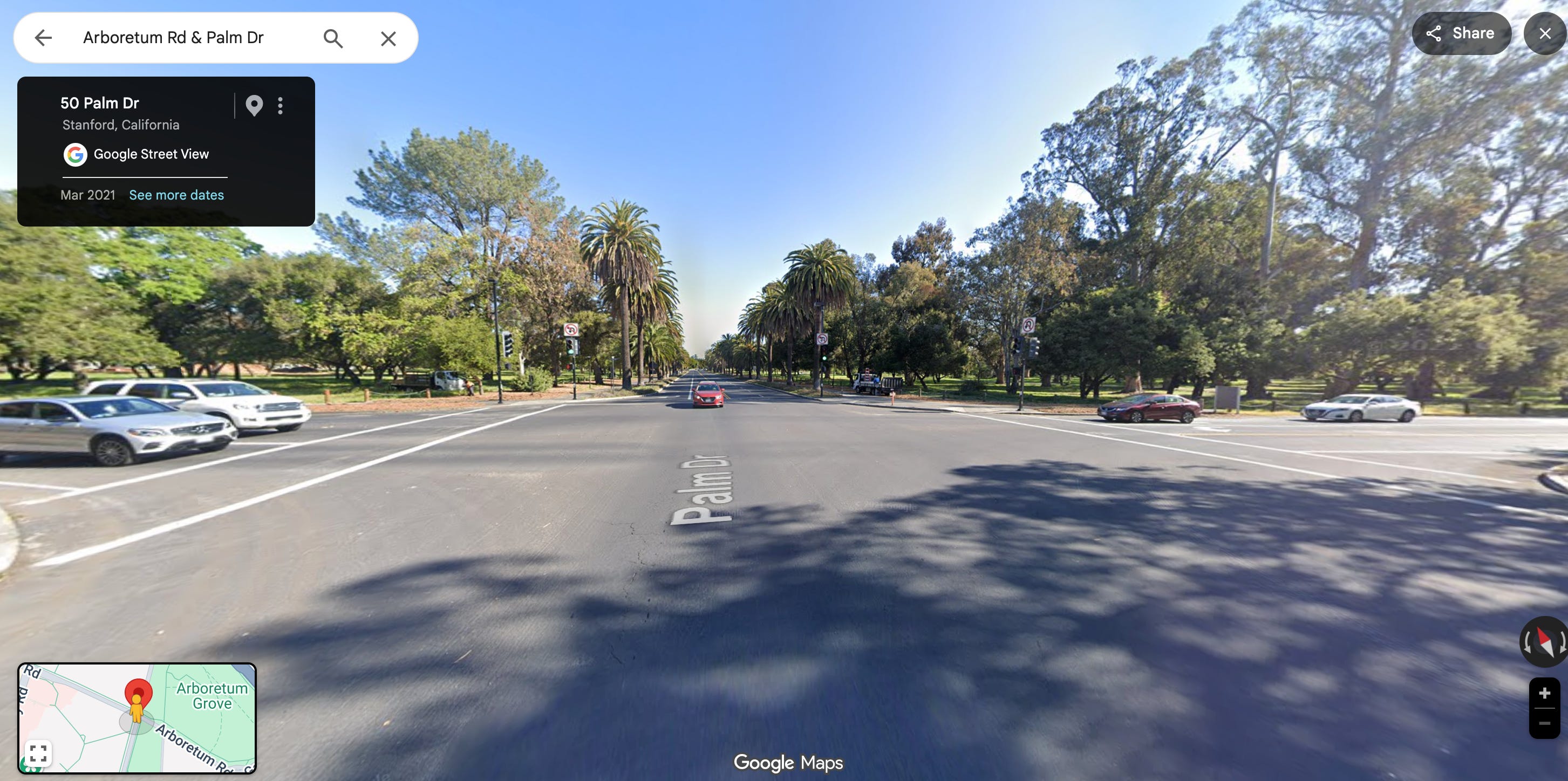
What annoys me about this kind of Stranger-Danger safetyism is that there are real hazards that college towns just ignore. The area around campus can be quite dangerous due to the crowds of pedestrians or bikes mixing with off-campus car traffic.
There have been a range of deaths on and around Stanford recently. A woman was struck and killed in a crosswalk near campus in February of this year. Last year, a Stanford student died after getting hit by a car while riding a bike on campus. That same year, a popular coach was killed by a garbage truck a few miles from campus, and a 90-year-old woman hit and killed a cyclist. In 2024, a visiting student researcher was killed in the very same way near campus.
I could keep going. Palo Alto Online, a local newspaper, is full of stories like these I’ve already listed. The Stanford Daily even chronicled “bike accidents” on campus from 2014 to 2018, finding over 300 such incidents. Over a third, the highest percent, were related to incidents with other vehicles. The authors even highlight one part of campus called the “Circle of Death,” which is apparently notoriously unsafe. Other intersections, especially where the campus interfaced with roadways, proved similarly dangerous for bikers.
Further, the two professors argue that there is only a “dubious benefit these cameras add” and that “we have yet to receive any evidence that they actually make us safer.” I do agree with this concern when these are simply tracking people rather than trying to curb driver behavior. We have a use case right in the Bay Area. The city of San Francisco has released data on their speed camera intervention: they are a resounding success.
…data collected from San Francisco’s 33 camera locations and other traffic-sensing equipment, excessive speeding — defined as drivers going more than 10 mph above the speed limit — dropped nearly 80%. The number of repeat offenders dropped, too.
Localities in the state turned to speed cameras after an alarming increase in fatalities related to cars and drivers. Speed, reckless or inactive driving, and vehicle size are key factors for the increase. The claim that there is “dubious benefit” is true if not utilized in this way, as traffic cameras do seem to alter some offending driver behaviors.
Where I align with the anti-Flock cameras sentiment is that I would much rather turn to street redesign rather than enforcement—the Strong Town way. This would mean narrowing lanes, adding more barriers, and removing cars from places altogether. But localities have proven over and over again that all of this is too much to ask. Traffic engineering dictates that speed and ease of access for cars outweigh the safety and comfort of everyone outside of a car. See one example from College Towns:
Making School More Walkable One Intersection at a Time

Note: I have both a video essay and a write-up for this post. Please read or watch, and let me know your thoughts.
To Stanford’s credit, the university has installed a range of roundabouts in recent years. However, students still report unease when walking. “I feel like sometimes I just have to be confident and pray I don’t get hit because otherwise I’ll be waiting forever to walk through when it’s busy,” said one student in a 2023 article in The Stanford Daily on the roundabouts.
In the end, I can see the fears of over-surveillance of an overreaching nanny state. At the same time, we cannot abdicate responsibility because there is an abuse of power in another arena. There is a real public safety issue; it’s just not the one the cameras purport to inhibit, nor the one the professors believe is an external threat.
Why Parents Tolerate Terrible School Car Pickup Lines

Since I have been writing about the school car pickup line culture in the US, people have asked me why do parents tolerate such annoyance. It is certainly a nuanced problem, but one clear aspect is that our streets really are dangerous for anyone outside of a car. Sadly, my own community provides an illustration for how our “deadly street design”, as
Links I’m Reading This Week
Education
Princeton NIMBYs are once again up in arms over a proposed development on the site of former dorms of a struggling college. It’s only a 4-story building, too! Just shows how difficult it can be to repurpose college space.
To help with the student housing crisis, one UT-Austin student came up with an innovative app. Instead of Rate My Professor, he created Rate My Rental. Cool initiative!
Columbia sold a housing unit in the Bronx that was deemed too disconnected from the main campus. My alma mater apparently lost money on it! Imagine losing money on New York City real estate
The financialization of youth sports is ruining a childhood pastime. The travel sports culture is also another aspect that connects to helicopter parenting.


Northeastern completes merger with Manhattan-based struggling college. The Age of Conquest is still forging ahead in US higher ed.
UC Davis gets a massive donation to expand vet school. No, not veterans, veterinarians. This field often seems forgotten in terms of funding and STEM initiatives, which is strange considering pets are only becoming more important in American culture.
Harvard is making its students take an AI series. If the wealthiest and most well-resourced university is paying this much attention, other schools cannot continue to ignore (or simply ban) AI.
More AI Wrangler job updates: OpenAI reported that its latest model was given a “Nerdy personality.” This resulted in an abnormal amount of mentions of “Goblins.”
Urbanism-ish
I’ve covered dead colleges and malls here, but those aren’t the only disappearing institutions. What happens to a vineyard once it closes? Turns out, it’s also complicated.
“Transit is only as good as its weakest link, at that weakest link is almost always the weekends,” writes Mark R. Brown, AICP, CNU in Car Free America. This is exactly my complaint here in Southern California (amongst many others).
Ali Ankudowich in Housing Action Lab at the Florida Housing Coalition writes on the rise of factory-built homes in Florida. I have long been curious about this housing innovation, but remain skeptical they can solve our problems.
New library in Omaha, Nebraska, is emblematic of how ugly our car-centric design is. What an abominable aesthetic.


Jeff Fong at Urban Proxima has a piece on practical steps Charlotte, NC, made to urge homeowners to support better housing policy. Always great to see a positive and practical writing in this space that is often doom and gloom.
For some California news, it seems there is more trouble brewing in Hollywood? The film company site where they filmed The Office is shuttering. It seems the industry here is disintegrating.
But it’s not all bad news in Southern California; LA college students are embracing the metro system. Ridership for young people is up considerably this year.
In some news from China, the Chinese government thinks that hostile foreign powers are trying to make their young people lazy. Funny that we have heard something similar about American youth usage of TikTok.
Manya Koetse of Eye on Digital China covered the backlash for the new The Devil Wears Prada 2 film in China. Apparently, there is a Chinese character who is a frumpy, nerdy assistant. The controversy highlights the different perceptions of aesthetics in the US vs. China. Chinese netizens complained this was an offensive stereotype, and would prefer someone with more traditional beauty standards. US media often takes the opposite view.
Closing Time… PSA: Used Bookstores, Please Stop Doing This
I do not mean to denigrate used bookstores on Independent Bookstore Day. But I must highlight a complaint from Matt K. Parker, who highlighted an annoying habit: terrible stickers. He pleaded on X, “Why, God, why do used book stores use cover-destroying price stickers?” The photo shows a nice-looking Penguin Classics version of Sir Gawain and the Green Knight, ripped to the spine.


Some book aficionados suggested that he try using a hair dryer on high heat next time (a trick I have also heard works). Others nodded approvingly, sharing their own examples from their collections. The most egregious example was from Joshua Penduck, who lamented, “This book survived for 250 years before a used-bookshop put its price sticker on it.” Indeed, what a sad accident of carelessness.


Since I collect old books and magazines, I am constantly annoyed by sticker habits. The worst offenders are the thrift stores such as Goodwill. I have found many books over the years maimed by an errant price. It’s frustrating. Here’s an example from my collection: The Organ-Cases and Organs of the Middle Ages and Renaissance, 1883. It potentially sells for $1600. Granted, I love the price I got it at Goodwill, I just wish they had a little bit better practices.

We all agree that the adhesive on most stickers is too damaging to used books, especially quite old ones. The best practice for pricing seems to be to use a light pencil on the front-end sheet. I have noticed the best (and longest-running) used bookstores often use this method. I wish more would follow suit to help preserve our old books.