


On January 23, 2026, a Waymo autonomous vehicle hit a child walking to school in Santa Monica, California. The student ended up being fine and apparently walked off the incident without much harm. Given the new technology, this incident made international headlines across various media platforms.
Critics of self-driving cars pointed to the case as a dangerous experiment on our streets, while defenders celebrated it as an example of how safe the technology can be compared to a human driver. This divide is especially acute in the urbanist community, where half are skeptical of anything with cars (whether robo or human driven) and the other half just want safer streets (whether robo cars or no cars).
I count myself in the latter half of urbanists, in which I have advocated for self-driving cars here on College Towns, such as through parking reforms. But there are a lot of people in the urbanist community with my respect who are on the anti-self-driving car side of the spectrum. I want to take these voices seriously.
To that effect, I ventured to Santa Monica this weekend to have a look at Grant Elementary School and the surrounding neighborhood for myself. I wanted to understand how this could have happened and what the implications are for self-driving cars, urbanism, and schools. This is my Crash Analysis of the incident.
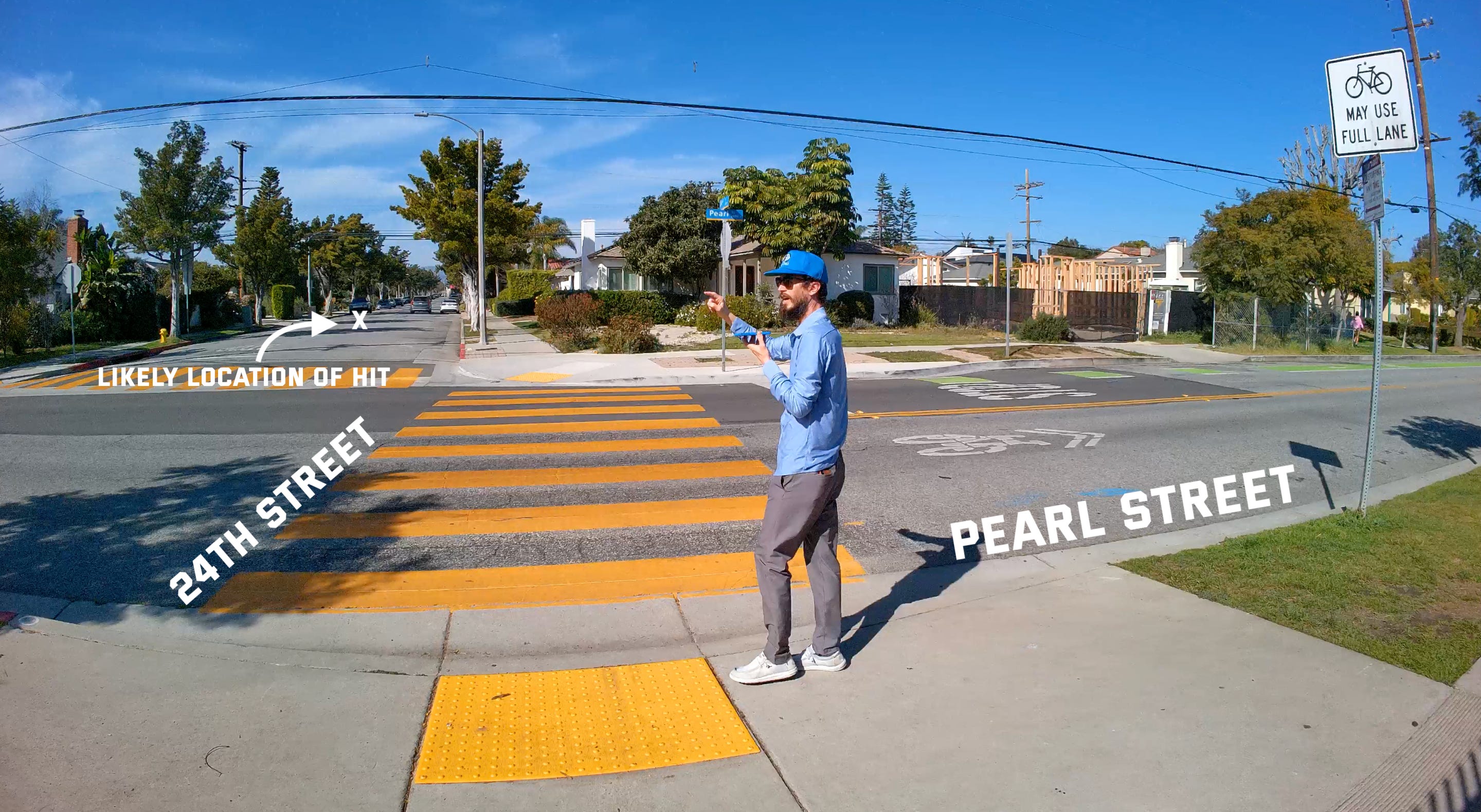
Note and UPDATE: I posted a YouTube video of my trip, with clips from that used in this written article. Other readers suggested that the spot of the hit was likely on 24th Street rather than Pearl Street. While the exact spot has not been released, media reports suggest this is likely the case. I have provided a photo of that location for contexts. It does not change any of the analysis in this article.
The Waymo Was Speeding
One of the key points in this incident was that the Waymo was speeding. The speed limit at that spot in front of the school was just 15 MPH, lowered to that speed “when children are present.” The self-driving car was going 17 MPH before quickly braking to just 6 MPH once the kid had been detected. The report from the company actually did not mention that the car was speeding. Even if it was only 2 MPH over the limit, I still think this is important context.
Being on Pearl Street and 24th Street in front of Grant Elementary showed me that 20 MPH really is basically the limit that any reasonable driver could even go on the streets. There are stop signs at each corner of the school and another in front of the main entrance. These are about 50 yards from each other. Going from a complete stop to even 20 MPH is already difficult on a Saturday afternoon without any kids running, parents waiting in minivans, or other school officials directing the madness.
What this tells me is that the Waymo that day was likely going a bit too fast. Yes, even by a couple of miles per hour. Really, in this area during school pickup and drop-off, cars should only be creeping through at just a snail’s pace. It should be annoying to drive through this space at these times.
Charles Marohn, founder of Strong Towns, wrote about the psychology of driving in Confessions of a Recovering Engineer:
System 1 is automatic and largely unconscious. It is the fast reaction system — the one where we do not have to put effort into thinking… Things that require mental effort to resolve access System 2. This system is slower and more purposeful.
For streets, where we need complexity in order to build a productive place, traffic needs to flow at a neighborhood speed (15 mph or less is optimum) to make a human habitat that is safe and productive. To achieve this on a street, the street design needs to shift drivers from the passive awareness of System 1 to the mental state of heightened engagement found in System 2.
On a wide open highway, drivers can comfortably cruise on System 1. But when lanes narrow, trees overhang, and potential hazards appear, drivers switch into System 2. Driving in front of a school at 8 AM necessitates paying attention—a move from System 1 to System 2.
It takes either a certain kind of degeneracy to speed through such a place or possibly superhuman driving capabilities. Given the choice of the two, luckily, it was the robot car that day, saving the child’s life. But perhaps, in this specific case, an average driver who switched into System 2, just creeping through, would have been better off.
Grant Elementary School: A Walkable School
There is a lot of discourse around why students no longer walk to school in the US anymore. Parents are fed up with the annoying car pick-up lines. One reason for the falling number of walks is that new schools are often built at the edge of town with no real way to walk. The school car pickup line is baked into the forever sprawl of our suburban development.
Grant Elementary is not one of these schools; it is tucked right into the middle of the neighborhood. It was built over 100 years ago, so there are no large parking lots or car line lanes for parents to sit in. The area flouts the unwalkable sprawl stereotype of LA. It is not dangerous, and there are no homeless encampments (not in the neighborhood at least).
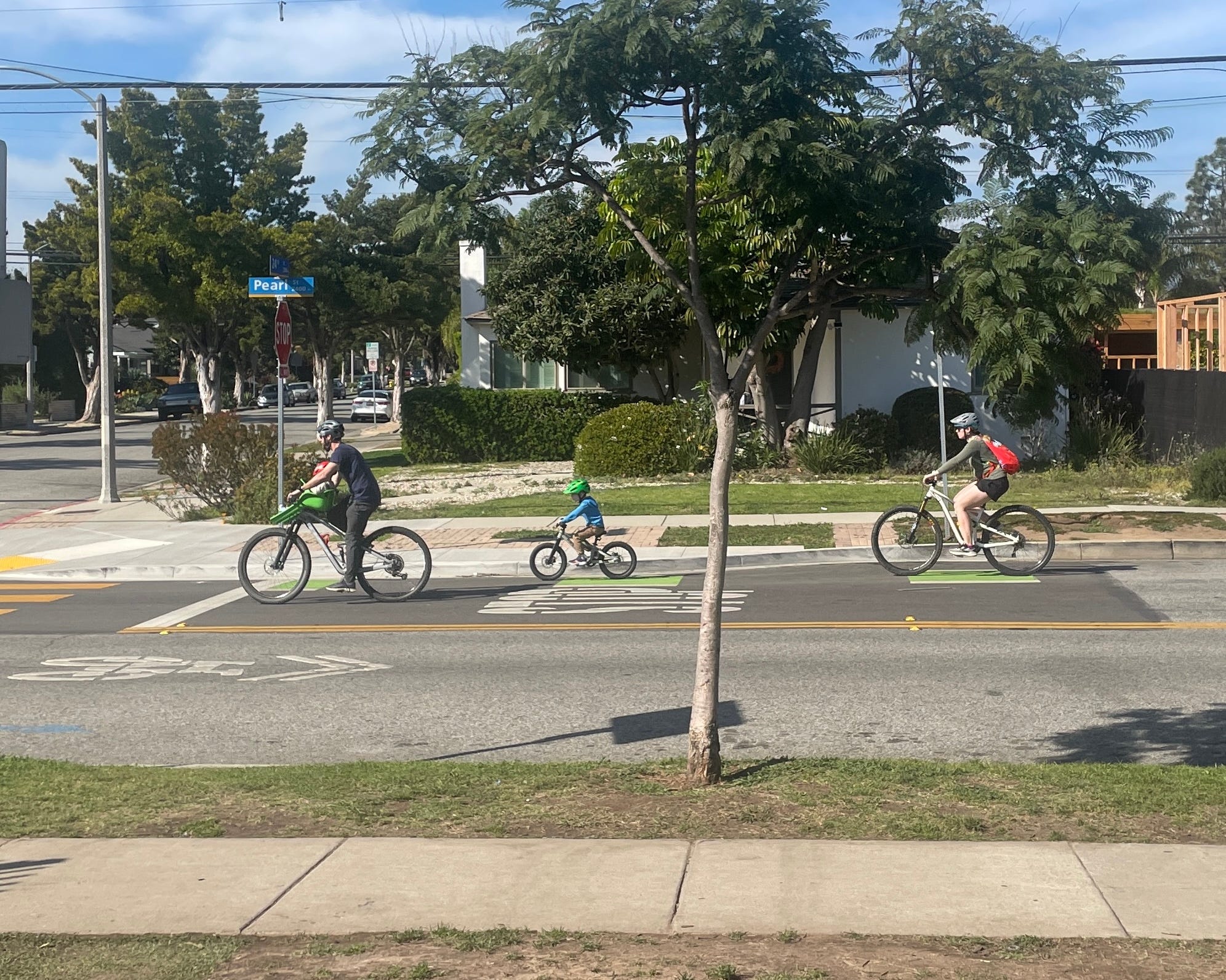
The area the school sits in has a Walk Score of 85; I know the metric isn’t perfect, but that’s why I visited the area myself to corroborate these high scores. It has nice sidewalks with curb extensions, added just in the last couple of years or so. There are bike lanes, though not protected, and just painted green (so not perfect). There is a wonderful tree canopy covering the streets all around the school.
Outside of the neighborhood, there is a Whole Foods a couple of minutes down the street. The 26th St / Bergamot Station is less than a mile away, where residents can take a light rail into Downtown LA. The beach is a 15-minute bike ride in one direction, with UCLA another 30-minute bike ride in the other. It is within two miles of Downtown Santa Monica, which has some of the best urbanism in LA:
Walker’s Paradise (93) - Daily errands do not require a car.
Excellent Transit (77) - Transit is convenient for most trips.
Biker’s Paradise (96) - Daily errands can be accomplished on a bike.
Tossing out the quantitative metrics to get more qualitative: I was physically there on a Saturday. The place was absolutely buzzing with people biking with their families, walking dogs, or just enjoying a general sense of a community that so many urbanists (and traditionalists) idealize. Oh, and in the perfect year-round weather. All of these amenities can be yours if you have the multimillions to buy a home there.
All that being said about the good urbanism, cars are still essential to the area. I doubt very many people live a car-free life. This cultural lifestyle spills over into the school. Presumably, most of the children who attend this public school live in this very walkable neighborhood. Yet, apparently, the pick-up and drop-off is still fairly hectic, with parents double-parking to drop off their little Billys or Suzys.
Without cars, this would be an easy pick-up and drop-off. Add in cars, and the walkable neighborhood gets messy. Cars simply complicate any space shared with people, especially with little humans running around. These specific human lifestyle habits were likely key to the Waymo incident that day.
Tragedy 10 Minutes Away
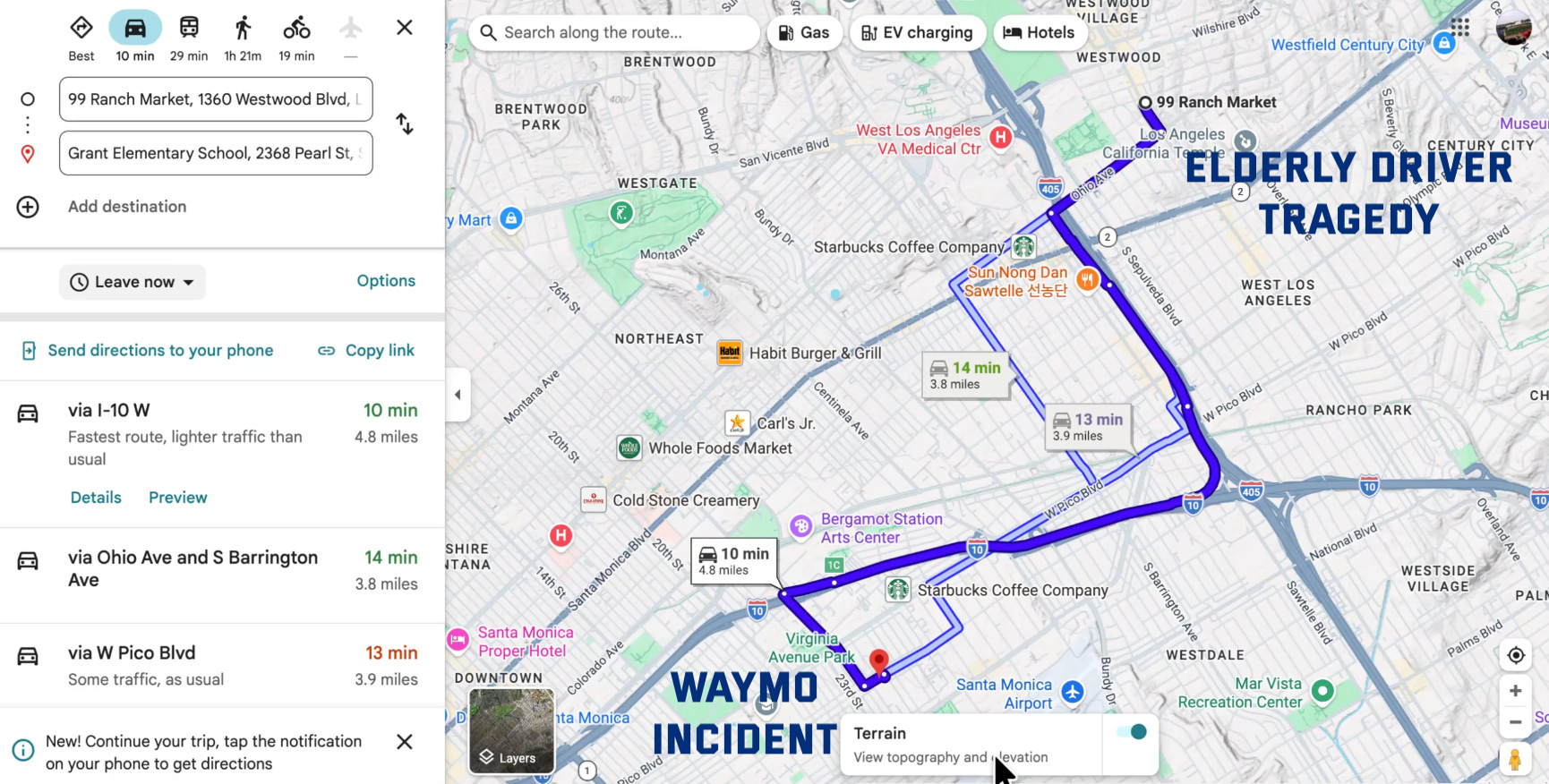
The same week that the news dropped about the Waymo incident there was another crash in the area with a much more tragic ending. In Westwood, a 10-minute drive from the school, a woman in her 90s hit a cyclist and allegedly panicked. She then lost control of her vehicle and went careening into 99 Ranch, killing three people standing inside. This is a real tragedy.
I do not want to turn this into a whataboutism by showing every crash that happens with human drivers. But I could not help connecting both cases since they happened a week apart and were very near to each other. Locally, both events made the news, but nationally and internationally, only the self-driving car received much attention. After visiting the school, I went over to the grocery store.
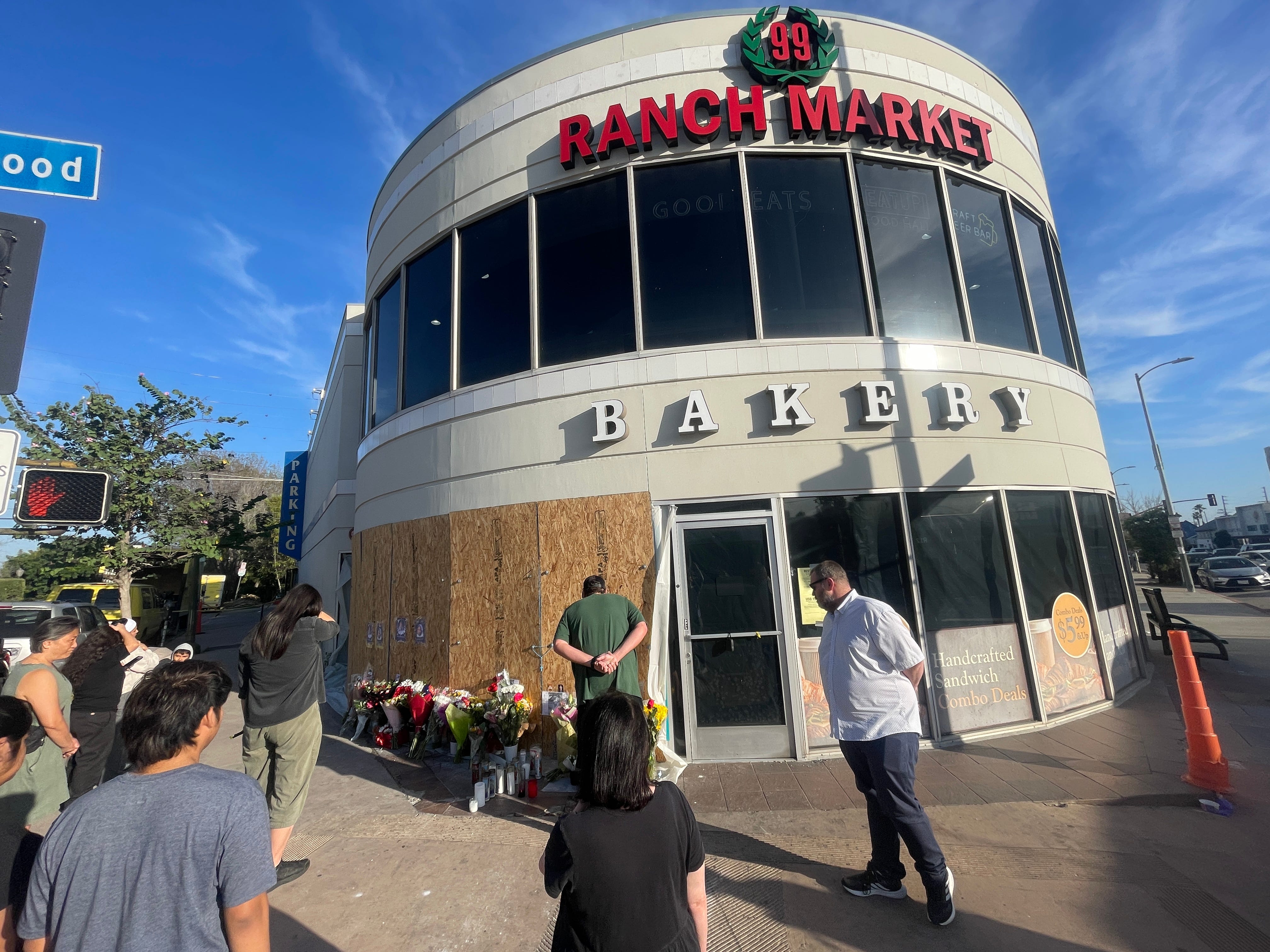
The juxtaposition between Grant Elementary and 99 Ranch could not be more different. The school was calm, unassuming, normal. Most people probably would not even realize there was an international incident here just days before. Conversely, the store itself was closed, and plywood covered the massive hole that the driver left in the bakery section. Family and friends were standing around, crying and mourning their loved ones. There was a memorial for those who lost their lives. It was tragic to witness.
Continuing my comparison, the space where this tragedy happened is not a pleasant place to walk. There are certainly a lot of pedestrians or bikers, but they are clearly afterthoughts. The streets here are designed like a speedway, wide and forgiving for drivers. They are the classic stroad, seven total lanes for cars. There are even breakaway poles designed to fall over when drivers plow through them—safer for drivers, unsafe for pedestrians. There are no bollards anywhere, despite a constant flow of drivers flying through at unsafe speeds.
Westwood is a busy, urbanized area. It is home to UCLA and its almost 50,000 students, along with 31,000 employees. This is not a far-flung suburb; it is the middle of the second-largest metro in the United States. Two subway stations are set to open there in 2027. Yet, the area is uncomfortable for pedestrians at best and dangerous at worst. Sadly, last week, the space was at its worst.
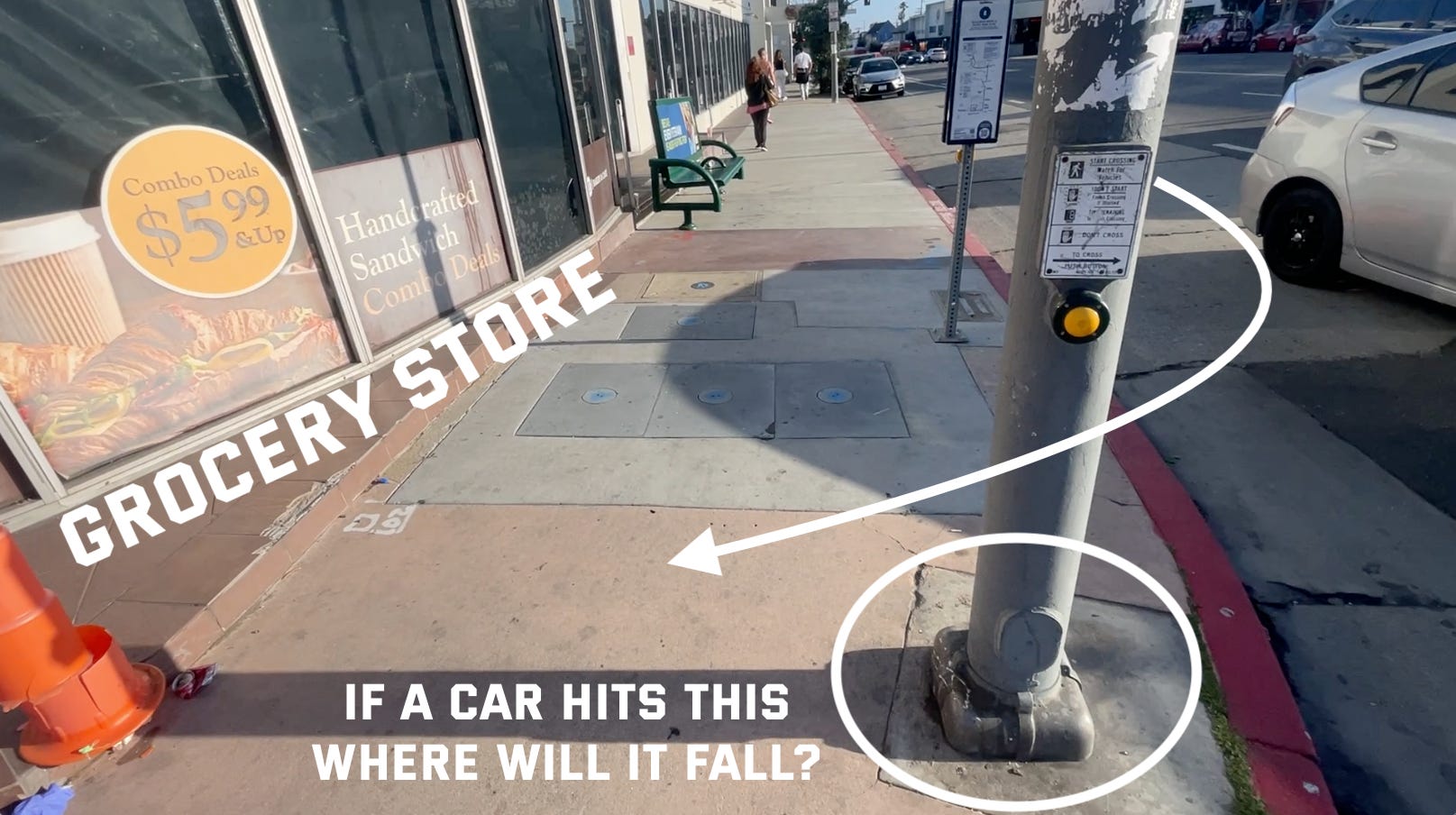
While the hole left by the driver will eventually get patched up, the hole in the lives of the families and friends can never be replaced. They will forever feel the impact of the dangerous streets. The decision-makers failed the people who were killed. They need to slow down cars and add real protection for pedestrians; apparently, some of these changes are on the way.
Of course, the discourse brought with it the idea that senior citizens shouldn’t be driving. And I agree that we must be cognizant that people lose their faculties to drive as they age. It will only get worse as the Boomers give us a so-called Gray Tsunami. There was even another case this same week of an elderly driver killing a woman on a bike just 30 minutes away from the grocery store.
We should not wait for more tragedy to act. As seniors age, they should lose their privilege to drive when their ability slips past a reasonable point. Public transit and more walkable communities should be priorities, but self-driving cars will also have to be part of the equation, given how bad most places are for the first two options.
The Verdict
I think the lesson for me here is that self-driving cars are not going to solve all of our problems. Visiting these sites was a good visceral reminder that the technology can assist in our efforts for good urbanism, but it is not the ultimate solution. We still have to make our streets better for people outside of cars. Conflict will always happen when cars and people mix, whether human or robot-driven. Redesigning our streets, neighborhoods, and spaces will be key.
I do agree that self-driving cars are already preferable to drivers with declining abilities to navigate the road like the one hitting 99 Ranch. They are also likely better than a lot of other human drivers, considering the road rage, aggression, or phone distractions on our roads. Human drivers already get annoyed when “stuck behind” an autonomous vehicle because the robots (mostly) drive by the rules. What we do not want is self-driving cars picking up on human bad habits, which is an urbanist concern for this tech. Perhaps this was a factor in the Waymo speeding.
The incident at Grant Elementary School was a rare case where the superhuman abilities of the self-driving car meant it could seemingly navigate a tight space at (slightly) higher speeds than what a (reasonable) human might do. We need self-driving cars to be better than humans at all times. Even if they mostly are already, some situations still call for System 2 driving.
Note: You can watch the full YouTube commentary of my analysis here:
Really appreciate your nuance of “AVs are already better than a lot of drivers.” Too many people are all or nothing on AVs, but right now an attentive driver is safer in many driving conditions than an AV, which in turn are much safer in city driving than distracted/impaired/aggressive drivers.
Thanks for sharing this story, and your autonomous vehicle positivity. I must confess, I don't like self-driving cars (just for their inhumanity) and have only ever heard of them talked if with disdain in my little urbanist orbit, but your point is well taken. It is certainly impressive how well the car responded to the presence of the child